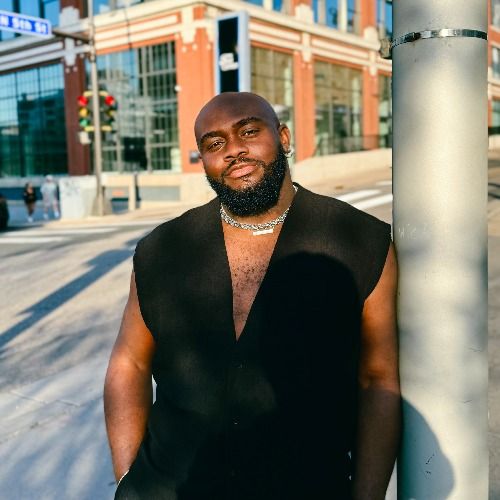
Dr. Brittany Lewis Is Building a New Table
In this episode of Odejuma, Harry speaks with Dr. Brittany Lewis, a scholar, author, and the founder of Research in Action. At its heart, this is a conversation about power: who holds it, who gets studied, and who gets to decide what counts as knowledge. Brittany shares how a queer Black girl from North Minneapolis became a scholar who refuses to write research that only mesmerizes problems. She talks about the Black women who raised her, the choice to leave a tenured path that was never built for her, and the idea at the center of her book, ‘Building a New Table.’ They get into community-centered research, the work behind Minnesota's first Office of Missing and Murdered Black Women and Girls, and what it means to build something meant to outlast you. This is an unhurried conversation about resilience, community, and living in your truth.
Connect with Brittany on Instagram: https://www.instagram.com/brittany.m.lewis/
Learn about the convening here: https://www.researchinaction.com/convening
Learn more about her book here: https://www.drbrittanylewis.com/book
Connect with Harry on Instagram: https://www.instagram.com/harryitie
For more information on Harry, visit: https://www.harryitie.com/
Transcript
Hi, my name is Harry Itie, and welcome to Odejuma.
Speaker A:Odejuma is an ishakiri farewell that loosely translates to till tomorrow.
Speaker A:But for me, I look at it as a promise that there is so much more in life to look forward to.
Speaker A:And this interview driven storytelling podcast is rooted in that promise.
Speaker A:So as you take the time to listen, I want you to feel that as we go deeper with folks from across the Black diaspora, exploring the adventures, resilience, joy, and the ordinary moments that change their lives, that you would have a good, hearty laugh or you find something to sit with.
Speaker A:Because there is power in the stories of everyday people.
Speaker A:And these stories are worth telling.
Speaker A:Hey, y'.
Speaker B:All.
Speaker A:Welcome to another exciting episode of Odejo Ma.
Speaker A:My name is Harry.
Speaker A:It's Pride Month.
Speaker A:We're excited.
Speaker A:We're gay, we're queer, we're here.
Speaker A:If this is your first time listening to this podcast, I want to implore you to hit that follow button.
Speaker A:Whether it's on Apple podcasts, Spotify, Amazon Music, music, wherever you're listening.
Speaker A:If you're watching me on YouTube, I also want to encourage you to do the same.
Speaker A:Click on subscribe so that you get notified when we have new episodes.
Speaker A:I'm super excited about today's episode because I have a very brilliant scholar who I'm going to dive into conversation with.
Speaker A:Her name is Dr. Brittany Lewis, and she's a scholar and author and founder of Research in Action, where she has spent over 15 years giving communities over ownership over the research done about them.
Speaker A:Her book is called Building a New Table, and her works helped create Minnesota's first office of missing and mother Black women and girls.
Speaker A:I'm super excited.
Speaker A:We have Dr. Brittany Louise here.
Speaker A:Hi, Brittany.
Speaker A:How are you?
Speaker B:Hey.
Speaker B:I'm doing good.
Speaker B:I'm doing good.
Speaker B:I feel like these allergies are kicking my butt.
Speaker B:But I'm super excited to be here with you.
Speaker B:I'm excited to talk about the book, the work, and why it's so important.
Speaker A:Yes, yes.
Speaker A:I'm super excited to dive right in.
Speaker A:Like I was telling you before, just reading about your story and, you know, your work was so inspiring and it just gave me all the excitement to want to come and talk to you.
Speaker A:But before Dr. Brittany Lewis, before the researcher, before the scholar, before all these accolades, like, who were you?
Speaker A:What's the.
Speaker A:What is your background?
Speaker A:You know, how did you become Dr. Brittney Lewis?
Speaker B:That's a great question.
Speaker B:I'm from the north side of Minneapolis.
Speaker B:At a very young age, I came out as a queer black girl and really had to navigate the world a bit independently as a result of that.
Speaker B:But along the way I found some really loving people who both affirmed my identity, who showed me the expansive love within community and like, supported me in like, fearlessly, like, pursuing my goals.
Speaker B:So I feel like at a really young age, good, bad or indifferent, I learned that I needed to be able to do things on my own, like spearhead certain things on my own.
Speaker B:And I think that's a double edged sword.
Speaker B:I think it's.
Speaker B:It made me really innovative and resilient.
Speaker B:It made me believe that there was always more than one way to do a thing.
Speaker B:So I think in one way that was really great.
Speaker B:I think in another way, I think it made it challenging for me as I was like coming of age to rely on others or ask for help or things like that.
Speaker B:I would also argue that the experiences that I had in that loving community, it taught me the expansiveness of the work that black women do for the family and their broader communities and how much that work goes undervalued.
Speaker B:So when I finally got into undergrad, I was trying to figure out what I wanted to do on one.
Speaker B:I thought I was going to be an investigative journalist.
Speaker B:That's what I thought I was going to do.
Speaker B:But I feel like once I.
Speaker B:Whether it's in my urban studies or poli sci classes, we're seeing the ways in which black women and families are being discussed as the problem or part of the problem or the thing we need to fix.
Speaker B:I was deeply struggling because they were talking about both myself and the women who took care of me when others were not there.
Speaker B:And I would argue they were always finding way with little resources to do amazing things.
Speaker B:So I think I got really fired up going, no, that's not the story of black womanhood that I know.
Speaker B:And I want to be a part of rewriting that.
Speaker B:And I just became really passionate about what does it mean to both write history, teach history and frame what history is.
Speaker B:And as I'm sure you know, across the Diaspora, our history has been written for us versus us, leading the charge and what our story is.
Speaker B:And then prior to, you know, getting into college, I couldn't have told anyone how to get a PhD that that was not my background, that was not, you know, where my family had come from.
Speaker B:I wouldn't have been able to explain it to anyone.
Speaker B:But it was my exposure to some amazing Black and Brown scholars in the Twin Cities and elsewhere that encouraged me to see myself as someone that could be a part of rewriting that history, I kind of, like, set my mind to something, and I saw it through.
Speaker B:Um, I would argue that, like, in that process, like, I got married, I had kids, I did what most folks think, like, if that's success, maybe, like, pursuing the professoriate, this is what it should look like, and you should sacrifice all those things to do that.
Speaker B:But I also pushed myself into a very unhealthy place.
Speaker B:I also later realized that, like, being married and fitting into that framework wasn't actually for me.
Speaker B:And I had another shift in my life where, you know, I quit my job, I moved home, and I wanted to reimagine what I was going to do with my gifts because I think, you know, we're all, you know, acculturated in certain spaces, and we're trying to figure out where we fit.
Speaker B:And what I realized is the vision I had for change never fit into the academy.
Speaker B:I was always, like, pushing back on professors.
Speaker B:I was always in some form of tension around this framework of what it was supposed to be or what's possible.
Speaker B:And it felt limiting.
Speaker B:And whether I know it, I knew it then, because I didn't, that all those things would get me to this place where I am completely independent from the university.
Speaker B:I have my own research company, like, pushing back on traditional models of engagement.
Speaker B:That never worked for us in the beginning, but I don't know if I could have told anyone I was going to do that.
Speaker B:And I also feel like I got to a place in my life where I needed to make sure I was living my values, and many of the places I was working in wasn't supporting my ability to do that.
Speaker A:That is.
Speaker A:That is really interesting background of how we got here.
Speaker A:I'm really curious.
Speaker A:I want to go back just a little bit more to you talk about growing up as a young black queer kid and finding a community of black women who took care of you and nurtured you, and that kind of, you know, became the basis and the foundation for your advocacy and the work that you're doing right now in community.
Speaker A:It's Pride Month.
Speaker A:There's a conversation that people always like to have around black folks and homophobia and naming that, oh, we are, for some reason, you know, the most homophobic people.
Speaker A:Right.
Speaker A:But you are here naming that as a young black queer kid, a community of black women were the ones who helped you be your best self.
Speaker A:Here's a little bit about that.
Speaker A:I feel like that in itself feels powerful because I feel like a lot of times you look at, you know, the other people as the yardstick and standard for acceptance and love and tolerance when it comes to all things Christ awareness.
Speaker A:But our communities, will we give them the side eye when some people are finding community and joy and wholeness in their queerness in our black communities as well?
Speaker B:Yes.
Speaker B:So my own immediate family, like, choosing me, didn't know what to do with me at the time.
Speaker B:And I think in some ways it might fall into some of this narrative of their inability to love me fully despite some of their own unresolved and unhealed understandings of identity.
Speaker B:I remember that because my family dropped me off at the bridge, which is a youth shelter, and I guess they thought that was going to.
Speaker B:I don't know what they thought that was going to resolve or do.
Speaker B:Did little to nothing.
Speaker B:And I end up choosing on my own not to live with my family.
Speaker B:And a black woman whom I love so much, she, Ms. Dorothy.
Speaker B:I moved in with her and her family and like, when I tell you, the amount of love and how I was embraced as a family member always sticks with me.
Speaker B:And, you know, when I tell you that, you know, Ms. Dorothy, like many black women in America, were working but still couldn't pay all the bills, but made sure we was all fed.
Speaker B:I never had to ask for food.
Speaker B:I don't know how she did it.
Speaker B:She would take me on their family vacations.
Speaker B:I became a part of their family.
Speaker B:So at the time, she had three kiddos.
Speaker B:They all went to North High School.
Speaker B:Yeah, I was just another one of the kids at that point.
Speaker B:We had conversations openly about, you know, sex and sexuality.
Speaker B:And honestly, every time we had these conversations, she would be like, you know, I support you in whatever you choose.
Speaker B:What I'm most concerned about is you getting a good education.
Speaker B:I'm most concerned about you feeling loved and supported in pursuing that, like, regardless of, you know, who you choose to love.
Speaker B:And truthfully, I didn't need her to spend a great deal of time sitting down talking identity with me.
Speaker B:If I were going to be honest at that time, I just needed a loving adult to say in addition to, I don't look at you any differently.
Speaker B:I support any relationship that you are in.
Speaker B:And if there are any questions you might have, I'm here.
Speaker B:And I didn't really need anything else.
Speaker B:I think at that age, you're just looking for folks to affirm you and your embodiment in whatever form it takes and know that you can code to them if and when you have questions.
Speaker B:I think at that time, all I needed to do was just feel Affirmed and that.
Speaker B:And she gave me that.
Speaker B:And honestly, when I think about, well, the.
Speaker B:The effortlessness of embracing someone for who they are and seeing that as an asset, not a deficit.
Speaker B:And that's.
Speaker B:That's what I felt.
Speaker B:And I feel like it was watching her selflessness and the way that she loves myself, her own kiddos.
Speaker B:Like, I had pictures on the fridge.
Speaker B:Like, I was on her gig.
Speaker B:Right.
Speaker B:And we still.
Speaker B:We still talk to this day.
Speaker B:Love her.
Speaker B:Love her to death.
Speaker B:I just.
Speaker B:I think it's.
Speaker B:We forget that some of the simplest things in community are right.
Speaker A:Yeah.
Speaker B:I'm just so grateful I got that.
Speaker B:And I say that, too, because at the time, there was this place in the Twin cities called District 202, and it was like, Queer Youth Center.
Speaker B:Also, they had, like, Queer Club, which we don't have anymore.
Speaker B:This place shut down years ago.
Speaker B:But, like, when I tell you at this time, we would hang out at this Queer Youth Center.
Speaker B:We used to go to, like, Queer Youth Club nights.
Speaker B:And I met queer youth from all across the state and the city coming to this one place, many of whom are sleeping on the streets, many of whom, whether it's.
Speaker B:Were already addicted to drugs and drinking.
Speaker B:Like, there were so many youth I was meeting at this time, and I often would go without someone, like a Miss Dorothy.
Speaker B:I could be one of these young people who all they needed was affirmation and a safe place to be who they were.
Speaker B:So I'm.
Speaker B:I'm forever grateful for that.
Speaker B:And then when I think about how black women and families are portrayed, whether it's from history, our stories, the media, et cetera, there is this complicatedness in naming the realities of intergenerational poverty, the choices made available to some of us, not all of us, and the way in which black women, like, make a dollar out of 50 Cent.
Speaker B:Like, I feel like we're often being judged for choices that are limited and are made in many ways out of survival, but in many ways out of love.
Speaker B:As I process wondering, like, how did she make ends meet?
Speaker B:I knew what she was making.
Speaker B:I knew it was hard, but we always had what we needed.
Speaker A:Yeah.
Speaker B:So.
Speaker B:Yeah.
Speaker A:Yeah, yeah.
Speaker A:And I feel like, you know, I'm hearing the.
Speaker A:The themes are very, very constant in your.
Speaker A:In your responses.
Speaker A:And it's.
Speaker A:You know, I feel like it gives me a little bit of understanding of why you do the work that you do when it comes to the research that you are very particular about.
Speaker A:At what point in time.
Speaker A:I know you said you had your doctorate and then you.
Speaker A:You quit your job and decided to start your own company.
Speaker A:What was that transition piece like?
Speaker A:When did you realize that?
Speaker A:Okay, fine.
Speaker A:My lived experience and the work that I've done in my doctorate degree requires me now to take my all this learning and my lived experience to shift how we talk about research and how we apply that when it comes to public policy.
Speaker A:When did our shift happen for you?
Speaker B:Okay, So I was 28 years old when I got my PhD.
Speaker B:By that time I had two children and I was trying to figure out, you know, which academic job to take traveling at different parts of the country.
Speaker B:I accepted a job because I felt like it was what I was supposed to do.
Speaker B:I lasted one semester and quit my job.
Speaker B:I realized that my gifts as a black woman were only being made accessible to privileged white students.
Speaker B:And that was not why I entered this work.
Speaker B:When I moved back home, I applied for my first non tenure track position at the center for Urban and Regional affairs at the University of Minnesota, cura.
Speaker B:I got this job and no one had existed in this position for over a decade.
Speaker B:So there wasn't this like, playbook of here's what you're supposed to do with it.
Speaker B:And there was some room for me to create, which also I think was a great thing, but a little nerve wracking.
Speaker B:Right When I took the job, I told the director at the time, I need us to not be agnostic about what we write, but stand on practice and policy change.
Speaker B:I feel like I had decided once I quit my former job and move home that, like, I don't want to write things that mesmerize problems.
Speaker B:I don't want to be writing things for my peers for the purpose of them telling me my value versus my work, actually moving things for the people I love.
Speaker B:So moving back home and trying to reimagine this path was the beginning of it.
Speaker B:And I found a great place to incubate some of my own scholarly ideas and approaches that I believe Community had been asking for that folks weren't investing in.
Speaker B:So at Cira, we did a really well known gentrification project.
Speaker B:I also did a project on evictions that really helped the city of Minneapolis both create its first tenant Ordinance act, also its first housing advisory committee.
Speaker B:That data was also used in a Minnesota Supreme Court case.
Speaker B:And what I feel like I did was like, I wanted to prove out that the engage research model that I knew was would actually benefit Community could work.
Speaker B:And that became the space where I got to pilot it.
Speaker B:We took on some really amazing projects in partnership with Community.
Speaker B:I Was able to prove out to my director and their center that there's a different way to partner with community, to actually move real practice and policy change and stand on those things.
Speaker B:There's this notion in the academy that something is objective.
Speaker B:The presumption that the canon of white men we are often learning from have objective viewpoints, and none of it is objective, and that's just ridiculous.
Speaker B:I name very clearly I have interests.
Speaker B:Here's what they are.
Speaker B:I want to center black, brown, and indigenous people.
Speaker B:I would argue that traditional research has caused more harm than good.
Speaker B:And you can go as far back as the Tuskegee Experiment.
Speaker B:The.
Speaker B:I mean, I think the medical industry, broadly speaking, has both used the bodies, the minds, and the kind of humanity of black folks as their subjects of research.
Speaker B:And I think there is a way to ethically undo those practices.
Speaker B:I feel like the shift from, like, me starting my own company, I was trying to convince my director at the time that our work could be bigger and have more impact.
Speaker B:And a couple years would go, and I'm like, okay, like, do this.
Speaker B:Let's shift that.
Speaker B:Whatever.
Speaker B:And they would placate me a little bit.
Speaker B:And I started to realize at the time, and this is no shade to my director, because former director, I think they were a great leader.
Speaker B:It was just good enough that I was there and that I was bringing what I was bringing.
Speaker B:And I also feel like that vision for change that I was seeking was much bigger than I think the center had the capacity to support.
Speaker B:And I was just like, you know what?
Speaker B:You should just stop talking, because you're giving away your stuff for free at that point.
Speaker B:And I feel like, as a contractor, so it's very common for faculty and staff to have side gigs.
Speaker B:I got one of my biggest contracts, and I was just like, I got to stop playing.
Speaker B:Just like I'm giving up myself for free.
Speaker B:And I got this huge contract.
Speaker B:I'm just like, wait a minute.
Speaker B:I can do this on my own.
Speaker B:I don't need.
Speaker B:Y' all do none of this.
Speaker B:So then that.
Speaker B:I mean, that was the beginning.
Speaker B:And I'm.
Speaker B:And I am a natural leaper.
Speaker B:And just.
Speaker B:I'm super.
Speaker B:I'm an optimist by nature.
Speaker B:I do.
Speaker B:I guess I have that whole, like, if someone tells me there's one way, I'm gonna show you, like, 10 that.
Speaker B:And I'm like, and if I believe in it enough, I'm just gonna leap.
Speaker B:So I saw that, and I'm like, let's go.
Speaker B:So for about three or four years, while I was at the university.
Speaker B:I was a building Research in action started off as just me and then I got contractors.
Speaker B:I also started to realize like, what is the longevity in like working with contractors who also have main health, main jobs or other commitments.
Speaker B:And I think when the projects got bigger, I really had to reimagine like the scale and scope of what I really wanted to do.
Speaker B:I also had to be honest, like, there's no way I can do that and stay at the university.
Speaker A:Yes.
Speaker B:So then I was also planning, like, okay, I need to plan my exit.
Speaker B:I also wanted to honor a place that like supported me in, you know, supported my vision and direction, which benefited.
Speaker B:And I also wanted to be transparent with them about that transition and support them in any way.
Speaker B:So I was always very transparent about what I was building.
Speaker B:That end will come and let's figure out what that looks like.
Speaker A:Yeah.
Speaker A:And how would you describe research in action now?
Speaker A:Years after you've taken the sleeper faith and now you're running this full time, how would you describe research in action?
Speaker B:Oh my goodness, it is exceeded my wildest dreams.
Speaker B:I have a staff of 13 now and these are full time employees.
Speaker B:We have man.
Speaker B:We have had the honor of being a part of some amazing projects, whether it was leading the missing and murdered African American women task force for the state of Minnesota, writing that legislative report in supporting the opening of the office, and then introducing the federal act on behalf of missing and murdered black women and girls called the Brittany Clarity Act.
Speaker B:We've also partnered with Twin Cities Habitat and Habitat International to help the foundations for their international black homeownership initiative.
Speaker B:We have, we are the eight year evaluators for the Nexus Open Road Fund project which is about black wealth and supporting black folks in generating that wealth.
Speaker B:We've done work with the state health department on overdose prevention, really trying to make sure that black, brown, indigenous folks get both the support and medication needed as they are trying to safely wean themselves off of street drugs.
Speaker B:Wow.
Speaker B:I mean, we have.
Speaker B:I mean we've partnered and done some really amazing things.
Speaker B:We've done bail reform work with the city of St. Paul.
Speaker B:I feel like we are deeply intentional about wanting to be supporting the movement around critical racial justice issues in our community.
Speaker B:We are not neutral about that.
Speaker B:The projects that we take on are asking ourselves, we know the problem.
Speaker B:Why haven't we moved on any core solutions and how can our approach help do that?
Speaker B:There's been lots of research done.
Speaker B:Why hasn't it moved anything?
Speaker B:Many of those kind of research studies were either done Internally and never published.
Speaker B:I mean, there's a reason for that.
Speaker B:There are many studies where they weren't asking the right questions because they didn't have community at the table to help them crack those questions.
Speaker B:And also, you got to name the reality that everyone has interests.
Speaker B:And if the community's interests aren't centered to that table, you're not going to get the outcomes that serve them the best.
Speaker B:And that requires some relinquishing of power.
Speaker B:And our model supports folks in doing that to get the best outcomes.
Speaker B:So, I mean, I'm honored that we have been able to be a part of building so many new and amazing tables.
Speaker B:And this year will be the first year that we host our first national convening in gala.
Speaker B:Because when I think about the legacy I want to leave behind.
Speaker B:One, I'm not the only one that can do this, and I don't want to be.
Speaker B:I want to mentor my staff and others to lead in this amazing work.
Speaker B:I also know there are black women all across the country who have created their own organizations, consultancies practices because the institutions from which they were trained and their limited way of thinking and engaging pushed them to do so.
Speaker B:I really wanted to bring all those women together to share the innovative ways that we have partnered with community and created change all across the country so that we all could learn from it and really push our respective fields to think differently about change and help, you know, fund the work.
Speaker B:So I'm super excited that that'll happen for the first time on June 11th and June 12th.
Speaker A:That is amazing.
Speaker A:And before we get there, I want to talk on the book a little bit.
Speaker A:The book is called Building A New Community Centered Handbook for Transformative Social Change.
Speaker A:I want to start off by asking about community expertise because I think that the book centers on your theory or your framework called Equity in Action Model.
Speaker A:Right.
Speaker A:Which is looking at centering community members when it comes to research and the research process.
Speaker A:So tell me a little bit about the Equity in Action model and what that means and what that looks like.
Speaker A:I know you don't have to give out everything.
Speaker A:People still need to buy the book for sure.
Speaker A:But I want you to share what you can share about that model and how.
Speaker A:How.
Speaker A:What was it like figuring it out and developing that model and how can we even apply it to whatever field of life that we're in in general?
Speaker B:100%.
Speaker B:The first thing I would say is that half of my work is people work and has nothing to do with the technical side of what I do.
Speaker B:The equity in Action model is just as much about the process for repairing harmed relationships as it is using data as a form of change, like an artist uses a paintbrush to influence culture.
Speaker B:So when I think about what truly engaged action research is, it is like the intersections of like community engagement, innovative data and learning processes, and like concrete activation.
Speaker B:Meaning you have to create a new table where everyone is willing with the influence they have to move whatever we all come to and agree on.
Speaker B:And you have to not only co create the questions, the tools that you might use to answer those questions, but you have to help the people at the table develop a new shared understanding of the problem.
Speaker B:Why the other things we've done before this didn't work, maybe how we got in our own way.
Speaker B:We also have to help them start to like trust one another.
Speaker B:We have to help them understand simple things like we will disagree, conflict will happen, and how do we come back to the table when it does so this model is just as much about supporting people in their like self awareness journey as it is about using data to move change.
Speaker B:Because data is moving everything.
Speaker B:And then like when I use the word data, like folks are, everyone is doing research every day.
Speaker B:I think my favorite example is like the mom who's couponing honey, she's doing research.
Speaker A:Okay, that is true.
Speaker B:Yes, we're all doing research.
Speaker B:And I think there's also this way.
Speaker B:I want communities who have felt like it is a language that they've been pushed out of reclaiming it.
Speaker B:Like I want us to reclaim this language that's been used against us.
Speaker B:It made us feel like we don't either know enough or won't understand.
Speaker B:So it's also my philosophy that it is our job to make what has historically been jargon like language clear and accessible.
Speaker B:So the model is six steps.
Speaker B:It's about shared understanding, shared language and shared strategy and how to support people in doing that so they can produce learnings that move conversations and they all feel confident standing on those learnings and using that to influence decision making.
Speaker B:That is kind of the Equity Action model's goal at the end of the day.
Speaker B:And there are various actors at that table that have roles that they need to understand and lean into in order for it to be successful.
Speaker B:And in the book there's a whole section we talk about these different actors at the table and the roles they play to ensure the successful outcomes of that table.
Speaker B:And it does require some self awareness work, some self reflective work about sharing power, leaning into disagreement or discomfort, willing to do more listening than talking.
Speaker B:And we Talk a lot about that in the book as we are co creating our next strategy and our kind of steps to get to the outcomes we say we desire.
Speaker A:This is so, this is so interesting to me because even like my work has always been very data data driven and data influenced, but also the connection of, between data and community and how community can influence the data that we, that we can use to, to create a much more equitable society is so fascinating to me.
Speaker A:So good to see you on this project.
Speaker A:You got, you also got some great endorsements on the book.
Speaker A:Yes.
Speaker A:Ilhan Omar giving a blurb.
Speaker A:There's Keith Ellison, who's the Minnesota Attorney General.
Speaker A:Chris Coleman, president CEO of Twin Cities, helped out for humanity.
Speaker A:So you have a lot of heavy hitters endorsing and expanding this work.
Speaker A:So does that bring us to community Research for Liberation?
Speaker A:Is the Equity in Action framework the basis for this convening that's happening in June in Minneapolis?
Speaker B:Yes, I mean, I would say the Equity in Action model is the, the framework that we use to both partner guide our values and our strategies in all spaces.
Speaker B:And the convening is really a representation of, I think two main things.
Speaker B:We want to support people in an investment where we're building a new table versus accepting an invitation to someone else's.
Speaker B:Something that I referenced a few times is that when former congresswoman Shirley Chisholm was running, she would say, they don't have to invite me to the table.
Speaker B:I'll bring a folding chair.
Speaker B:Like that was her kind of one of her kind of campaign messages.
Speaker B:And I feel that I'm inspired by that.
Speaker B:I stand on the shoulders of women like Shirley Chisholm.
Speaker B:And I would argue we are at a time where I will say we are no longer bringing folding chairs.
Speaker B:We are building new tables.
Speaker B:And we need to teach you how to support new tables run by black women, girls and Finns.
Speaker B:And this year's convening theme is building a new table with Black women, girls and FINNS.
Speaker B:So on June 11, which is our opening night, we're hosting a dinner in two separate spaces.
Speaker B:One space is just for black women, girls and Finns.
Speaker B:It's about healing, reconnection and holding space for the fact that we have been leaning in holding a lot of work and we're often not feeding into ourselves and we want to hold separate space for that.
Speaker B:Then we have another space for whom we call our accomplices, all those folks that are not black women, girls and friends.
Speaker B:And we're going to support those folks in processing together.
Speaker B:What does it mean to build new tables of black women, girls and friends.
Speaker B:What gets in the way of that?
Speaker B:How can we dream of a world where that is more consistently happening?
Speaker B:And how can you ready yourself tomorrow, which is the full day, Friday, when we're all integrated together in both listening with intention, but networking with intention to support the voices of black women, girls and femmes.
Speaker B:So, oh, that's what opening night is for us.
Speaker B:And this is an illustration of our model because before we can get to some critical questions, how can we move some practical issues, some theory to practice, we have to sit with ourselves first and develop some shared language, some shared understanding before we get into space and assume we'll all just know, like, how to be together.
Speaker B:So Friday, when the convening happens, the first thing we will present.
Speaker B:The justice for Institutions project is the continuation of the missing and murdered work that we've done.
Speaker B:Last year we did a statewide survey of black women, girls and families.
Speaker B:First time in Minnesota's history we connected to their safety and security across county based programs across the entire state.
Speaker B:We surveyed 767 black women and girls.
Speaker B:13% Came from rural Minnesota, which has never been done.
Speaker B:And we're going to present the outcomes of that data and some potential solutions from what we've learned.
Speaker B:We've also got an agreement from Hennepin county to use that data and pilot it in their programs.
Speaker B:So we are actually working with Hennepin county on that.
Speaker B:So there's a part where we want to show folks how can we use this information to move actual genes and programs to support people's lives.
Speaker B:And then we want to ask the audience in this like debrief, write, reflect, how can you take this back to your places of influence?
Speaker B:The second part of the day, we have what we call our concurrent sessions.
Speaker B:We did a national call and we got black women and girls from across the country, Philly, Atlanta, Mississippi, California, doing innovative stuff.
Speaker B:We'll have a series of sessions people can go to to learn more about how they've been approaching innovative change.
Speaker B:We'll have a keynote at the end of the night.
Speaker B:Dr. Monique Liston from Ubuntu Research was an all black evaluation firm in Milwaukee and a panel on black women CEOs to talk a bit about why do we have to create our own thing and how do we sustain that work.
Speaker B:We really want to like support folks in both understanding how to build those new tables of black women, girls and femmes, have an investment in it and seeing the innovative outcomes of what it can do.
Speaker A:This is really, this is really powerful stuff.
Speaker A:I'm super excited about this convening, National Convening for Community Research for Liberation.
Speaker A:I'm excited that people are going to be able to experience this learning and this frameworks and we can figure out how best can we work together, how best can we build together the kind of future that we're imagining for ourselves.
Speaker A:So for folks who are interested, who want to be a part of this process, what can they do?
Speaker A:How can they come and be a part of the convening?
Speaker B:Yes.
Speaker B:So if you go on our website ww.researchinaction.com you will find a link to the convening as well as the gala that we are hosting.
Speaker B:So the gala is Friday night.
Speaker B:We partnered with the African American Leadership Forum.
Speaker B:We're doing a black art auction which I'm super excited excited about.
Speaker B:We want to resource this work.
Speaker B:We want to support our ability to honor the expertise of community members.
Speaker B:So you can go on the website to get tickets and or show up and pay.
Speaker B:There it is downtown at Westminster hall which is off of Nicollet Mall.
Speaker B:We're super excited.
Speaker B:Just about.
Speaker B:There's so many folks coming together to make this really innovative moment happen.
Speaker B:I'm super honored.
Speaker B:Honestly.
Speaker B:We've had a lot of sponsors and folks from philanthropy, government, community who are really seeing the value in working across sector.
Speaker B:We tend to work in silos and I mean I'm super excited about with this space is to support some like cross sector dialogues which we think is super important and we hope this can become an annual thing and this is just the beginning.
Speaker A:Yes, yes.
Speaker A:So folks, it is the Community Research for Liberation national convening.
Speaker A:It is going to be on June 11th and 12th in Minneapolis.
Speaker A:All the information you need is@researchinaction.com so just go over there and you get all the details.
Speaker A:There's FAQs, all you need to know, a full breakdown on what you would expect, the convenience.
Speaker A:I'm super excited about it and you should be too for sure.
Speaker A:I have a question about.
Speaker A:We're going to go back a little bit to the Equity in Action framework for a bit.
Speaker A:I'm thinking about Equity in action in our personal life.
Speaker A:Right.
Speaker A:How does that show up as well?
Speaker A:And I know sometimes we like to.
Speaker A:We can talk about things in a very grandiose, grand way.
Speaker A:But how does Equity in Action show up in our personal life?
Speaker A:How does it show up in your personal life?
Speaker A:What have you learned by applying this framework?
Speaker A:Whether you're with your friends, your family, etc.
Speaker B:I love that question because When I am talking about the model, teaching it, we have, like, a coaching and training arm of our work where we work with organizations who are trying to reset their organizational cultures, and we use that equity in action model to help them do that work.
Speaker B:I always say that practicing this approach has made me a better parent, made me a better partner, and has made me, like, kinder to myself.
Speaker B:And, like, what does that mean?
Speaker B:One, I think kinder to myself.
Speaker B:I now think about what is in and out of bounds for me in more clear terms.
Speaker B:Because when you're trying to develop a partnership with anyone, you have to first be able to assess for yourself what is in and out of bounds and having a grounded sense of that, which is also connected to what you're.
Speaker B:What's in your capacity and how you are, what role you can best play in this strategic moment.
Speaker B:And not everyone is doing that self assessment, and this work really requires you to do that.
Speaker B:I would say as a parent, I feel like it has brought me patience that I don't think is natural in certain parental situations where I was like, okay, if I'm teaching this work, whether it's with my staff, with the folks that I'm, you know, coaching and training with, okay, I need to be able to practice this, even in this context, because your kids will push you there, honey.
Speaker B:So I feel like I've learned a different kind of patience and an ability to ask questions out of curiosity versus make statements out of assumption.
Speaker B:And that's a part of the practice, right?
Speaker A:Yeah.
Speaker B:And my partnership, ugh.
Speaker B:It's so hard, but important.
Speaker B:I. I feel like it gets to this heart of, do your values match your strategies?
Speaker B:And if you're being really honest with yourself about the values you claim and how you actually act on them, that shows up in every part of your life, whether it's how you and your partner are interacting or how you're dealing with that conflict or disagreement at that moment.
Speaker B:So as you're teaching these things and showing and modeling those things in the equity and action model, you have to look back at yourself and go, how am I modeling that same ethic or value in my personal life?
Speaker B:And then if there are things that are preventing me and feeling as confident in doing that, I need to interrogate why.
Speaker B:And that's my work.
Speaker B:That's not nobody else's.
Speaker B:So I think overall, it's solely.
Speaker B:It's made me a better person.
Speaker B:And this is not to say I feel like I'm anywhere near the right perfection.
Speaker B:I'm totally.
Speaker B:I had those moments where like, you know what?
Speaker B:I didn't really need to my kid out.
Speaker B:I could have paused.
Speaker B:I'm gonna go back and apologize and say, here's how I was feeling, but that, you know, I should have approached it that way.
Speaker A:Yeah.
Speaker B:And don't ever do that again.
Speaker B:So this is not to say mistakes won't happen.
Speaker B:And it's in the book.
Speaker B:There's a phrase in the book called how do you fail?
Speaker B:Well, because we're all going to make mistakes.
Speaker B:But if the people you're surrounding yourself by, you believe have genuine interest in your growth, when they push back on you, you will feel that.
Speaker B:And you will feel that as an act of love, not as a blame or shame moment.
Speaker A:That's real.
Speaker A:And I'm even like, even thinking about you saying, leaning into curiosity.
Speaker A:I feel like that is something I struggle with sometimes in personal life.
Speaker A:Because in my head I'm telling myself, because even when you said, are we really believing the values that we say we have, I'm thinking to myself, when the situation happens, am I leaning to the curiosity of what is happening, or am I reacting off the jump?
Speaker A:You know what I'm saying?
Speaker A:And so, yeah, it's really.
Speaker A:It's really interesting.
Speaker A:Very excited about the work that you're doing.
Speaker A:Excited about how that is showing up in community, how community can benefit, especially the black community in Minneapolis and the Twin Cities in general is very desperate and in need of something like this.
Speaker A:I feel like this kind of help shape and shift how we move moving forward.
Speaker A:I have a couple of rapid fire questions for you before I let you go.
Speaker A:A quick, you know, fun thing to help our listeners understand and know you a little bit better.
Speaker A:So the first one is, what are three songs that are currently on your playlist right now?
Speaker B:Okay, three songs.
Speaker B:All right.
Speaker B:I love tiny desks.
Speaker B:I probably listen to same ones every morning.
Speaker B:I love the Her Tiny desk I've been loving.
Speaker B:Okay.
Speaker B:Leon Thomas's Tiny Desk.
Speaker A:Okay.
Speaker B:And my last tiny desk, I would say Snow Allegra.
Speaker B:I play that one a lot.
Speaker A:I love Snow Allegra.
Speaker A:I think she's pretty cool.
Speaker A:Yes.
Speaker A:What is a book that changed how you see the world?
Speaker B:Ooh, Vibrate higher daily.
Speaker B:It was a book that I picked up and probably one of the most challenging times of my life.
Speaker B:But professionally, professionally and personally, I got out of a really, like, violent relationship.
Speaker B:I was trying to reset my boundaries and intention, and this book really helped with that.
Speaker A:That is beautiful.
Speaker A:I'm glad you were able to figure that out for sure.
Speaker A:What is your dream travel Destination dream.
Speaker B:I'm a traveler.
Speaker B:I'm an avid travele is a part of my self care.
Speaker B:I would say a place.
Speaker B:I'm excited to go to them I haven't been yet.
Speaker B:I mean, I want us to go to Seashells.
Speaker B:There's an island off the coast of East Africa.
Speaker A:Yeah.
Speaker B:I'm not too far from.
Speaker B:Yeah.
Speaker B:I want to check out Seashells.
Speaker B:It's on the list.
Speaker B:Okay.
Speaker A:Okay.
Speaker A:Shout out to that.
Speaker A:Where is the Minneapolis spot?
Speaker A:Now mix that.
Speaker A:Anytime you go there, it feels like home.
Speaker B:I'm going to say.
Speaker B:I'm gonna say canned and social.
Speaker B:I absolutely love Cat and Fonzie.
Speaker B:Known them for a really long time.
Speaker B:It's so great to see it from an idea to a reality.
Speaker B:Yeah.
Speaker B:I think it's really just dope what they're doing.
Speaker A:Yeah.
Speaker A:I love it.
Speaker A:I love what they're doing over there as well.
Speaker A:What's one word your kids will describe you?
Speaker A:Will use to describe you?
Speaker A:I'm sorry.
Speaker B:I think they'd say I'm too much.
Speaker A:Why would this be too much?
Speaker B:Too much, Too much.
Speaker B:They feel like I'm always going into lecture mode because, like, it won't happen.
Speaker B:I'm like, well, did you know?
Speaker B:Blah, blah, blah.
Speaker B:I'm like, too much.
Speaker B:I just wanted a quick answer.
Speaker A:That's real.
Speaker A:That is real.
Speaker A:What is something that brought you joy this week.
Speaker B:Ooh, something that brought me joy this week.
Speaker B:Okay.
Speaker B:I got to visit some friends in New York.
Speaker B:I was in New York this past weekend.
Speaker B:I went to my first Broadway show.
Speaker A:What did you see?
Speaker A:You know, I love Broadway.
Speaker B:So I went to see Joe Turner's Come and Gone and I got to see Taraji Anderson and Cedric the Entertainer.
Speaker B:First time live show.
Speaker A:Yeah.
Speaker A:How did jj, did you like it?
Speaker B:Oh, my gosh, it was great.
Speaker B:It was very intense.
Speaker A:Yes.
Speaker A:It's August Wilson.
Speaker A:It's always intense.
Speaker B:Yes.
Speaker B:Haggis had us like Omaga, but it was great.
Speaker A:Yeah.
Speaker A:And Penumbra is also doing a production of that as well, so.
Speaker B:Okay.
Speaker A:That is pretty awesome.
Speaker A:Yeah.
Speaker A:Final rapid fire question.
Speaker A:What is your guilty pleasure?
Speaker B:Guilty pleasure?
Speaker B:I don't know if I feel guilty about that.
Speaker A:People always say that they don't have any pleasures they feel guilty about.
Speaker A:And that's.
Speaker A:That's a good answer too.
Speaker A:So you could.
Speaker A:It could be like, what is a pleasure that you enjoy indulging in or something like that.
Speaker B:Let's just say I'm a spa girly.
Speaker B:I love body work.
Speaker B:Like, rub me.
Speaker B:I could get a massage every day if I Could afford it.
Speaker B:I really love body work and I don't know if I love the guilty pleasure.
Speaker B:I think it's necessary for the self care.
Speaker B:Yeah.
Speaker A:Okay.
Speaker B:Okay.
Speaker A:That's pretty amazing.
Speaker A:Thank you so much for answering our rapid fire questions.
Speaker A:Before I let you go, I wanna.
Speaker A:I want to find out if your life for a book, what chapter would you say you're in right now and what are you learning from that chapter?
Speaker B:I feel like this chapter is called living in your truth.
Speaker B:I feel like.
Speaker B:I feel like I've gotten to a point where I'm very clear and firm about my boundaries.
Speaker B:I'm very clear and firm about the intention behind what I've built and where I'm going.
Speaker B:And I'm okay if everyone can't go.
Speaker B:I'm okay being clear about what I need to be surrounded by to continue to grow.
Speaker B:And I'm also clear about how I can be of support to people and when I can say I might not be the one.
Speaker B:And I think that level of clarity is really important because I think formally I would spread myself thin thinking I can.
Speaker B:I had to do everything or I wasn't sure if I was missing an opportunity.
Speaker B:First.
Speaker B:Being clear about what my capacity was, I just don't feel that anymore.
Speaker B:I feel really like grounded and intentional in the direction I'm going.
Speaker B:And that both feels settling and it feels like it's a different chapter of awareness because I'm also processing what does it mean to like work yourself out of a job kind of thing?
Speaker B:Like, what.
Speaker B:What does that mean?
Speaker B:And I've also asked myself, I'm doing this work now.
Speaker B:I don't actually want to do it forever.
Speaker B:And I'm like, I think I'm here in the role I'm in for a reason.
Speaker B:And if there's this piece around legacy that I'm really leaning into and like, how am I cultivating someone else to take my place?
Speaker B:And I think my brain is there now,.
Speaker A:That's real.
Speaker A:And I feel like it's very important because I think that sometimes I think sometimes we're aware and we're thought to hold to things so much, so tightly and without, you know, passing on the church, without impacting the knowledge.
Speaker A:And so it's really nice that you are in that space where you're thinking about legacy and how you want your work and what you've built to live on past you.
Speaker A:That's really.
Speaker A:That's very awe inspiring.
Speaker A:Thank you so much, Brittany.
Speaker A:Dr. Brittany Lewis.
Speaker A:This has been such great conversation.
Speaker A:I have learned so much from you and I'm really excited to see what, what's next, what's coming forth.
Speaker A:If you, if you are listening, wherever you are, make sure you get Dr. Bernie Lewis's book Building a New Table.
Speaker A:It's available everywhere I'm guessing, right?
Speaker B:Yes, Amazon, you've impressed all the places.
Speaker A:Awesome, awesome.
Speaker A:If you want to get it from a black owned bookstore.
Speaker A:Also.
Speaker B:Let's support local bookstores.
Speaker B:They're everywhere.
Speaker B:Yes.
Speaker A:Thank you so much Dr. Lewis.
Speaker A:This has been such great conversation and yeah, if you've been listening, whether you listen on online on the podcast or you watched us on YouTube, thank you for staying with us.
Speaker A:Don't forget to like subscribe.
Speaker A:I will share Dr. Lewis's information in the description so you can follow and you can learn more about the book and the convening and everything they have got going on.
Speaker A:Thank you so much.
Speaker A:Oh Dejuma.