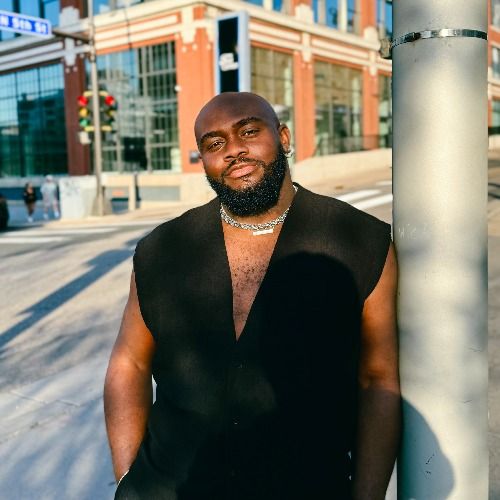
TRYFE on Stepping Into His Gift and Spreading Joy Through Music
In this episode of Odejuma, Harry is in conversation with TRYFE, the DJ, entertainer, and founder of the Viribus Foundation, about following a calling he never planned for. From Howard University to the White House and a Kamala Harris rally of thirty thousand, TRYFE has built a career out of one gift: walking into a room and giving it the joy it didn't know it needed. This is a conversation about love, loss, grief, mental health in Black, brown, and LGBTQ communities, faith and family, and the power of music to heal and connect us.
Connect with TRYFE on Instagram: https://www.instagram.com/mrtryfe/
See TRYFE in Minneapolis: https://app.opendate.io/e/pride-rooted-in-black-queer-joy-indigo-room-june-20-2026-703210
Connect with Harry on Instagram: https://www.instagram.com/harryitie
For more information on Harry, visit: https://www.harryitie.com/
Transcript
Hi, my name is Hariye and welcome to Odejuma.
Speaker A:Odejuma is an ishakiri farewell that loosely translates to till tomorrow.
Speaker A:But for me, I look at it as a promise that there is so much more in life to look forward to.
Speaker A:And this interview driven storytelling podcast is rooted in that promise.
Speaker A:So as you take the time to listen, I want you to feel that as we go deeper with folks from across the black diaspora, exploring the adventures, resilience, joy, and the ordinary moments that change their lives, that you would have a good, hearty laugh or you find something to sit with.
Speaker A:Because there is power in the stories of everyday people.
Speaker A:And these stories are worth telling.
Speaker A:Hey, y', all, how's it going?
Speaker A:Welcome to another episode of Odejuma.
Speaker A:I am Harry iti.
Speaker A:I'm super excited to be here with you today because I have a very exciting guest.
Speaker A:But before we get on, if you're watching on YouTube, don't forget to use the subscribe button.
Speaker A:If you're listening on Apple Music, Spotify, wherever you're listening, make sure you follow our podcast so that you can stay notified when we drop new episodes.
Speaker A:Right.
Speaker A:And so today, I'm going to get right in.
Speaker A:Our guest today is Trife.
Speaker A:He is a DJ and entertainer whose story goes from dreaming of a career in corporate America to being one of the most sought after black queer DJs right now.
Speaker A: e, a Kamala Harris rally, the: Speaker A:He's also the founder of the Vere Bus foundation, which raises awareness around mental health and black, brown and LGBTQ communities.
Speaker A:And on June 20, he's in Minneapolis headlining the Indigo Room Pride Month edition party.
Speaker A:So help me welcome Trife.
Speaker A:Hey, Trife, how are you doing?
Speaker B:What's going on?
Speaker B:I'm so excited.
Speaker A:I feel really good.
Speaker A:That was a very, very, you know, very, very impressive bio, Very impressive resume.
Speaker A:I'm so excited to get to speak with you today.
Speaker A: rst at First Lounge, DC Pride: Speaker A:Yes.
Speaker B:Really?
Speaker A:Yes.
Speaker A:It was such a. I had such a great time.
Speaker A:And, you know, pride is always a great time.
Speaker A:It's always fun and, you know, but I think that there was something about that, that set or that particular day that I was at first and at that party I was like, damn, this is such a great vibe.
Speaker A:Like.
Speaker A:And ever since then, I started following your career, you know, and I'm super Excited they're going to come to Minneapolis.
Speaker A:But before we get right into that, I want the people to know you a little bit more.
Speaker A:I just gave you a bio, but who's the person behind the.
Speaker A:The name and the person tried, you know, give us a little bit of insight into who, who you are.
Speaker A:A little bit.
Speaker B:Yeah.
Speaker B:I mean, from a little research about your podcast, you kind of want to know more about where we come from and where your guests started.
Speaker B:So I'll start there.
Speaker B:I am a little black gay boy from Dallas, Texas, and I, I am of Afro Cuban immigrants.
Speaker B:My dad is from Cuba.
Speaker B:He immigrated here with my grandfather who's a doctor, and he brought his family here.
Speaker B:My mother is from the Midwest and they met in Dallas.
Speaker B:I started in music.
Speaker B:I've been around music my entire life.
Speaker B:Like my great grandmother, my great aunts played for Cab Calloway.
Speaker B:They played at the Howard Theater, which I've played at in DC.
Speaker B:I started in music at the age of 6 playing the violin.
Speaker B:And I played the violin all the way through college.
Speaker B:I played for the New Conservatory of Dallas.
Speaker B:I played at Carnegie in Lincoln, and I did all those things.
Speaker B:And then when I got to college, I joined the Howard Gospel Choir where I got into singing and playing other instruments.
Speaker B:And then it wasn't until after I graduated college that I started DJing.
Speaker B:And I actually had no intentions of becoming a DJ.
Speaker B:I never wanted to be a DJ.
Speaker B:I literally fell into it.
Speaker A:But you fell into it.
Speaker A:And now like you are, you're, you're.
Speaker A:This is now your full time career, but you started playing music from like a kid and you said Carnegie Hall.
Speaker A:Like, did it ever cross your mind that, okay, fine, maybe I would be a professional, maybe classical artist or something, or was music not even on the radar at all?
Speaker B:I.
Speaker B:In Cal, in high school, I had the opportunity to join a performing arts high school.
Speaker B:It's Booker T. Washington Performing Arts High School in Dallas.
Speaker B:It's where Noah Jones went.
Speaker B:Erykah Badu went, Todrick Hall.
Speaker B:Really great, amazing school.
Speaker B:But my parents, I wanted to go there.
Speaker B:My parents were very much into me going into more academic studies, as most immigrant children's parents are.
Speaker B:And I went into a school, I got accepted to a school that was a law preparatory high school.
Speaker B:I originally had intentions of becoming a judge or an attorney.
Speaker B:And I went to Howard and I got to Howard as a pre law major.
Speaker B:And I went along that journey.
Speaker B:I think within six weeks I changed my major to tech because I landed this amazing internship and they were paying like amazing Money.
Speaker B:And I was like, oh, this is where the money is.
Speaker B:So this is my, this is going to be my major.
Speaker B:And that's how I got started into going down that tech world with my parents.
Speaker B:I wouldn't say that they didn't support me in my music career because they did.
Speaker B:They were at all of my events, they supported me paying for private lessons for anything that I wanted to do.
Speaker B:But they were very much, very adamant on you need to get a degree because music may not pay the bills, but this degree will.
Speaker B:And so they definitely pushed me in that direction.
Speaker B:And I just never had the intentions because I didn't think it was an option to be a full time musician.
Speaker B:I also felt like it wasn't lucrative enough to support me in whatever my future endeavors were.
Speaker B:So I just didn't go down that path.
Speaker B:But I was literally pulled back into it.
Speaker B:And when I started DJing, I actually downloaded some DJ software in college and I used to just play around with it and I would like make mixes and I would sometimes send it to my friends and be like, hey, what do you think about this?
Speaker B:What do you think about this?
Speaker B:I graduated.
Speaker B:My first job was with Johnson and Johnson, and I was living in New Jersey.
Speaker B:I was bored.
Speaker B:After work, I would just go to work, go to the gym.
Speaker B:And I was like, this can't be it.
Speaker B:So I went and bought a play.
Speaker B:Like, I wouldn't call it a play, but it was like 100, $200 turntable.
Speaker B:And every day after work I would just come home and I would mix.
Speaker B:And like, if my roommates at the time, if we had friends over, I would just mix.
Speaker B:And so one day somebody was like, hey, I'm having a cookout and would you be my dj?
Speaker B:And I'm like, well, I'm not really a dj, but I'll bring my computer and computer speakers and I'll DJ for you.
Speaker B:And I did like one of those.
Speaker B:And then someone was like, can you do my birthday party?
Speaker B:And I was like, I'm not a dj, but like, I'll come do that.
Speaker B:And then someone asked me to do their Halloween party in D.C. and so I went and bought like the big DJ speakers.
Speaker B:I threw them in my car, I drove to D.C. and I did that Halloween party in someone's clubhouse in dc.
Speaker B:It was an apartment building.
Speaker B:And in that party were two promoters.
Speaker B:And they walked up to me and they were like, do you do clubs?
Speaker B:And I was just like, sure, yeah.
Speaker B:I didn't even have a DJ thing.
Speaker B:Like, I was just like, yeah, Yeah, I do it.
Speaker B:Of course.
Speaker B:Yeah, I do it.
Speaker B: That was in: Speaker B: That was October: Speaker B: In November, December of: Speaker B:My very first club appearance was.
Speaker B:And it's so ironic because she was at Thirst about a month or two ago, four months ago, and I chatted with her about that, and, like, where I am now from when we took our pictures, I kind of.
Speaker B:Her picture is actually the very first picture on my Instagram.
Speaker B:You scroll all the way down from me that night, I was so scared.
Speaker B:I was so nervous.
Speaker B:And I just remember the promoters were just like, just.
Speaker B:Just.
Speaker B:Just do.
Speaker B:Just have fun.
Speaker B:Just do your thing.
Speaker B:And I text all my friends and, like, you know, I got through the night.
Speaker B:I remember I sat in the car and I was just like, I'm a dj.
Speaker B:And I went home that night.
Speaker B:I got to drive back to New Jersey, and I thought of.
Speaker B:I was thinking of a name.
Speaker B:I was like, I need a name.
Speaker B:Like, I have a name.
Speaker B:And that.
Speaker B:That's how I got started.
Speaker A:So where did the name Trice come from?
Speaker B:So it came from college.
Speaker B:It is short for trifling, so, you know, it is spoken correctly.
Speaker B:I've branded it so well where it doesn't scream that, but that is what it is short for.
Speaker B:In college, I. I joke a lot, and, like, I'm a jokester, and my friends should be like, oh, my gosh, you're so trifling.
Speaker B:And so I used to joke and be like, well, put some respect on my name and call me Mr. Trife.
Speaker B:And so friends should be like, there go Mr. Trife.
Speaker B:And that became my Instagram handle.
Speaker B:And so DJ Trife just was the natural progression.
Speaker B:And then that's why my Instagram is still Mr. Trife.
Speaker B:And I just kind of left it there.
Speaker B:And then as I started growing my brand outside of just DJing, when I started finding myself, like, the Potomac Housewives appearances and, like, hosting and, like, things like that, I was like, I think the DJ at the front is doing a disservice to me, especially when I got into, like, production.
Speaker B:I dropped the DJ probably about four or five years ago, and I just was, like, gonna be Trife.
Speaker B:And it's so weird to me because everyone calls me Trife now.
Speaker B:Like, that is.
Speaker B:That is my name.
Speaker B:When I walked into the White House, they were like, Mr. Trife is so great to have you.
Speaker B:And the only people who call me by my name are, like, my family members.
Speaker B:Like my mom and maybe my brothers and stuff, but even they refer to me as Trife if we're not at home.
Speaker B:It was the weirdest thing at first.
Speaker B:I used.
Speaker B:When people call me.
Speaker B:I'm like, why people call me Trife.
Speaker B:And now if someone doesn't call me Trife now, I kind of get a little upset, especially we're in public, because it's like, do you know how I built this?
Speaker B:This is my name.
Speaker B:I own it.
Speaker B:Like, I built it.
Speaker B:It has taken me to the highest places in the world.
Speaker B:This is my name now.
Speaker B:And, like, do not refer to me as anything else.
Speaker B:It reminds me like Tina Turner when, you know, when she got divorced and they were like, yeah, keeping Turner.
Speaker B:It's mine.
Speaker A:Yes, you.
Speaker A:You built it from the ground up.
Speaker A:You.
Speaker A:Your blood, sweat and tears.
Speaker A:That's your name now.
Speaker A:Yeah.
Speaker A:Okay.
Speaker A:Okay.
Speaker A:Shout out to that.
Speaker A:I'm very curious about you.
Speaker A:Talk about how, you know, being a DJ became just a part of, you know, what you were doing and who you were in the world.
Speaker A:How would you describe where you are now professionally, as an artist now?
Speaker A:How would you describe how your forms of expression, your forms of creativity, and how does that show up in your work?
Speaker B:Yeah, that's a great question.
Speaker B:And in an overarching word, I'm in a transition.
Speaker B:I'm in a. I'm in a big transition.
Speaker B:And I think that, like, I hope that you and I can sit down again about a year from now.
Speaker B:You and we have this conversation again, and I got you.
Speaker A:I'm looking it down right now.
Speaker B:Yeah.
Speaker B:Where I am a year from now, what I've done a year, like, later, I think it's going to be a really interesting conversation.
Speaker B:But to step back into the question.
Speaker B:The past four years or so have been probably the most difficult years of my life.
Speaker B:And it's mainly been me finding who I am and understanding my gift.
Speaker B:And on a personal note, like, I buried my dad, I buried my grandfather, I buried a stepbrother.
Speaker B:It was like every six to eight months, something was happening.
Speaker B:And I also stepped away from my job in corporate America, and I was extremely comfortable.
Speaker B:I was extremely comfortable.
Speaker B:I was making more money than anybody in my family had ever made.
Speaker B:So to walk away from that, that security and the thing that gave me my identity, like the money, the job, the title, the house, the cars, those things I felt were my identity and the journey, I was more concerned with that journey than the journey of Trife.
Speaker B:It was always that first, and then Trife was just something I did on the weekends, I'll be doing amazing things.
Speaker B:It was.
Speaker B:I always tried to minimize trife and maximize.
Speaker B:Even when I presented myself to people or if I was dating, I would say, this is who I am.
Speaker B:This is what I do.
Speaker B:I do that on the weekend, on the side.
Speaker B:Having to let go of that job, I had to let go of that identity.
Speaker B:And that started me on this journey that I am on now where people were asking, what do I do for a living?
Speaker B:I was like, damn, what do I do for a living?
Speaker B:Like, that's interesting.
Speaker B:So the first thing I had to understand was myself and who I was and what I came to this earth to do.
Speaker B:And I have a gift.
Speaker B:And my gift isn't necessarily just DJing, but my gift is spreading joy to people and doing that through music.
Speaker B:And I've done that through DJing, through singing, through the violin, playing the piano.
Speaker B:Like every instrument that I've picked up, I've been able to be a joy to people.
Speaker B:I don't think it has necessarily anything to do with my talent, but more or less everything to do with my gift to the world.
Speaker B:And once I started to understand why I was on this earth, then I started to understand what I should be focusing on and what I should be doing.
Speaker B:So when it came to trife, it no longer was performances anymore and gigs.
Speaker B:It was me walking into a room and looking at the room and filling the room out, which I feel is my gift is being able to fill a room and see what people need and give back to them.
Speaker B:So it wasn't what I had in my set or what I thought I was gonna go in there and play.
Speaker B:It was about what the room needed.
Speaker B:And I think the peak of me understanding that was the rally.
Speaker B:And we'll talk about that.
Speaker B:I know, at some point, but the peak of that was walking into a room with 30, 30,000 people and having hours to prepare and executing the goal that was there.
Speaker B:And the goal was to bring joy into the room.
Speaker B:And so you ask like, you know, where's my career now?
Speaker B:It's figuring out how to use my talents for good and to support myself.
Speaker B:So it's interesting that you say that you met me at Thirst Lounge.
Speaker B:And Thirst was at the time, my dad had just passed away maybe two and a half months before that.
Speaker B:So I was dealing with the transition, his transition.
Speaker B:But I had just started my new company, and Thirst was my first client.
Speaker B:So I have a consulting company, and we help restaurants, lounges and bars, corporations, and even small events.
Speaker B:I help them build out their Musical programming.
Speaker B:So if you own a restaurant or a bar and you want to book DJs, most people don't know, like, what DJs are going to fit the sound, the brand.
Speaker B:And it's like, what type of audience are you trying to bring?
Speaker B:Because the audience that you're looking for is connected to the music, not necessarily to the visible DJ or what they visibly look like.
Speaker B:And most people are stuck on the visible DJ or what, you know, they see on social media, so it's not a great connection.
Speaker B:And then understanding rates and markets and all that stuff is.
Speaker B:Which I know very well.
Speaker B:So I started that, and I've been able to continue to use my talent to bring that joy and to connect people and musicians and put them together in the right places.
Speaker B:That makes the most sense for both of them.
Speaker B:And so it brings joy to me because in the first year, that thirst was open.
Speaker B:I was there every Friday, Saturday and Sunday, all day, all night, sitting and listening, Sitting and listening and curating.
Speaker B:And then probably once a weekend or every other weekend, I would hop on the wheels.
Speaker B:So to answer your question, I'm definitely in a transition.
Speaker B:I've moved from being corporate trife to not just DJ Trife, but Trife the consultant Trife the artist Trife the performer.
Speaker B:All of that is changing now.
Speaker B:And so I'm very excited with, like, now that I'm on these things, the wheels are starting to turn in these places, and I see the opportunities and the doors and the roads that are opening where I ended up now.
Speaker A:Yeah.
Speaker A:And when you were speaking, I'm trying not to get emotional here, because you talk about grief, something that you.
Speaker A:I'm gonna share with you now.
Speaker A:A couple of days before I got to D.C. i think I got to D.C. on Thursday, and then, yeah, I got to D.C. on Thursday, and that was the Thursday that my sister had called me.
Speaker A:You know, my father had passed, like, that weekend out.
Speaker A:I was at D.C. black Pride, and I remember being there.
Speaker A:My family is.
Speaker A:My.
Speaker A:My.
Speaker A:My.
Speaker A:My.
Speaker A:My dad was in Nigeria.
Speaker A:I'm living here.
Speaker A:You know, you can't really do anything much.
Speaker A:And also, we had a very interesting relationship at that point in time.
Speaker A:And so it's like we had our.
Speaker A:I was going through a lot of emotions that weekend, but I was out with my friends.
Speaker A:And I remember I didn't go to see a show.
Speaker A:I went to, like, this.
Speaker A:I think it's a signature theater.
Speaker A:I think it's in Virginia or.
Speaker A:So I'd gone there.
Speaker A:I've seen a show that was about A gay guy and his immigrant father and how his father died, and he couldn't see a lot of things that he wanted to say to the father.
Speaker A:And then I was dealing with.
Speaker A:So that had.
Speaker A:That got me emotional.
Speaker A:And then I come out and then I'm getting a call that, you know, my dad had passed.
Speaker A:And I think that one.
Speaker A:And which is why I remember that day after so vividly, because I think that that was the only time I was away from, like, my friends.
Speaker A:You know, when you go to, like, this pride event, you know, you're your friends, you go to all the things together.
Speaker A:That was the only time I was by myself that I remember.
Speaker A:I took a walk from where I was staying.
Speaker A:I took it all the way down to Thirst, you know, feeling all the multiples of emotion, feeling a little bit of guilt that, you know, I am here, you know?
Speaker A:You know what I'm saying?
Speaker A:My father just passed.
Speaker A:Feeling like I shouldn't be feeling grief because of the kind of relationship that we had as father and son and going through, you know, that I shouldn't really be grieving the way I am because of our relationship, but also feeling the emotions that, you know, I am still sad that, you know, this person who was a huge part of my life is gone.
Speaker A:And then going into this lounge and then having, like, the best time of my life because of the music.
Speaker B:Right.
Speaker A:And you.
Speaker A:I'm just hearing you talking about how your goal was to bring joy and just, like, the reason why I went to a bunch of parties that weekend.
Speaker A:But there are some things that stick to me about that weekend.
Speaker A:There is, you know, the play that I saw before I heard the news, and there was my time at Thirst.
Speaker A:And so it's like you are doing what you're doing.
Speaker A:You are providing joy to people.
Speaker A:Because in that moment in time when I was dealing with a very tumultuous life situation, you know, you hearing you.
Speaker A:And I think.
Speaker A:What's his name, Amorphous also played afterwards.
Speaker A:Like that.
Speaker A:Yeah, yeah, yeah.
Speaker A:So I think that.
Speaker A:That I was like.
Speaker A:I was trying.
Speaker A:I was like, this is.
Speaker A:It feels very.
Speaker A:It's taking me back to that moment.
Speaker A:And also hearing that you've also.
Speaker A:You're also dealing with your own grief.
Speaker B:At the time, you know, emotions.
Speaker A:Yeah.
Speaker B:So, you know, you.
Speaker B:You don't know what people are going through.
Speaker B:You just think that, you know, the day is happening and it's never typically that easy, that simple.
Speaker A:Yeah, it's never.
Speaker A:And I think that, yeah, it was.
Speaker A:It was such a. I don't Think anybody understood where I was at, you know, But I think so.
Speaker A:My friends knew I was dating again at the time.
Speaker B:We were, we were there in that room together.
Speaker B:We were both experiencing that.
Speaker B:Yes, we were both experiencing that.
Speaker B:Thirst was built.
Speaker B: Thirst opened up December of: Speaker B:And they asked me to join them.
Speaker B:And I was like, I don't know, I got too much stuff going on.
Speaker B:And my father was passing in Texas, so it required me to fly back.
Speaker B:So every weekend I would go be by my father's side and then fly back to Thirst.
Speaker B:And then I continued to do that, to handle his affairs.
Speaker B:And so I was.
Speaker B:It was still very fresh, just for me as it was for you.
Speaker B:Because as soon as I left Thirst, I was getting on a plane and I was going back to handle those affairs.
Speaker B:I'm glad you shared that with me because, you know, we don't know when you're.
Speaker B:When you're sharing, you don't know how you're impacting people.
Speaker B:But yeah, to know that you were going through that too, it just, it means so much because we were just.
Speaker B:We were in there and we were having a good time and like the emotions and all the things moving, but you just, you never know.
Speaker A:Yeah, I remember.
Speaker A:You know, I remember I was close to the DJ booth.
Speaker A:There was a mirror there, right.
Speaker A:You know, and I was.
Speaker A:I was having so much fun, but I was still in the meat, in the middle of the grief, you know, and, you know, I don't talk about this in a while, but it's like just having to deal with that in that space and not having anybody.
Speaker A:I feel like music is very healing, that people don't like to like something about music, you know, and there are different times on the dance floor.
Speaker A:I would think about him and I would smile.
Speaker A:It was such a very interesting time.
Speaker A:And I think I'm curious, how are you dealing with your, you know, you've had back to back grief.
Speaker A:How are you dealing with, how are you navigating?
Speaker A:You know, because grief is hard and you know, like, I see I'm getting flustered myself.
Speaker A:It comes in waves.
Speaker A:You can't really control it.
Speaker A:So how are you handling yours in the moment?
Speaker B:I.
Speaker B:Everyone has to find the thing that works for them best for me is stepping away and kind of turning inward.
Speaker B:And I heal myself the best.
Speaker B:I tried to let other people heal me.
Speaker B:It doesn't quite work the same.
Speaker B:I just Got to step away and do that.
Speaker B:And so, I mean, you, you.
Speaker B:We've been following each other for the past like two years or so.
Speaker B:So I go through these spurts where you see me.
Speaker B:I'm very visible, I'm everywhere.
Speaker B:I'm doing a lot of things and then I'm gone.
Speaker B:And typically that is when I need some time for myself.
Speaker B:And so I.
Speaker B:And that's the.
Speaker B:And I think that, like, it makes me so grateful that I'm.
Speaker B:That I don't work at like a 9 to 5 because it allows me to say I need a couple weeks.
Speaker B:Like I don't need a day.
Speaker B:I need a. I need to go sit down on the couch for a week and a half and shut my door and just let it out.
Speaker B:I do that.
Speaker A:My.
Speaker B:I take just time just to, to, to be still and to disconnect because I feel everybody's emotions.
Speaker B:That's my gift, is feeling emotions.
Speaker B:And so sometimes I need to step away from all of that.
Speaker B:The second thing that I do is the gym.
Speaker B:Now it is my saving grace.
Speaker B:And I look at the gym as a part of my job.
Speaker B:So everybody has.
Speaker B:You may have your 10am Stand up meeting every day.
Speaker B:I have my 10am gym.
Speaker B:So regardless of what I got going on, regardless if I'm depressed or whatever, I get up and I go to the gym.
Speaker B:And it could be a great workout, it could be a bad workout, but it does multiple things.
Speaker B:It gets me out the house, it gets me moving.
Speaker B:If I just go sit in the steam room or just go sit in the sauna, or I'll just go stand on the StairMaster for 30 minutes or 40 minutes.
Speaker B:And sometimes it's bad.
Speaker B:Sometimes I'm just climbing until I don't feel like climbing anymore.
Speaker B:And I'll stand on there in time, exhausted and sleep.
Speaker B:Because, you know, if you, if you're grieving, sometimes you can't sleep.
Speaker B:And so if you go exhaust yourself, you can sleep.
Speaker B:And I, I told my therapist this.
Speaker B:I was like, well, you know, it may not be healthy to exhaust myself on the Stairmaster.
Speaker B:But I was like, I feel like there are more unhealthy things that I could be doing.
Speaker B:Like, worst case is I lose a little weight and my heart gets stronger like worst case here.
Speaker B:So I do that.
Speaker B:The final piece is I find my own joy.
Speaker B:And what I had to learn, especially in my 20s when I dealt with more like more of my major depressive episodes, is that I can't rely on anybody else for my joy.
Speaker B:I can't rely on my mom.
Speaker B:I can't rely on my friends.
Speaker B:That joy is 100% my responsibility.
Speaker B:And I don't like to use the term, like, ain't nobody coming to save you, because that's not necessarily true.
Speaker B:Somebody may come save you, but you, only you can save yourself.
Speaker B:Someone may come to the water while you drowning and offer you a life raft, but, like, you still gotta do a little work to get yourself out that water.
Speaker B:So my way of finding joy is at my house.
Speaker B:Like, I have an amazing sound set up and lighting set up throughout the entire home.
Speaker B:And it could be a Tuesday night, and I will have my favorite songs blasting.
Speaker B:Okay.
Speaker B:And I'm twirling around in the mirrors.
Speaker B:I'm singing and dancing.
Speaker B:I grab my stage fans sometimes and I set them up and, like, it is a full production and performance.
Speaker B:And it's one rehearsal.
Speaker B:Hey, right?
Speaker B:But two, it's just.
Speaker B:It's me getting that anxiety out, it's getting that movement out, and it's feeling the music.
Speaker B:Cause the music has never led me wrong.
Speaker B:Like, the music has never left me wrong.
Speaker B:And music is frequency.
Speaker B:So, you know, you need to pump some of those high frequencies.
Speaker B:That's why house music is, like, scientifically good for you, because it's.
Speaker B:It's about where your heart rate is supposed to go when it's up and it's excited and it's moving.
Speaker B:At 125bpms is a excited heart rate.
Speaker B:So you get the heart moving at that rate, and, like, now you are literally in tune with some upbeat music.
Speaker B:And so you are effectively upbeat.
Speaker B:Mm.
Speaker A:And I think that just kind of leads me into your foundation.
Speaker A:Right.
Speaker A:And I was gonna go somewhere else, but I feel like since we're here on the topic of mental health, we might as well just go right into your foundation that is raising awareness for mental health amongst black, brown, and LGBTQ communities.
Speaker A:Can you talk about that a little bit more?
Speaker A:When did you.
Speaker A:What.
Speaker A:What inspired that and how was that process, like, be running this foundation so far alongside your artistic career?
Speaker B: it was officially founded in: Speaker B:Like, it became a 501.
Speaker B: the work, I think started in: Speaker B:I used to have really managed really bad depression, and, like, I've tried to take my life more than once, and it just.
Speaker B:In my late teens and into my 20s, most of my 20s, I was just lost, and I just didn't really know who I was I was really fighting being trife and being this big creative thing and my gayness and like, all of that and just leaning into that.
Speaker B:And so I started this event called the Pumpkin Patch.
Speaker B:And at first it was just a pumpkin carving event where, like, my friends got together, we dressed up and we carved pumpkins.
Speaker B:And so then the second year I did, and I was like, well, you know, I want to elevate.
Speaker B:I'm gonna have to charge for it, but I don't really wanna make money off of this.
Speaker B:And I was like, well, I need a cause.
Speaker B:And I was like, okay, well, I'm gonna donate to Taraji's Boris P. Henson Foundation.
Speaker B:She started a foundation for mental health, which kind of laid the groundwork.
Speaker B:And I think I knew what I wanted to do, but I was kind of afraid to step into that.
Speaker B:And then when I got to my 30th birthday party, I decided to throw a gala and to make the whole thing a fundraiser and to officially launch my foundation there and to officially tell my story.
Speaker B:I thought it would be important to tell, to show people that, like, even though outwardly I was the pillar of success, I had the degrees and all the nice material things and the jobs and DJing was going very well for me.
Speaker B:I was very accomplished in that.
Speaker B:But on the inside, I was a fucking mess.
Speaker B:Like, I had a therapist, a psychiatrist, I was on antidepressants, I was on Adderall.
Speaker B:Like, I was on all these drugs and had all this whole team of people to just to get me up in the morning, to get me through my week.
Speaker B:So I wanted to share that.
Speaker B:I was tired of hiding that.
Speaker B:And the other thing is, I wanted to hopefully.
Speaker B:I don't use the word inspiration because I don't want to use myself as say I was a pillar of inspiration.
Speaker B:But I did want to let people know that, like, you can.
Speaker B:Depression doesn't look like what you think it looks like.
Speaker B:Like there are very high functioning people who are carrying depression, especially people who have the financial means to get all the help to make better.
Speaker B:I had the dermatologist and all the things, so I didn't look like what I was really going to.
Speaker B:And that was just because of material things.
Speaker B:I also wanted to inspire people to, like, not give up, that if I had gave up or had accomplished those things, those horrible thoughts, ideations that I had, I wouldn't have done the things that I was supposed to do.
Speaker B:I wouldn't have given so much joy to people that I have in all these years.
Speaker B:So when it came to that foundation, I thought that that was the first thing was to share the awareness and to make it okay.
Speaker B:Like, my goal at the time was it wasn't to get off of meds.
Speaker B:It was to tell people, I take antidepressants.
Speaker B:I want y' all to know that.
Speaker B:Like, and if you need antidepressants, you should get them too.
Speaker B:I have a therapist.
Speaker B:I have a psychiatrist.
Speaker B:So if you, if you, if someone's told you to talk to somebody, you, you need to go do that.
Speaker B:And this is what it looks like, it's okay to do that.
Speaker B:That was the initial goal.
Speaker B:And then once I realized that, yeah, you, you are recommending these people to do things, but can nobody afford that?
Speaker B:Like.
Speaker B:And so then it turned into, how do we raise money to help provide these things?
Speaker B:So I started partnering with black psychiatrists and therapists because there's a slew of them, a plethora of them in the D.C. area.
Speaker B:And we would, we set rates prior and then we would raise funds and then we would.
Speaker B:The foundation would write checks directly to them.
Speaker B:So I was supporting black owned businesses, supporting black doctors.
Speaker B:I was supporting also people who were my friends and their practices and paying their market rates.
Speaker B:But what we were able to do is say, what, somebody comes to you and they're black, brown, lgbtqia, then offer them six months of services, not one or two sessions, because that's not going to be enough.
Speaker B:Offer them six months of services and we'll take clients on a six month basis.
Speaker B:And so I'd rather help one person get through a journey and find some type of closure than offering multiple people one or two appointments.
Speaker B:And so that's how that started.
Speaker B:It started with me kind of wanting to just share and raise awareness to that and try to make it okay to people.
Speaker B:Because at that time, I want to say 10 years ago, it was a taboo for black men to have therapists.
Speaker B:You know, mental health is a big thing now, but then it was not.
Speaker B:And so once mental health started to become a platform that I saw that more people were open to, I shifted to how we can help finance that.
Speaker B:And then last year we shifted the foundation again a little bit more.
Speaker B:So I'm now seeing my foundation as more as something that is for my community, but for what we need in that moment.
Speaker B:So, yes, we still raise funds through our events through to.
Speaker B:For mental health, but we started an event last year for the Congressional Black Caucus weekend.
Speaker B:And I've been in here and see, I don't want to say how old I am, how many Years.
Speaker B:But I've been here for a while.
Speaker B:And one thing I noticed is that during the Congressional Black Caucus weekend, which is huge for black people, like the parties, all of the things, and we as gay people, black, gays, lesbians, lgbtq, we were completely shut out of that weekend.
Speaker B:Like, we were accepted to be in the background, a part of stuff.
Speaker B:But the panels always stopped short of our rights.
Speaker B:They always stopped short of the things that we needed.
Speaker B:Even the parties, like you have parties for every state and every organization, but they stopped short of us.
Speaker B:And the biggest thing that hurt me was no one recognizes the people that are doing the work for our community today.
Speaker B:So I think of Vinton Jones, who's a Texas House rep friend of mine, too, from high school.
Speaker B:He is one of the first black gay men to be a rep.
Speaker B:Openly gay man.
Speaker B:And no one speaks about the work that he's doing for our community.
Speaker B:Or Hope Giselle or Zachary Parker, the D.C. council member here, or Twiggy Garcon or George, you know who Emmy nominated or even George Johnson, who is one of the number one banned books in the country for All Boys Aren't Blue.
Speaker B:Like, no one is talking about the work and the advocacy and the policy work that they're doing.
Speaker B:So we are.
Speaker B:I now work with my foundation at three places.
Speaker B:Awareness, the Mental Health Awareness, raising the funds and then honoring recognition and honoring.
Speaker B:And I think it's important that we recognize and honor the people who are doing the work in our community but are going unannounced.
Speaker B:And I even go further back to think of Marsha P. Johnson or Sylvia Rivera like, they started Pride.
Speaker B:They started that riot at Stonewall.
Speaker B: And then that was in: Speaker B: And then in: Speaker B:And, you know, that goes into why we have black prides and white prize around the country.
Speaker B:But that's a good conversation.
Speaker B:But to answer your question with the foundation, that's why I got started.
Speaker B:That's how we started.
Speaker B:And this is kind of where we've grown over the past few years or so to do awareness, funds and then recognition.
Speaker A:I'm going to go.
Speaker A:I'm going to go on a tangent a little bit.
Speaker A:And I feel like this is such great conversation that we're having.
Speaker A:And I just really love how you approach not just your art, but your advocacy work and everything.
Speaker A:I'm going to ask you about your advocacy and why it's important for you to do advocacy with your art.
Speaker A:But before I do that, I'm curious about.
Speaker A:I want to have a little Black Pride conversation, right?
Speaker A:Because Black Pride was trending.
Speaker A:It's trending.
Speaker A:And I talked about seeing you a Black Pride in D.C. black Pride was trending.
Speaker A:And I feel like in our.
Speaker A:In black queer spaces, we have this.
Speaker A:Converse a lot about how Pride, it feels like, has lost its essence.
Speaker A:You could correct me if I'm wrong.
Speaker A:You know, if we.
Speaker A:If we.
Speaker A:You know, we might disagree.
Speaker A:And I feel like.
Speaker A:I feel like partying and joy is a part of our resistance, is a part of who we are and a part of queer culture that, despite of, we're still going to thrive.
Speaker A:I'm from Nigeria, where there are laws criminalizing being queer, and that's why I was raised, you know what I'm saying?
Speaker A:So I understand the need for spaces of joy.
Speaker A:I also believe that, you know, Pride events should be accessible to everybody.
Speaker A:I feel like.
Speaker A:I'm not saying don't charge a cover fee.
Speaker A:I'm not saying don't.
Speaker A:You know, I feel like people should be able to come to a Pride event.
Speaker A:I'm not saying a party that you are throwing on a random Tuesday on.
Speaker A:In August or a party you're throwing on a random December Christmas party.
Speaker A:Right?
Speaker A:If you're.
Speaker A:If we're doing a Pride celebration, you know, because Pride was a march.
Speaker A:You know, we talked about Masha P. Johnson and all these people.
Speaker A:The first Pride was a march.
Speaker A:If we're going to have Black Pride that you started because of exclusion, it should be accessible, and we should try to make it accessible.
Speaker A:And there's a whole.
Speaker A:There was a whole conversation, you know, over the past couple of months.
Speaker A:D.C. black Pride was the forefront of that conversation.
Speaker A:I want to hear your thoughts about what you feel about Black Pride accessibility.
Speaker A:As someone who is actually in the know, who actually does events, who actually understand both sides, it seems like.
Speaker A:So I want to hear your thoughts on that conversation that was going on.
Speaker B:Yes, this.
Speaker B:I won't say D.C. i won't.
Speaker B:I won't say D.C. and I will say Black Pride has lost its essence or it has changed to be, you know, more along the middle ground.
Speaker B:And I do understand both sides of the conversation because I am a promoter in the sense that I thrown my own events, and I've thrown them in D.C. and some of the events that I've thrown, I've been on the hook for $20,000 between venue fees.
Speaker B:Like, I'll give you an example.
Speaker B:The party I did, the Beyonce party I did last July, the Great American Dance Party, the after party for Cowboy Carter.
Speaker B:That venue fee was like five grand.
Speaker B:And then the bar minimum.
Speaker B:So that's.
Speaker B:You have to pay that regardless just to open the doors.
Speaker B:It's five grand.
Speaker B:And that really pays for like security, sound team, lighting team.
Speaker B:The venues aren't just like.
Speaker B:I mean, they're making money, but they're not just hitting you over the head for just crazy bullshit numbers.
Speaker B:Right?
Speaker A:Yeah.
Speaker B:Then the other thing is the minimum of the venue.
Speaker B:So they had a minimum spend and the minimum spend is 15,000.
Speaker B:So now the venue holds, can hold 6, 700.
Speaker B:Right.
Speaker B:You know, you do it all.
Speaker B:If you do it perfectly, everybody walks away happy.
Speaker B:But in the event that you do not, you can walk away on the $5,000 to the venue.
Speaker B:Whatever the difference is that you didn't make to that venue fee, which, you know, let's say nobody showed up.
Speaker B:That's 20k that you're in the hall.
Speaker B:And now did you hire dancers?
Speaker B:Did you hire graphic artists to design the stuff?
Speaker B:Did you hire DJs?
Speaker A:Yeah.
Speaker B:So you see what I'm saying that like, it is a.
Speaker B:You have to put up and sign your name on a dotted line.
Speaker B:Especially for big events like Pride, you know, people get upset about, well, the venue wasn't big enough.
Speaker B:It couldn't hold all these people.
Speaker B:Well, if you want to plan to hold that many people.
Speaker B:And now you got to think about security requirements.
Speaker B:It's like every, you know, 100 people, 150 people, you need another person.
Speaker B:So you got 5,000 people.
Speaker B:You do the number on how many security guards you need.
Speaker B:And then for every regular security, you gotta add a real police officer.
Speaker B:And the hourly rates for all those people to pay them livable wages and respectable wages, it can get very, very, very, very expensive.
Speaker B:So I understand the charging part for today, the gouging, the price between, you know, making your money and gouging, that's a topic of conversation.
Speaker B:The other thing that I.
Speaker B:And I'm gonna switch back to the patron side in a second.
Speaker B:The other thing that I think people are not aware of is that Black Pride does not receive the same sponsorships as White Prides.
Speaker B:So when you go to regular Pride, things that you see, or just general, I'm gonna say general Pride.
Speaker B:When you go to General Prides in June, typically corporations write huge checks.
Speaker B:And in the black Prides, you, Gilead, will write the checks.
Speaker B:Shout out to them, they've written checks to my foundation events.
Speaker B:But like Hennessy may send you a couple bottles like, but you are not seeing the 10,000, $20,000, $30,000, 40, $50,000 checks that these corporations are writing for General Pride.
Speaker B:So our promoters are putting up a lot of risk, a lot of risk.
Speaker B:And you know, it takes one girl on the Internet to tear down a party and now they 20k, you know, so that is the other side of it.
Speaker B:And but when it comes to our, the, the, the sense of pride, I do think we kind of lost it.
Speaker B:And not just in the sense of places where we celebrate joy, but places where we are all celebrated.
Speaker B:And I think that has less to do with black people or pride or gays, and more to do with capitalism and where the market is today.
Speaker B:And I've had a really great seat in seeing DC change.
Speaker B: When I started DJing in: Speaker B:Gays were not really allowed in the top spaces in the city we were put in.
Speaker B:That's why you had more queer owned clubs back then.
Speaker B:And you starting to see thirst coming back.
Speaker B:But there was an era where we, where they no longer were needed or wanted.
Speaker B:And so when black gay clubs like the Mill, the Bachelor's Mill in dc, which is one of the longest running, oldest black queer clubs in the country, Lace Lounge, a lesbian Spa Secrets, I don't think that was black owned.
Speaker B:But those places were needed because you could not go and be gay in a regular public space, let alone.
Speaker B:And during the daytime, like day parties, like that was a no.
Speaker B:Venues were not opening the doors to you.
Speaker B:They don't care how much money you promised them.
Speaker B:It was not happening.
Speaker B:And then when it came to city planners, all of the gay spaces were not in the most desirable places in the city.
Speaker B:So you think about D.C. all those gay clubs I mentioned were all in Southeast D.C. where the stadium is today.
Speaker B:The tracks, it was huge.
Speaker B:If you get on YouTube and you type in the tracks, the Tracks was the largest black gay club and like on the east in D.C. for the very long time, it was over there also down there by where the Nash Stadium is.
Speaker B:And so when they built that stadium, as typically happens with black people, they tore all of the gay clubs in the areas where all the gay clubs were.
Speaker B:So black people then were only allowed to be in our spaces and they were constantly attacking our spaces.
Speaker B:And so we had this need.
Speaker B: Now in about: Speaker B:Then it changed its name to Love nightclub in D.C. huge, like five floors.
Speaker B:And the gays were like, wait, what?
Speaker B:We get to go to like the big straight club?
Speaker B:Like, what?
Speaker B:And you know, the gays, we don't really do dress codes because, like, how can you police trans people?
Speaker B:And like, you, you gonna get the mess.
Speaker B:Stay away from the dress codes.
Speaker B:And so it was the first time that the gays were allowed to go into a predominantly straight space.
Speaker B:And we were not subjected to the dress codes, but we were allowed to be ourselves.
Speaker B:And the owner of that club, I'm just not saying names of the parlors, the owners, just not that ignorance, but just not to say their names.
Speaker B:They made so much fucking money because there's a whole demographic of educated people in this D.C. area with disposable income.
Speaker B:And then the next year they went to the park.
Speaker B:And I am going to say the park.
Speaker B:And I'm going to say Mark Barnes, because he opened his doors to us.
Speaker B:And the park to this day still has that day party.
Speaker B:And it runs for like 12 hours from like 3pm to 3am because of the amount of money that was spent from us.
Speaker B:And once Mark, and Mark is the, I will say, one of the number one nightclub owners in the country.
Speaker B:If you own a major nightclub in the United States of America, you most likely know the name Mark Barnes.
Speaker B:Especially on the east coast.
Speaker B:They saw what he did, they saw how much money he made.
Speaker B:And then overnight DJs were allowed to go in other clubs.
Speaker B:And so there was even a change for me as the DJs who came before me.
Speaker B:Like, well, DJ Cedric is still obviously working, doing amazing, but like, Cedric is my.
Speaker B:Has been DJing as long as I've been alive.
Speaker B:But Cedric was not allowed into all of these other spaces because his audience and the girls he worked with were gay.
Speaker B:So when you saw that shift, this is kind of where pride started to shift as well.
Speaker B:Because now the gays are in the venues we wanted to be in, like D.C. at Rose Bar and like all of the nice places that you went with your straight friends and that the black straight crowds could go to.
Speaker B:You now had that access as gay promoters.
Speaker B:Which also is why now our black gay spaces started to close.
Speaker B:Because no one wanted to go to the hole in the walls and the hole in the corners of the city where I can be at the top of the line venues.
Speaker B:And then you introduce, you know, section culture and all those other things.
Speaker B:Now that's where the price change for promoters happens.
Speaker B:Now promoters have crazy minimums.
Speaker B:The gays back then just said, come on Like, y', all, come on.
Speaker B:We didn't have crazy bar minimums because we didn't have crazy overheads because we didn't have crazy rents because we were not in these top tier places.
Speaker B:And so you start putting these venues and now we're at the Bullpen and the Howard Theater if you're in dc, like, and I'm just mentioning all these huge large venues, culture or AI, they all have huge minimums and overhead costs.
Speaker B:And so those costs have to be passed on to the patrons.
Speaker B:And so I think that, like, and then, you know, the gays want celebrities.
Speaker B:Now I have a bone to pick about celebrities.
Speaker B:I hate that we always pick women who are not allies in our community and we don't, we don't book the gays in our own community.
Speaker B:And we argue with gays and the artists about their rates.
Speaker B:But we'll drop 30k for a reality star to come sit and drink.
Speaker B:I'm gonna leave that there.
Speaker A:I with you.
Speaker A:I with you on that one.
Speaker A:They don't need to be our pride, like, what are they.
Speaker B:Are gangs.
Speaker A:Yes, money.
Speaker B:And that's when we spend the money we need.
Speaker B:The money need to be in our pockets.
Speaker B:But like, I've gotten to a lot with promoters who would argue me down over paying me my rate.
Speaker B:But would in the same party drop 30k for a reality star, someone who can't even perform and expect me to do the heavy lifting of the whole party while they just sit there for an hour and a half?
Speaker B:Mind you, they not staying for two, three hours, hour and a half and they out.
Speaker B:But so it's two sides to the story when it comes to why pride has changed.
Speaker B:Yes, gays want to be in the same venues or not the same venues.
Speaker B:We want to be in the A list.
Speaker B:Venues with the amazing sound, the amazing lighting, the amazing views.
Speaker B:We want that.
Speaker B:And to have that comes at a cost.
Speaker B:And the promoters are not going to put that cost outside of their profits either profits away to give us that benefit because they could go to the other venues and or the less desirable venues and give you that same party with the same DJs and all those things.
Speaker B:But you don't want that.
Speaker B:And you know, we went through that with promoters.
Speaker B: arted to pick up between like: Speaker B:Like you couldn't be.
Speaker B:It wasn't darken at night.
Speaker B:You wanted rooftops and so you get those venue prices and Those venue drinks and promoters don't set drink prices.
Speaker B:So, you know, it's, it's the trade off to Pride.
Speaker B: ide is so big, prior to DC in: Speaker B:Like maybe a competing party, two parties on Saturday night.
Speaker B:And, you know, but it was a lineup of like six or seven parties for the entire weekend.
Speaker B:Pride in D.C. is now, there are, at any given moment, from Thursday Until Monday, in 24 hours, we're talking from 4pm until 4 or 5 in the morning, there are at least four parties.
Speaker B:At least.
Speaker A:You need a spreadsheet.
Speaker B:You need spreadsheets to understand, like, what is really happening here.
Speaker B:And that is just for the men.
Speaker B:There's a lesbian side of it.
Speaker B:And then there's like the after hours and there's the house after hours, the circuit after hours, the hip hop after hours.
Speaker B:And like there's all these things, all these venues.
Speaker B:And now these venues are also aware of these weekends and the amount of money that's coming through.
Speaker B:So they're increasing the minimum to have these spaces, you know, rent these spaces.
Speaker B:So it's, it's.
Speaker B:I don't think it's one person.
Speaker B:There is a little bit of greed in it.
Speaker B:There is a little bit of that, you know, there's all of that.
Speaker B:But it is just.
Speaker B:It comes with the territory of the change.
Speaker B:If Pride is no longer in predominantly gay spaces and less desirable venues, elite or less expensive venues, we're now in the largest venues in the city in the most desirable places.
Speaker B:And then you have to remember it's the most desired, one of the most desirable weekends.
Speaker B:It's Memorial Day weekend.
Speaker B:So gays are not just competing with the gays anymore, they're competing with just straight people anymore.
Speaker B:You are competing with your West African parties, you know, your Afrobeats, your piano parties.
Speaker B:They have that weekend too.
Speaker B:Now the Latin in dc, they have like a double DC with Pedro Knight.
Speaker B:He, he has this whole Latin thing and like a Caribbean feel and that's his whole following.
Speaker B:And then you still have white people and you still have, you know, you're Asian, predominantly Asian.
Speaker B:And then I even think about, like, you're Persian, you're Middle Eastern.
Speaker B:Like, they still have their huge parties.
Speaker B:And so the gays didn't just grow in the past 10 years or so.
Speaker B:All of the other small demographics also did.
Speaker B:The thing that did not grow is dc.
Speaker B:And so we're speaking about then.
Speaker B:That's why it's more expensive and that's why it's more competitive and it's harder every year to get into these venues because it's just grown to something that is just entirely so large.
Speaker B:And it's not really just DC anymore that experiences this almost every major city.
Speaker B:Probably the only cities that don't really see these issues are maybe New York, because it can handle capacity to do stuff like that.
Speaker B:But any place that's in the south, you know, Dallas is now dealing with Juneteenth being a pseudo pride thing, which Juneteenth has been going on for 30 years.
Speaker B:And Dallas Pride is not Juneteenth Weekend, White Pride or General Pride.
Speaker B:And Black Pride is in the fall when it's cool.
Speaker B:So, you know, it's like it's all these things and people are trying to manage it, but there is a cost that comes along with it and it's going to get passed over.
Speaker B:So if the gays want to get back to partying and dance floors, then they got to step away from wanting the ballot service and the sections and the super gorgeous venues.
Speaker A:You don't.
Speaker B:At the.
Speaker B:At the same cost.
Speaker B:It just doesn't happen that way.
Speaker A:I feel like I'm so happy and I thank you for breaking it down the way you did.
Speaker A:I feel like I have a little bit more empathy now because I feel like I was thinking to myself that, you know, and I. I would say I love.
Speaker A:I feel like DC Black Pride is a time we recommend everybody goes at least once in their lifetime.
Speaker A:It's a great time.
Speaker A:It's always so much fun.
Speaker A:You meet people from everywhere.
Speaker A:But I always tell people that the reason why I love Atlanta Black Pride as well, is because you.
Speaker A:There's something.
Speaker A:It doesn't feel like it's trying to be extra performative.
Speaker A:It doesn't feel like.
Speaker A:I know some people are greedy or whatever, but it feels like, you know, you can find.
Speaker A:And I think even with me, I just started my own creative.
Speaker A:I feel like I don't like to call myself a promoter because I feel like that that's a little.
Speaker A:I don't want to box myself in that.
Speaker A:But I feel like my goal is to curate spaces in Minnesota, in the Twin Cities area, for black queer people.
Speaker A:So it could be a showcase, a theatrical showcase.
Speaker A:It could be a nightlife.
Speaker B:A creative curator.
Speaker A:Yes, a creative curator.
Speaker A:Yes, exactly.
Speaker A:And so we have, like, different series.
Speaker A:We have the nightlife series that you're coming for.
Speaker A:We have all these things and trying to make it accessible.
Speaker A:And I get it.
Speaker A:I get, like, venue even in Minneapolis.
Speaker A:Here, it's still hard.
Speaker A:You have to cover minimums if you want the premium venues, you know, which I cannot afford.
Speaker A:You know, you have to pay your.
Speaker B:Price as well or take that risk on ticket sales.
Speaker B:And.
Speaker B:Yes.
Speaker A:So you know what I'm saying?
Speaker A:But I also feel like.
Speaker A:I feel like.
Speaker A:Like you.
Speaker A:Like we've, like, our theme throughout this conversation.
Speaker A:Joy is what moves us through as black queer people.
Speaker A:We're dealing with a lot.
Speaker A:We're carrying a lot of trauma, a lot of, you know, the joy.
Speaker A:The dance floor is supposed to be for everybody.
Speaker A:You know what I'm saying?
Speaker A:That is where we.
Speaker B:We don't have dance floors.
Speaker B:That's the problem.
Speaker B:Most movies you book today don't have dance floors.
Speaker B:Like, that's typically the hardest thing when I'm trying to find you is like, can y' all show me pictures of the dance floor?
Speaker B:And they're like, people just dance around the bar.
Speaker B:And I'm like, babe, this is a bar.
Speaker B:This is not a club.
Speaker A:I went to a party in Houston.
Speaker A: I think it was: Speaker A:I got into the venue and it was all sections.
Speaker A:I'm not even exaggerating.
Speaker B:Houston is the worst.
Speaker B:Houston and Atlanta are the worst when it comes to sections, which is like, bro, where am I supposed to dance?
Speaker A:I don't want a section.
Speaker A:I'm just here by myself.
Speaker B:I came here alone.
Speaker B:Awkward to not have a section.
Speaker A:Yes.
Speaker A:And then I'm not standing awkwardly by the bar, and I can't even really dance because nobody's dancing.
Speaker A:Everybody's just in the section or getting a chance.
Speaker B:Well, if I can't get a section and I can't have a good time, I can't go to no party section.
Speaker B:And I'm like, well, if you need somewhere to sit down, you aged out the club.
Speaker A:I am screaming.
Speaker A:I am screaming.
Speaker A:But trife.
Speaker A:Yes.
Speaker A:From the Met Gala after party.
Speaker A:And now you're coming to Minneapolis to perform and DJ at Indigo Room, the Pride Month edition.
Speaker A:How you feeling about, you know, being in the Midwest and coming to, you know, party with the black queer folks of our city?
Speaker B:I'm very excited to be in Minneapolis.
Speaker B:I'm very excited to be at the Indigo Room.
Speaker B:And for me, over my career, I've seen prides grow.
Speaker B:So, you know, when I started, there was Miami, Splash, DC Pride was kind of a thing.
Speaker B:And, like, Houston kind of had something going on, but that was pretty much it.
Speaker B:LA had a little something, and obviously everybody was going to Atlanta.
Speaker B:Right?
Speaker B:You know, Atlanta and Miami were the big.
Speaker B:The hot spots for pride.
Speaker B:But you didn't really see huge pride celebrations in places like Philly or Baltimore, Dallas, the Carolina, Chicago, Minneapolis and Vegas.
Speaker B:But now you are.
Speaker B:And so even like Boston has Frolic Weekend.
Speaker B:And I think, you know, Dallas is now grown.
Speaker B:Even Juneteenth is like its own pride thing.
Speaker B:And I think that Minneapolis is at its like, crest, where it is growing to be a destination that people are also going to want to go to, especially if you're in the Midwest, because you typically really just have Chicago.
Speaker B:And that pride isn't really that huge.
Speaker B:And so I think that, like, coming to Minneapolis is going to be one of the best things on being at the forefront of a pride, growing into a national phenomenon and not just something that people locally do.
Speaker B:And I think that you guys, especially with the work that you're doing, I see the path it being a destination for the year for everybody else.
Speaker B:And I mentioned fraud.
Speaker B:Cause, you know, I think I went out there the second year that they.
Speaker B:Those guys did it.
Speaker B:Yeah, it was just some weekend and some, you know, outside of Boston.
Speaker B:And it's like, I'm going to Boston for pride.
Speaker B:People are like, what?
Speaker B:It's like me saying, I'm going to Minneapolis right now.
Speaker B:And they were like, well, you're going to Minneapolis.
Speaker B:And I'm just like, oh, you wait.
Speaker B:Or even during the pandemic when I was like, I'm going to Dallas.
Speaker B:And people were like, dallas for Brian, Texas in the South.
Speaker B:And I think that's where Minneapolis is.
Speaker B:So that's what like makes me most excited is that we as a community in the United States, we're building our own network and our own schedule of prides.
Speaker B:And now you have, you know, PV where the gays are like, we going down to PV this weekend for a certain weekend.
Speaker B:So I think you are adding, you and your team are adding this, this another piece of this puzzle.
Speaker B:And I think a couple years from now, we're going to look up and the spreadsheets that we see are going to grow to like, national spreadsheets.
Speaker B:It's like there's a spreadsheet per city, per weekend.
Speaker B:It's like, you know what the schedule for prize this year is?
Speaker B:I think Philly always starts first in April.
Speaker B:It's like, it's Philly in April.
Speaker B:And then we're in D.C. and then we go to Dallas.
Speaker B:We do Minneapolis, we do Chicago, all those things.
Speaker B:We do New York.
Speaker B:And like, that is.
Speaker B:That is the gay summer.
Speaker B:And it's like, if you want to do gay summer.
Speaker B:This is how you do it.
Speaker B:So I'm super excited about that.
Speaker B:I'm super excited about Minneapolis putting their foot down and stamping and standing up and waving their flag in the US and saying, hey, we are to a destination.
Speaker B:And locally, you know, the girls, the gays, the bays have a place to kind of come together and feel seen and feel proud.
Speaker B:And it's not just a week a party on Saturday night.
Speaker B:It's a whole weekend and celebrities and like, you know, I'm the beginning.
Speaker B:You know, I start going.
Speaker B:Other people bigger than me are looking, they're seeing and they're all going to start to converge on this area.
Speaker B:Especially you start to see the social media influencer that will start to look and say, oh, the girls are descending upon Minneapolis this week.
Speaker B:That's the weekend that I need to be there.
Speaker B:And so I'm excited about the party part.
Speaker B:But me being the Aquarian humanitarian that I am, I see where, where it can go and why.
Speaker B:I've watched and been actively a part of all these other prides.
Speaker B:And like Minneapolis has nothing like this.
Speaker B:And you know this because you're curating it here like, like this.
Speaker B:The closest thing you may get to is Chicago.
Speaker B:Like none of the big Ohio, Kansas City, St. Louis, like none of them within a few hours are, are drive or have prides that are recognizable or that people actually are traveling to study for black people.
Speaker A:Yes.
Speaker B:You know, yeah, no.
Speaker B:And black people this year, I think this year and last year, the first year that black people are starting to travel for Chicago.
Speaker B:So you know, it can happen very fast.
Speaker B:I mean Frolic was, no one knew about frolic 3 years ago or you know, that area outside of Boston.
Speaker B:And now it's a well known thing.
Speaker B:Like you know about Frolic Weekend and you've never even probably been to Boston, like, but you know it.
Speaker A:Yeah.
Speaker B:And that's where Minneapolis is headed.
Speaker B:So I'm excited to be at the beginning of something that's going to turn out and then the DJs locally.
Speaker B:I'm really excited to meet the DJs because be getting able to connect with them then I'm now connected and I can now pull them into other cities.
Speaker B:And that's a huge thing that I do when I get to other cities, especially with my company.
Speaker B:I get to meet DJ and I get to hear them and I get to say, you know what, I think you should come and do and play in D.C. which is a huge thing that I do.
Speaker B:So I'll hear DJ and I can Book you with Thirsty, but I also have great relationships with all the DC promoters.
Speaker B:And so if you're gonna be at Thirst this weekend, we can also put you there.
Speaker B:But it's sharing our sounds, it's sharing our music, it's sharing the way we party, and it's like, blending and it's community.
Speaker B:And so, yes, it's a party, right?
Speaker B:Yes.
Speaker B:But us traveling and connecting is what's going to bring Minneapolis outside and bring us there and kind of just continue to build this network that we have.
Speaker B:And when you start seeing the other parties, like Boozy Bounce and Posh and Escape at Minneapolis to this stop, you know.
Speaker A:You know, we did something.
Speaker A:Yeah.
Speaker A:And it's funny you mentioned Frolic, because I spoke to.
Speaker A:I spoke to Lam on this podcast, season one, because I was also very inspired by the work that he did with Frolic.
Speaker A:And now it's Frolic Weekend.
Speaker A: e who moved to Minneapolis in: Speaker A:Folks will be like, oh, I used to live in Minneapolis, but I left.
Speaker A:I couldn't find community.
Speaker A:I couldn't find, you know, black queer folks, you know, And I know that it took me a while also.
Speaker A:I'm not gonna.
Speaker A:I'm not even gonna pretend.
Speaker A:It took me like a year to start to make networks and form people.
Speaker A:And, you know, and I'm like that, yes, we are small.
Speaker A:We're a growing community.
Speaker A:But if we keep.
Speaker A:If we keep building our community communities together, we can find a way to keep people who may like living here, but may not have community or may have to be here for work or whatever or school.
Speaker A:Find them a network of people they can get to know and build that community infrastructure that is needed.
Speaker A:Because I feel like right now community is important with the way the world is going, with all that's going on is important.
Speaker A:And also, like, even with Indigo Room that, you know, we are also doing connection to care work.
Speaker A:You know, so we have.
Speaker A:We're doing it with a local nonprofit who is going to come and try and get people connected to Prep because of the numbers are alarming.
Speaker A:You know, how do you feel about.
Speaker B:To me that Prep has, like, is struggling to.
Speaker B:To get the adoption that, like, where it should be.
Speaker B:I. I mean, I'll share.
Speaker B:I've been on Prep for 11 years.
Speaker B: I started Prep in: Speaker B:Someone I was dating at the time, we found out that that person was hiv.
Speaker B:Positive.
Speaker B:And so it was very scary.
Speaker B:Cause it was like, oh, my God, like, our relationship is over.
Speaker B:I may also have hiv.
Speaker B:And that wasn't the case in either situation.
Speaker B:You know, I was able to walk away from that.
Speaker B:And then we were also able to continue to stay together.
Speaker B: member going to The Doctor in: Speaker B:And she was like, what's that?
Speaker B:And I'm like, I'm a black gay man going to you and you.
Speaker B:I had to tell her about it and do my research on it and, like, tell her about the schedule of the labs and how it all works to get it.
Speaker A:Wow.
Speaker B:And I mean, that was 10, 11 years ago, right?
Speaker B:It's not that bad today.
Speaker B:But it is that way within our community.
Speaker B:Most people don't understand that, like, you could take a pill every day.
Speaker B:You can get a shot once a quarter nap.
Speaker B:Like, there are a lot of things that can protect you.
Speaker B:And I think if we can help with that awareness, we also can help with the stigma when it comes to dating.
Speaker B:Because I don't really.
Speaker B:I typically don't even ask people their status anymore.
Speaker B:Like, in dating, I don't.
Speaker B:I ask them, you know, if they are positive.
Speaker B:Like, do you know your T cell account, T cell levels?
Speaker B:Like, if you know that good, that means you.
Speaker B:You are medicated.
Speaker B:But, like, is not a death sentence anymore.
Speaker B:You can protect yourself.
Speaker B:You can.
Speaker B:Other people can protect themselves.
Speaker B:You can even be positive and live a super healthy, super long life.
Speaker B:You can make sure that your immune system is doing well.
Speaker B:So I don't understand it, but I'm pretty sure that my understanding is a product of my environment and my community.
Speaker A:Yeah.
Speaker B:Yeah.
Speaker B:All of my friends, like, you know, I remember I made a joke.
Speaker B:One of my friends came over the house earlier today, and I was joking with him.
Speaker B:I was like, I can't go to the doctor's office after Pride Weekend.
Speaker B:Because I walked into the doctor's office to do my, like, my, like, my labs, and I saw all the girls sitting in the office, and I was like.
Speaker B:And it just.
Speaker B:It was funny to me because, yes, this is exactly what we want to see, right?
Speaker B:And this is exactly what we want to see.
Speaker B:We want to see everybody taking care of their health.
Speaker B:We want to see people getting checked out after maybe having a fun weekend.
Speaker B:Like, this is exactly what we want to see.
Speaker B:But that's limited to an area like DC which leans more educated and leans more into people who have nine to Five which means they have better health and insurance and all those things.
Speaker B:Right.
Speaker B:So that is what is.
Speaker B:It's more standard here and normal in the D.C. area.
Speaker B:But when you get to other cities and especially like hanging out in Texas, like I live mostly there now and you know, I'll go to parties and like I'm speaking to people and they're just not as in tune into politics.
Speaker B:They're not in tuned into healthcare matters.
Speaker B:And the stigma around a lot of infectious diseases is still there and it's just, I don't wanna use the word ignorance cause it can't imply that you are just stupid or willfully didn't look.
Speaker B:But some people are just uninformed and haven't had the ability to be informed because if they would they will feel a lot more comfortable with things like where I am now.
Speaker B:What I learned 10, 11 years ago has changed me to where, you know, I obviously will have those conversations in a relationship.
Speaker B:But your HIV status has nothing to do with our relationship and us getting together and a long term relationship, you know.
Speaker B:And I think in my early 20s I was like I would never date anybody with HIV.
Speaker B:I would never, blah blah, blah blah blah.
Speaker B:But like that's not the case today.
Speaker B:I would 100 be in a relationship with somebody who had HIV.
Speaker A:Yeah, yeah.
Speaker A:And that's why even like the org aliveness project, who's doing the party with us, you know, they wherever whether you have, you know, we try our best to see everybody who is in community try I guess and make sure that it's access prep is accessible to everyone, you know and I think that that's like the, I feel like with my work, I think that that's the thing that I want to always hold on to.
Speaker A:Back in the day when I was younger I would go to parties in Nigeria.
Speaker A:The gay parties were always underground because you know, it was illegal, you know, until you go to those parties.
Speaker A:But the folks doing HIV advocacy will be there, they'll be there doing testing, they'll be there trying to connect people to care.
Speaker A:And I feel like with the numbers not moving, we are over 30% of new HIV cases in the country.
Speaker A:We have the lowest demographic of folks who are on prep right now in America.
Speaker A:And so it's like how do we get, how do we bridge that gap between, you know, and I don't even.
Speaker B:Know if there's something that we could do locally because this is actually we're being attacked in this sense at a national level.
Speaker B:You know, government is constantly removing HIV funds and HIV prevention, not just here, but elsewhere in the world.
Speaker B:I mean, they've made health care our Affordable Care act healthcare has doubled.
Speaker B:It's went up 200% this year because, you know, our Congress failed to act on those subsidies.
Speaker B:So there is stuff we can do, yes, to connect people with care, but even the care that people we can connect them with is starting to be limited.
Speaker B:And getting all your prep labs doesn't necessarily.
Speaker B:Just getting on prep doesn't mean you just get to take this pill every day.
Speaker B:You also need labs every three months, which come at a cost, or you got to go to a provider to get that.
Speaker B:What we've also seen is that when people get on prep, they typically have a spike in STI infections because they're now no longer using condoms as much as they would in past sexual experiences.
Speaker B:And so that presents a new cost of how do you go get care and treatment for that?
Speaker B:And even those with health insurance, like, if I walk into my doctor's office today and I say I want to get tested, they most likely will charge me.
Speaker B:The charge is actually more expensive because you're just asking for labs to be in.
Speaker B:Most insurance would not cover that.
Speaker B:But if you go in and say, I have symptoms, that's covered, you know, so it's tricky.
Speaker B:Like, healthcare is really tricky, and it's really just a thing that's really only tricky here in United States when it comes to comparable countries.
Speaker B:So I think we kind of got to fight it.
Speaker B:We got to fight it from both ends.
Speaker B:We have to fight locally with the stigma and with connecting people to the care that's available.
Speaker B:But we also kind of got to get down there to Washington and to our or our local capitals, because that's where that funding is coming from.
Speaker B:And that's where those clinics that are being closed and places like Whitman Walker that were getting all this funding, their funding is being shut down.
Speaker B:So, you know, a little bit of both.
Speaker B:I. I am a. I have a weird thing about being tested at the club.
Speaker B:Like, I. I like the idea of meeting people where they are.
Speaker A:I agree.
Speaker A:I.
Speaker B:Me, speaking for me, I would know my.
Speaker B:My results while I'm walking in the club.
Speaker B:Yeah, yeah, for sure.
Speaker A:Like, even.
Speaker A:Even at our party, we're not doing.
Speaker A:We're not doing tested at the party because we're like, okay, nobody wants to come to a party and know that, you know, we.
Speaker A:We also don't have, like, counselors if, say, you're positive to help you navigate that.
Speaker A:But what we can do is get you to set up an appointment.
Speaker A:So you come to the party and you're like, you meet someone from this organization who's doing this great work when it comes to HIV care in the city.
Speaker A:And it lets you know what up, what, what you can get.
Speaker A:You can get on Medicare, you get on the injection, whether it's the six months or, or the twice the twice a year or the every three months injection, whatever it is you need, we'll connect you to Care.
Speaker A:You sign, you fill out a form and we'll reach out to you so that you're like, okay, fine, you call me, you're having a good time, you get connected to care.
Speaker A:At least you have the idea.
Speaker B:Okay?
Speaker B:Y' all got it right?
Speaker B:Y' all got the damn because.
Speaker A:Yeah, yeah, yeah.
Speaker B:Well, I remember it as a kid.
Speaker B:They was like, well, if you go get tested, you get a free drink.
Speaker B:And I'm like, that drink ain't worth my peace of mind.
Speaker B:And I'll see y' all later because.
Speaker B:And you know, if you do have something, it's like, it's weird, the callback because like if they call you to come in, they don't want to call every single person they tested.
Speaker B:They're typically only going to call people that are positive.
Speaker B:So if your phone, you like you already know what it is and then you don't.
Speaker A:Yeah.
Speaker B:Yes.
Speaker B:So I, I really like that idea of setting people up, setting up appointments.
Speaker A:Yes.
Speaker A:That's what we're doing.
Speaker A:Yeah.
Speaker A:Right now probably do something more like.
Speaker B:A festival style thing, like a health festival where it's like we, all the booths are like all the different doctors and stuff.
Speaker B:Like you can go get your eye exam, you can go get you a little of this, you can get you a cleaning like festival.
Speaker B:And like these doctors come in and you pay like a fee.
Speaker B:Like it's like a hundred dollars or two hundred dollars or whatever.
Speaker B:But you can come in and you get all this work done.
Speaker B:And YouTube, like, you know, eye exam, a dental cleaning, you can get your blood work ran, you can just get you a physical grant.
Speaker B:You know, all these little appointments take like really in front of a doctor, 30, 40 minutes, right?
Speaker B:Yeah, all day.
Speaker B:We got a whole bunch of doctors and you just doing your thing.
Speaker B:And we sent all the results and stuff afterwards and we got a DJ played.
Speaker A:We got dj.
Speaker B:Yeah.
Speaker B:It's a good time.
Speaker B:And then like you make an appointment to maybe digitally or in person, you know, and you just kind of.
Speaker B:They go through all of your things.
Speaker A:Yeah.
Speaker B:Not just whatever, you go through everything that you went through that day.
Speaker B:Yeah, they typically, you know, you don't need the doctor you saw to go through that.
Speaker B:You just really need like a nurse practitioner who's can read all the stuff and just like you and I are here and just kind of go through your, your wellness.
Speaker B:And I feel like people would do that and have, go have a little fun and community versus you know, setting all those different appointments up.
Speaker B:I mean how many appointments do you go through a year?
Speaker B:Just my eye doctor, my dentist.
Speaker B:Between my prep labs, I'm probably in the doc, in a doctor's office, maybe in my dermatologist.
Speaker B:Seven to ten times a year on average, almost once a month or every month for me.
Speaker A:I also have to go for like my asthma check.
Speaker A:Cause I got asthma, I got to go get my braces checked.
Speaker A:I got an orthodontist appointment.
Speaker B:Yeah.
Speaker B:And that's every like two or three weeks.
Speaker B:Like you know, I've been through orthodontics care like that, that.
Speaker B:Yeah, it's a lot.
Speaker B:So some people don't know how to manage that.
Speaker B:And if you don't have health insurance, you damn sure aren't aren't managing that.
Speaker B:And I didn't really realize how cumbersome it was until I became a full time creative and I had to figure out navigate insurance insurance.
Speaker B:Yeah.
Speaker B:Yes.
Speaker B:And it wasn't just like you know, your health insurance, your vision insurance, your dental insurance and it's like all the prescriptions and the co pays and you forget that like the amazing companies that you work for negotiated way better deals than like what you're going to get on your own.
Speaker B:So you got to take a lot of that care into your own hands.
Speaker B:And I think that like if you you know, work a non corporate job or a job that doesn't have all those benefits or something like that, that becomes daunting outside of just your regular work.
Speaker B:Like there's no central place for you to just go.
Speaker B:Like if you go to like Europe or like Turkey or Asia, they have like hospital malls.
Speaker B:Like it's a mall and like make an appointment that day for a full everything, ears, eyes, nose.
Speaker B:And like you just spend your day there like at a spa in your robe and they just sifting you through like we don't have anything like that here.
Speaker B:And I think like if we could create something for the black gays that's similar where it's like it's your health day.
Speaker B:Like we just going through it's your health day.
Speaker B:I'm talking about make it cute.
Speaker A:Yeah, yeah.
Speaker A:So, so I. I'm curious.
Speaker A:It's such a great conversation, by the way.
Speaker A:I feel like I could talk to you for hours, but.
Speaker A:But.
Speaker A:But I wanna.
Speaker A:Knowing all that, you know now about, you know, the intention behind what we're doing, how do you feel about what we're doing in community on June 20th?
Speaker A:And what are the people gonna expect when they come in and experience hearing you play and perform?
Speaker A:So it's like a.
Speaker A:It's a two in one question.
Speaker B:I mean, now that I know what you guys are doing, I'm even more excited about just being there and being in the room and being around the community in Minneapolis.
Speaker B:What can people expect?
Speaker B:Well, first, I want to call out my trans girlies.
Speaker B:I want to see you front and center.
Speaker B:I want to see my J setting girls or boys or they's.
Speaker B:If you got a little set in your spirit, if you are, you know, you might need to.
Speaker B:I share my fan.
Speaker B:The girls that got their wigs on the.
Speaker B:If I see you need a little fan, I got you.
Speaker B:I'll pick the fan up, give it to you.
Speaker B:For me, it's about all of us being seen, and it's about all of us being celebrated.
Speaker B:So bring your fan, bring your dance.
Speaker B:If you are a twerker, if you want to be twerked upon, like, bring what you got and give it to us.
Speaker B:That is where I'm at.
Speaker B:Bring what you got and give it to us so that we can have a good time and make space and let's celebrate other people.
Speaker B:So if we do have a West African moment or we do have a Caribbean moment, and you may not know it too well, but you see somebody who does look at what they doing and get you a piece of that.
Speaker B:Like, get in and get and get and get you some.
Speaker B:So I want all of my.
Speaker B:They, them girlies, my trans girlies, my J setting girlies.
Speaker B:I want you to come out and I want you to be seen.
Speaker B:I want you to have a good time.
Speaker B:I don't want anybody to be scared or to feel like, well, I can't do this dance or I can't do that.
Speaker B:Because we are doing a little something for everybody.
Speaker B:We gonna slide through the Caribbean, you know, we gonna have a little Latin music.
Speaker B:Cause I'm a little Latin, you know, we gonna touch West Africa.
Speaker B:You know, we're gonna be on the east coast, because I lived on the east coast and you know, we going down south because I'm from the South.
Speaker B:So we just.
Speaker B:We just gonna do a little bit of this and that And I just.
Speaker B:I really want people to feel seen and to feel like you can be and do whatever you want to do.
Speaker B:Now, when it comes to dressing, I know some people like, well, what do you wear to bride?
Speaker B:And I'm like, whatever makes you prideful.
Speaker B:But me, there's two things I'm typically going to wear.
Speaker B:One is white.
Speaker B:I love white.
Speaker B:I'm always going to be drifting it from head to toe, or I'm going to be in something very sparkly.
Speaker B:Okay.
Speaker B:Very twinkly.
Speaker B:Okay.
Speaker B:Lots.
Speaker B:Lots of diamonds and pearls.
Speaker B:Lots of.
Speaker B:Lots of rhinestones and things.
Speaker B:And see, I was twinkling before Renaissance.
Speaker B:Okay.
Speaker B:Before twinkling became popular on social media and trickled down into your rainbows and your city trends.
Speaker B:I was twinkling.
Speaker B:And so you got a twinkle.
Speaker B:If you want to twinkle, you can twinkle because.
Speaker B:Thank you, boo.
Speaker B:I was White House twinkling in front of 9 million people, streaming on all major networks.
Speaker B:Okay.
Speaker B:So.
Speaker B:And I was loved for it.
Speaker A:Yeah.
Speaker B:And you will be, too.
Speaker A:Okay.
Speaker A:Okay.
Speaker A:I want to talk about you, the major things that have happened to you and in your career over the past couple of years.
Speaker A:You did the White House performance.
Speaker A:You did the Kamala Harris rally in Houston.
Speaker A:You did a Met gala after party.
Speaker A:Take me through these big moments in your career.
Speaker A:What has that been like for you?
Speaker A:And what have you learned from just been sharing your gifts with millions of people through those platforms?
Speaker B:Those really big moments have all in true tri fashion.
Speaker B:They came out of nowhere.
Speaker B:I've had.
Speaker B:I've had a matter of days to prepare for every single last one of them.
Speaker B:Just so they know ours in some sense, the big events reaffirm my gift and reaffirm what I came here to do.
Speaker B:Because I didn't apply to those I didn't.
Speaker B:My management didn't like.
Speaker B:The Met Gala is a different story.
Speaker B:That's different.
Speaker B:But the other big things, we didn't send applications, we didn't send emails, we didn't request.
Speaker B:We didn't ask for time for people.
Speaker B:They reached out to us and.
Speaker B:Right.
Speaker B:That's like.
Speaker B:That's absolutely crazy.
Speaker B:But it affirmed to me what I came to do with my talent.
Speaker B:The White House thing first.
Speaker B:So how I originally started this, I was asked to do Kamala Harris Pride event.
Speaker B:She had a Pride event, like two weeks before the White House event.
Speaker B:Actually, I gotta take a step back of where it all came from.
Speaker B: April of: Speaker B:He had a White.
Speaker B:Every year, he does this White House correspondence dinner after party.
Speaker B:And it Was.
Speaker B:I was so nervous right after my dad died, and I actually was gonna say no.
Speaker B:It was two months after he died.
Speaker B:They reached out a month before.
Speaker B:It was like, weeks.
Speaker B:I think I was the week I had buried my dad.
Speaker B:And I was like, I'm not really in the mood for that.
Speaker B:And my manager was like, I think you should do it.
Speaker B:Like, you really should do this.
Speaker B:Like, you should just go.
Speaker B:So I get to the party, and a week before the party starts, we get a call, and the coordinators are like, so there's a deep.
Speaker B:There's someone who wants to do a set with Trife for, like, an hour.
Speaker B:Are you guys aware of a Jermaine Dupree?
Speaker B:So, you know, we're like, I'm on the off.
Speaker B:You, like, bitch, what?
Speaker B:And I'm saying, get you ready for you.
Speaker B:And they were like, he just wants to hop on.
Speaker B:Do like an hour.
Speaker B:But, like, we just didn't.
Speaker B:We didn't know how Trifle feel about giving up an hour of his time.
Speaker B:And I'm like, I don't have no choice in the matter to be with you.
Speaker B:So I do this party.
Speaker B:I'm nervous.
Speaker B:Like, I'm so concerned with impressing Jermaine.
Speaker B:Like, my whole set, the way I prepared was to impress Jermaine Dupri.
Speaker B:He walks in with Dallas Austin and he hops on the wheels.
Speaker B:We're standing there, we get the photos, we do the set.
Speaker B:And I'm just so concerned with impressing him.
Speaker B:We leave the party, and I'm hoping that, like, somebody from.
Speaker B:Cause Live Nation was there.
Speaker B:And I'm like, oh, I just.
Speaker B:I want to get with Live Nation, like, trying to get.
Speaker B:Trying to get on.
Speaker B:Like, I'm trying to get on.
Speaker B:And we get this call from Kamala Harris's staff who was there, and they were like, we would love to have Trife do the Pride party at the Vice president's home.
Speaker B:And I'm like, shit, I'm so concerned with this.
Speaker B:And, like, this was lining up for me.
Speaker B:And so they reach out, and they were like, okay, we're working through a couple other people.
Speaker B:We'll let you know.
Speaker B:And so they come back and they say that they decided to go another direction.
Speaker B:And I was like, damn.
Speaker B:And then I see the Pride party happen.
Speaker B:It was like the first weekend of June, and after the party, and then I was supposed to get invited to the party, and I didn't even get that.
Speaker B:And so I was just, like, bummed.
Speaker B:It was about the weekend we met, but somebody from the White House Staff had came to Thirst and heard me, dj, and they decided that they wanted me to play at the White House for Pride.
Speaker B:I had no idea this was happening.
Speaker B:So what ended up happening was on the back end, the White House staff had told Pride, the vice president, we're going to take trial for the White House.
Speaker B:And so you guys are going to have to find somebody else.
Speaker B:And so the vice president's staff had said nothing to me.
Speaker B:I had no idea what was happening.
Speaker B:And this was also, again, because you and I are sitting here because of Thirst.
Speaker B:They came to Thirst and heard me.
Speaker B:And so the initial offer was because I decided to do that party at the Swiss ambassador's house.
Speaker B:And that got me into the conversation.
Speaker B:And then someone from the White House saw me, and they both were considering me.
Speaker B:And so the White House trumped, obviously, Joe Biden trumped Kamala and pulled me for the gig.
Speaker B:And so after Kamala's event happened, I got the call to do the White House.
Speaker B:And it was like, so then,.
Speaker A:Yeah,.
Speaker B:So that day my mom flew in, and it was so crazy to me because I've been to the White House before I went.
Speaker B:It's like one of my friends was interning.
Speaker B:He got me on, like, a White House tour.
Speaker A:Listen.
Speaker B:But I always assumed that if I got to the White House, it would be with some company under some brand.
Speaker B:But I was being invited to the White House to be what?
Speaker B:A few years ago, I was scared to be what I was not even proud to be.
Speaker B:I am being invited to be as a dj one.
Speaker B:You know, I just stopped working as a proud gay man and to do it in sequence.
Speaker B:And, like, I remember the first time I wore a sequence, I was so scared, and I just.
Speaker B:I was, like, flabbergasted because life is so.
Speaker B:Life is so funny.
Speaker B:The things that I used to be most embarrassed about, the things I used to hide, I was now being celebrated in that sense.
Speaker B:And so.
Speaker B:And I asked.
Speaker B:They asked, you know, how are you gonna come?
Speaker B:And I was like, can I drive?
Speaker B:And they were like, yeah.
Speaker B:Cause at the time, I still lived in D.C. and I had just bought, you know, this new car.
Speaker B:And, you know, it was a little sports car.
Speaker B:And I just remember driving up to the white and windows down, my mom was in the passenger seat, and security comes up, and he's like, get your id.
Speaker B:And, you know, real just.
Speaker B:And he was like, you the DJ for today?
Speaker B:And I was like, yeah.
Speaker B:He was like, welcome to the White House.
Speaker B:Like, they did the dogs and searched the car, you know, did the whole thing.
Speaker B:And, like, I remember driving, the gates opened up and I'm sitting, I look at my mom and we both look at each other.
Speaker B:Like, this is really happening.
Speaker B:Like, this is happening.
Speaker B:Like, I'm driving onto the White House grounds as tripe.
Speaker B:And we pull in.
Speaker B:My team, they Ubered there because I wanted to drive.
Speaker B:Like, we could have rolled in one car, but I just had to drive my car and I didn't have a backseat.
Speaker B:So sorry, but.
Speaker B:And they understood.
Speaker B:So we get there, we go through security, and they're walking me through, they're giving me the tour.
Speaker B:And shout out to Sydney Harvey.
Speaker B:She was the one who put all that together for this end of the rally.
Speaker B:She was the White House chief engagement, like, celebrity engagement officer.
Speaker B:And she picks me up outside.
Speaker B:We walk in and they take me to my dressing room.
Speaker B:And my dressing room is like, the door is here and Michelle Obama's portrait is next to it.
Speaker B:And I'm just like.
Speaker B:And we open the door, I walk into my dressing room and it's a spiral staircase that goes all the way down.
Speaker B:And these two double vanities, like eight vanities, bath, there's two staff in there, food laid out.
Speaker B:And this is your.
Speaker B:Like, I had hospitality staff that just stood there that were just waiting.
Speaker B:Are you hungry or do you want.
Speaker B:Do you want something to drink?
Speaker B:And like, a person comes in and gives me the history of the room.
Speaker B:And they're like, this dressing room has been the same dressing room for B.B.
Speaker B:King, for Beyonce, for Aretha Franklin.
Speaker B:And it's like, in me, the first, like, dj, I believe in this, in this room.
Speaker B:Like, this is a.
Speaker B:This is American history now.
Speaker B:And like my father, literally, you know, like my grandfather, like, they would never have imagined.
Speaker A:Yeah.
Speaker B:That I'm being invited.
Speaker B:I'm getting dressed and I was getting emotional.
Speaker B:I'm crying because my mom was there.
Speaker B:Michael, my.
Speaker B:My attorney, my management photographer, videographer.
Speaker B:Like, I have this full entourage.
Speaker B:And it's also crazy because I'm telling them all these people that I have with me, and they're just like, okay.
Speaker B:And I'm just like, oh, I guess it's entourage.
Speaker B:Like, okay, I'm getting dressed and I have these.
Speaker B:Lawrence, this guy I've been working with, does all of my custom stuff.
Speaker B:I have these sequins.
Speaker B:We go and buy the fabric.
Speaker B:These gold sequins, high waist, bell bottom pants.
Speaker B:And like this custom polo with the shawl.
Speaker B:The custom gold shawl that sits over it looks like a sweater.
Speaker B:It's like very polo classic.
Speaker B:But it's and they.
Speaker B:They.
Speaker B:We.
Speaker B:They walk me through to see everything.
Speaker B:And they're like.
Speaker B:We're looking through the rooms.
Speaker B:Oh, here's the first lady.
Speaker B:And I'm doing sound check.
Speaker B:And they're like, the first lady's having a meeting in the room behind you.
Speaker B:Just, you know, just so you know.
Speaker B:And, like, I turn around and I'm like.
Speaker B:And she's like.
Speaker B:They take me to where I'm performing, and I'm on the portico steps, which is like the Olivia Pope balcony, if you just.
Speaker B:Yeah, like, we've never had a DJ up here, so we're excited about that.
Speaker B:And I'm like, I'm the first DJ in American history to DJ from here.
Speaker B:Me and the.
Speaker B:The.
Speaker A:The.
Speaker B:The.
Speaker B:The, like, poke.
Speaker B:The.
Speaker B:The podiums are, like, wrapped in pride colors.
Speaker B:And I'm just sitting there like, this is fucking crazy, because pride wasn't even, like, gay wasn't even legal 10 years ago in the United States.
Speaker B:To.
Speaker B:This was not a dream to dream.
Speaker B:This is not a prayer.
Speaker B:A prayer to pray, because it was not anywhere within the realm of my reality.
Speaker B:And, you know, we just.
Speaker B:I remember doing the event, and then, like, when the event was over, it just.
Speaker B:It all felt surreal.
Speaker B:So we get back and, like, I mean, I go out to, like, greet my friends and stuff, and I'm behind, like, the actual security barrier.
Speaker B:And so Secret Service is following me.
Speaker B:Arrest.
Speaker B:I'm like, oh, can I go?
Speaker B:They were like, uh, you stay behind the thing.
Speaker B:And I'm like, what is happening?
Speaker B:Afterwards, we go back inside because my dressing room is physically in the White House.
Speaker B:Like, it's.
Speaker B:We get done, the party is over, and it's just me and my mom, my team, and everybody had left.
Speaker B:And I look at Sydney, I'm just like, oh, my mom's never been in the White House before.
Speaker B:Like, and they were like, oh, just go look around.
Speaker B:And I'm like, do I need an escort?
Speaker B:And they're like, no, everyone knows where you are at all times.
Speaker B:Like, trust you can.
Speaker B:No one will not know where you are.
Speaker B:Obviously, there's tracking off to this building, right?
Speaker B:And they just let me walk around.
Speaker B:Like, my mom went into the Jackie Kennedy bathroom.
Speaker B:We went into the blue room.
Speaker B:We went to the library.
Speaker B:We went into the ballroom.
Speaker B:We took photos.
Speaker B:Like, they were like, just don't walk up to the third floor to the residence.
Speaker B:Like, outside of that walk around.
Speaker B:I'm, like, taking photos, and I'm so proud because the east wing, you know, that's been torn down.
Speaker B:Those steps, that path that Got torn out where Obama was running with the dog.
Speaker B:I have a video of me running back and forth and like, they just let me just take photos and just hang out.
Speaker B:And like, me and my mom are just hanging out in the White House just talking to people.
Speaker B:And they were all like, security, Secret Service, White House staff.
Speaker B:Mr. Trife, we are so happy to have you.
Speaker B:It was definitely a dream.
Speaker B:I'm very glad I got to share my team because they had.
Speaker B:They've been with me on this journey.
Speaker B:So I'm glad that.
Speaker B:I'm glad that my mom was there because, you know, my sexuality was a journey for us.
Speaker B:Her coming to terms with that and, you know, not her just coming to terms with it, but her supporting it.
Speaker B:I did a Google Pride commercial and she decided to be.
Speaker B:They wanted to do a commercial with parents and they were like, if your parents can't come, we'll get actors.
Speaker B:And my mom came and my dad was willing to come too, but he was like, I'll let your mom do it.
Speaker B:But he was down.
Speaker B:He was actually mad when I didn't tell him.
Speaker B:But my mom doesn't just support me in theory, she, like, supports me in practice, and she's there with me.
Speaker B:And because of that, she also gets to share some of the amazing moments and love that, that it was.
Speaker B:It was life changing.
Speaker B:It was very humbling.
Speaker B:It was very.
Speaker B:It was very affirmative.
Speaker B:It just reminded me of like, you are here to be yourself.
Speaker B:And you being you is what's going to continue to bless you.
Speaker B:That's what's going to open it, Continue to open the doors.
Speaker B:Being your big, beautiful, gay, black, Caribbean Spanish.
Speaker B:Just being all of yourself and showing up as authentically as you can is going to be.
Speaker B:And so the biggest events I've done have been when I started showing up and dressing and performing for me and not being concerned if I look gay or if I or this outfit is do it looks like it's too much like, that's when things started to roll.
Speaker B:The rally.
Speaker B:You asked me about how the rally came.
Speaker B:So Sydney, Sydney Harvey, she left the White House to join the Kamala Harris campaign.
Speaker B:And they started planning the rallies.
Speaker B:And the Houston rally was planned to be the largest one, not just for her campaign, but in American history and also for the state of Texas, also for Democrats, because Democrats never had rallies in Texas.
Speaker B:And really, you know, the current administration started the whole rally thing.
Speaker B:Right.
Speaker B:I get a call on a Wednesday night, I'm sitting at the house, got my durag on, I'm a little depressed.
Speaker B:I'm kind of sad.
Speaker B:Cause I'm still dealing with stuff with my family.
Speaker B:My siblings were kind of in turmoil.
Speaker B:I just.
Speaker B:I really wasn't in a good place.
Speaker B:And Sydney calls me and was like, what are you doing Friday?
Speaker B:And I'm like, girl, don't play with me.
Speaker B:What's going on?
Speaker A:Like, what day was this?
Speaker A:Was this a Thursday?
Speaker B:It was Wednesday night.
Speaker B:It was Wednesday night.
Speaker B:Oh, wow.
Speaker B:And I was.
Speaker B:At the time, I was still in dc.
Speaker B:I was still in dc and she was like, what are you doing Friday?
Speaker B:And I'm just like, nothing.
Speaker B:Probably I'm being thirst.
Speaker B:Like, what's going on?
Speaker B:Well, we're doing a rally.
Speaker B:And, you know, we're thinking about having a dj.
Speaker B:And I'm like, okay.
Speaker B:She's.
Speaker B:I just want to see if you're available.
Speaker B:And I'm like, I'm available.
Speaker B:And she was like, okay, I'll get back to you.
Speaker B:I was, okay, cool.
Speaker B:Like 30 minutes later, she calls me back and she was like, okay, so I can give you a little bit more information.
Speaker B:And I can tell you this information now.
Speaker B:Because she was like, so we're doing this rally and.
Speaker B:And I was like, huh?
Speaker B:She was like, but if this leaks, you will not do this thing.
Speaker B:And she was like, if it leaks beyond your team, like, you will not do this thing.
Speaker B:So she was like, I would suggest that you only mention this to people that like.
Speaker B:So it was just Nefertiti, my manager, and I were the only people we knew.
Speaker B:I didn't tell my family.
Speaker B:I didn't tell anybody, so.
Speaker B:Because it wasn't even confirmed, right?
Speaker B:And Wednesday, they were like, okay, well, so what's gonna happen is, if it's confirmed, you'll fly here tomorrow night.
Speaker B:No, you'll fly here Friday morning, and we'll do the rally and that other artist may come speak.
Speaker B:And I'm like, okay, cool, fine.
Speaker B:And I'm thinking it's gonna be like an arena, like a basketball arena or something.
Speaker B:Cause that's where all the other rallies, the one with Megan Thee Stallion Glo was after my.
Speaker B:She was scheduled, but she hadn't been announced yet.
Speaker B:But I knew what the.
Speaker B:And they were at arena.
Speaker B:So I was like, okay, cool.
Speaker B:So they text me back Wednesday night and were like, we're good to go.
Speaker B:Like, that's all I got was, it's happening.
Speaker B:I was like, okay, what do I wear?
Speaker B:Like, what's happening?
Speaker B:What do I play?
Speaker B:Like, I don't know.
Speaker B:They gave me nothing.
Speaker B:Like, nothing.
Speaker B:So I wake up Thursday morning, and they're like, oh, well, the artist that can't be named is having a sound check earlier.
Speaker B:And so we need you to do your sound check at 8:00am and I'm like, okay, cool.
Speaker B:But there are no flights that can get me there to Houston unless it's a private flight.
Speaker B:And they weren't paying for that.
Speaker B:So they were like, well, so we need you here today.
Speaker B:Today.
Speaker B:And they were like, yeah, yeah, yeah, you need to get to Houston like today.
Speaker B:So we.
Speaker B:My.
Speaker B:They found flights for me.
Speaker B:The very last flight out of.
Speaker B:Out of D.C. to Houston.
Speaker B:And I ran into my closet and all that sequence stuff I just had sitting in my closet because it's me, right?
Speaker A:You pulled out of sequence?
Speaker B:Because I just.
Speaker B:I got it right.
Speaker B:Like I had it.
Speaker B:I bought it off a street vendor.
Speaker B:This woman who made these sequence Howard jackets during homecoming like three years ago for $200.
Speaker B:And she was selling them on the street.
Speaker B:And they weren't selling because everyone was seeing these sequins Howard Letterman jackets and thought they were absolutely crazy.
Speaker B:And like they were tacky.
Speaker B:And I looked at it, I was like, I need that.
Speaker B:And it spent in my closet.
Speaker B:And then other jacket I had which was like a jean jacket that was sequenced.
Speaker B:It was a cowboy jacket.
Speaker B:Is a designer called Ron David and he has a store in New York, D.C. and one in Atlanta.
Speaker B:It's one of his jackets.
Speaker B:It was a sample piece that he did that he never sold that he let me borrow that I had not given back.
Speaker B:And it was.
Speaker B:So I was like, well, we just need options because the jacket looks perfect.
Speaker B:I got my cowboy hat, but it's supposed to be 90 degrees.
Speaker B:And that jacket was an actual jacket, like with, with lining.
Speaker B:Like a coat.
Speaker A:Yeah.
Speaker B:I was like, I don't know about that, but whatever.
Speaker B:So I threw this stuff in my suitcase and we got to Houston that night.
Speaker B:We landed at 11, 1am 1am we landed in Houston.
Speaker B:I had to be in the stadium by 7:30.
Speaker B:And I walked into the stadium and I was googling on the way there.
Speaker B:Like, I was like, hey, where are we going?
Speaker B:I'm asking the driver and they tell me the stadium.
Speaker B:And I google the stadium and it's like a soccer stadium.
Speaker B:What's the capacity?
Speaker B:And it's like 20 something thousand.
Speaker B:And I like asked the staff, I was like, the capacity says 20 something thousand.
Speaker B:Are we going to have all of that?
Speaker B:And she was like, oh, we're gonna pack another 10,000 on the floor, honey.
Speaker B:And I was like, 30,000 people.
Speaker B:Okay.
Speaker B:I think this might Be my largest crowd.
Speaker B:Like, no pressure.
Speaker B:We go do the sound check.
Speaker B:And then even that went viral.
Speaker B:So I randomly decided to soundtrack with Before I Let yout Go, the Beyonce version.
Speaker B:And I was playing around with the stems, and I just had the vocals.
Speaker B:Me being my first time in the stadium and not thinking anything of it.
Speaker B:Like, I didn't realize that you hear Beyonce's voice, just her voice screaming over the stadium in, like, pure accident.
Speaker B:Like, I just wasn't thinking.
Speaker B:And I get back to my hotel and, like, it's going viral that Beyonce is sound checking in the stadium now.
Speaker B:Beyonce would never sound check over loudspeakers.
Speaker B:Like, she would never do that.
Speaker B:Like, yeah.
Speaker B:So I'm like, oh, my God, I gotta go.
Speaker B:Like, respond to people on Twitter and stuff and be like, no, no, no, that's me.
Speaker B:Like, please, because I do not want the queen.
Speaker B:Yeah, I love Beyonce.
Speaker B:Just picked a song I loved that I thought was neutral.
Speaker B:And I was just sound checking.
Speaker B:And I wanted to see, like, how my isolations and stuff were working.
Speaker B:Had no idea.
Speaker B:We got back to the hotel, and then me and my team sat.
Speaker B:Michael and Nefertiti.
Speaker B:We sat for three hours, and we went through every single song, every single lyric, and every single artist that was played.
Speaker B:We thought about them politically, we thought about them, what they stood for, how the public sees them.
Speaker B:We thought about the lyrics.
Speaker B:We thought about clean versions, dirty versions.
Speaker B:Like, we went through it all, like, three hours.
Speaker B:We went through every song.
Speaker B:I put together a list of what I thought would work, and then we sat down, went through every part of it, of every song in the background.
Speaker B:Like, we.
Speaker B:I remember the Glorilla.
Speaker B:Like, we was like, I played it exactly on 7pm Friday in the stadium.
Speaker B:And I remember we sat there for 30 minutes arguing over, can you play Glorilla at the vice president's rally?
Speaker B:But I'm like, glorilla is booked for the next rally.
Speaker B:Like, she is not known, but she's booked.
Speaker B:So Megan.
Speaker B:Thee Stallion.
Speaker B:I mean, Megan was just shaking her ass in the last arena.
Speaker B:So.
Speaker B:And the first song I started with, we were like, what do you start with?
Speaker B:And I was like, I'm gonna start in California because the vice president's from California.
Speaker B:Yeah, blow the whistle.
Speaker B:And I was like, the way the audience responds will tell me what I can do next.
Speaker B:And so, like, what's my favorite word?
Speaker B:And I broke the music, and I heard the audience go, bitch.
Speaker A:I said, these are your kind of people right there.
Speaker B:We're ready to go.
Speaker B:We're gonna have a Great time.
Speaker B:Like, we're going to.
Speaker B:So I knocked the first set off, and then I go backstage, and they were like, we want you to come out and do a second set.
Speaker B:And I was just like, what?
Speaker B:Okay.
Speaker B:And so I look, I had the second jacket, the Howard letterman jacket.
Speaker B:And I came, and they was like, you gotta put it on.
Speaker B:Like, you gotta put it on.
Speaker B:And by this time, the sun had went down and everyone was waiting on Beyonce.
Speaker B:Like, the world was waiting for Beyonce.
Speaker B:My second set was literally right before she came out.
Speaker B:And so now I, you know, also say that I opened up for Beyonce because I did.
Speaker A:Right?
Speaker B:So I come out in the jacket, and at this point, all the news cameras is live.
Speaker B:Like, they're live on TikTok.
Speaker B:All major networks are live, and it's.
Speaker B:I'm live on all major networks in the United States.
Speaker B:There are nine and a half million people on the streaming services between TikTok, YouTube, Facebook, and I have no idea that this is happening.
Speaker B:I have no idea that I'm live on tv.
Speaker B:I have no idea that any of this is going on.
Speaker B:I walk into the stadium and the sound enlightening people.
Speaker B:When I came off the first time, they were like, you were amazing.
Speaker B:We gonna back you up this time.
Speaker B:And I was like, I had no idea what that meant.
Speaker B:So I walk out.
Speaker B:Next thing you know, all the stadium lighting is on me.
Speaker B:And they turned the stadium into a club.
Speaker B:And now I'm on the screen because originally I was just background music.
Speaker B:Like, I wasn't.
Speaker B:I'm on the screen, and so I look at my manager and I.
Speaker B:And Sydney's standing there, and I was like, I look like a star.
Speaker B:And my manager comes, you are a star, baby.
Speaker A:Go ahead.
Speaker B:You are a star.
Speaker B:And I was, like, trying not to cry and not get emotional because, like, I'm standing in the middle of 33,000 people, and I had no idea I was on TV and all the other stuff, and I'm opening.
Speaker B:Beyonce is literally minutes to the stage.
Speaker B:Like, I saw her staging when I came out, like, Beyonce was standing right there.
Speaker B:And this is.
Speaker B:And it's like, it's Beyonce, but it's also the vice president of the United States, also a house mom, like.
Speaker B:And you're in your home state of Texas, and you need to DJ for your life.
Speaker B:And it just.
Speaker B:You know, I just walked out there, and once I got behind the wheels, I wasn't scared.
Speaker B:I wasn't nervous anymore.
Speaker B:I just wanted to have a good time.
Speaker B:I wanted to get people excited about voting.
Speaker B:I wanted to get people excited about change and this blue wave.
Speaker B:And that's what I focused on.
Speaker B:Like, I.
Speaker B:The music.
Speaker B:We had already figured it out.
Speaker B:We knew.
Speaker B:We didn't know how I was gonna play it.
Speaker B:We cleared, I wanna say, 200 songs.
Speaker B:So we had no idea what I was gonna do or how I was gonna do it.
Speaker B:We just knew at least a range of what I could play.
Speaker B:And the time of 200 songs is something like three days of music.
Speaker B:So, like, I had enough time of music to get me through the gig.
Speaker B:And when I. I remember I got done, and I was the most exhausted I had ever been.
Speaker B:Like, spiritually.
Speaker B:Like, I just felt so drained.
Speaker B:I got to my hotel, and I woke up to my management calling me.
Speaker B:And they were like, the Houston Chronicle wants to have.
Speaker B:Do an interview and an expose with you.
Speaker B:Like, now can you wake up?
Speaker B:I was like, huh?
Speaker B:And that's how it happened.
Speaker B:And then Saturday morning, I ended up staying in Houston to hang out with some friends.
Speaker B:But I felt sad in some moments.
Speaker B:Cause I'm like, I just played the White House, the Swiss ambassador, and I opened up for Beyonce at the vice president's rally, the largest rally in American history.
Speaker B:And I did that all within six months of my dad passing.
Speaker B:And I was just like, dad, like this little boy from Cuba.
Speaker B:Like, yeah, like, I.
Speaker A:He did it for you.
Speaker B:You know, I get emotional because I was like, I.
Speaker B:Like, I wanted him to see that so bad.
Speaker B:I wanted him to come to the White House with me and to experience the White House rolling out the red carpet for him.
Speaker B:And, like.
Speaker B:Like, as an immigrant, you know, like, I wanted him to experience that with me.
Speaker B:Because you are me and I am you.
Speaker B:So that was.
Speaker B:That was the bittersweet thing of the 24, because all those things happen.
Speaker B:And ironically, I still made it to the vice president's house because she had her annual Christmas party.
Speaker B:And I was invited.
Speaker A:That is amazing.
Speaker A:I was invited.
Speaker B:So that December, she invited me.
Speaker B:And I got to go and have cocktails and dinner and food and bites and hang out and tour the vice president's house.
Speaker B:So I wasn't remiss.
Speaker B:I still got to party at the vice president's house.
Speaker B: d, but talk about a hell of a: Speaker B:And then I think my grandfather passed, like, days he was on hospice care when I was at the vice president's house.
Speaker B: And so: Speaker B:And I got to touch a lot of people.
Speaker B:Like, that was the most people that I had ever got to touch and got to spread joy to.
Speaker B:So it really affirmed to me, as I've said over and over again, what my journey is and what I came here to do, because none of those events required me to prepare.
Speaker B:I didn't even have time to prepare for those things.
Speaker B:Not club, not the music, you know, travel.
Speaker B:All of those were literally hours, you know, a day or two.
Speaker B:And it just shows that, like, me and my raw form is.
Speaker B:Is what's going to get me the furthest in life.
Speaker A:Yeah.
Speaker A:And, you know, I feel like.
Speaker A:Not to bring it up again, but, like, I feel like I, you know, I'm proof of that.
Speaker A:I feel like, you know, not.
Speaker A:Not a lot of people.
Speaker A:I hear dj, maybe I was in my most vulnerable space at the time, which is why he sticks the most.
Speaker A:But not a lot of people have imprints on you, on you as you go along.
Speaker A:And so you're doing what you're supposed to be doing.
Speaker A:You're out there creating joy for people.
Speaker A: career has gone and how your: Speaker A:You know, the signs are all there.
Speaker A:And so I feel like you should be very proud.
Speaker A:And your.
Speaker A:Your dad and your grandpa and all these people, all your ancestors and the people who have left are with you, on you with this journey and are celebrating your wins even wherever they are.
Speaker A:So, yeah, we should be very thankful.
Speaker A:You should be very proud of all you've accomplished.
Speaker B:I am proud.
Speaker B:No, not speak to them.
Speaker B:You know, in my practice, I believe in speaking to my ancestors and having those conversations with them and remembering them and honoring them daily.
Speaker B:So I do believe that they are close, and I do believe that they have something to do with all of the amazing things that I.
Speaker B:That I've been able to accomplish and for the road that I'm on and for the doors that are opening up for me soon.
Speaker B:And I believe that that's what's leading us together.
Speaker B:I mean, we were both sharing the same emotional experience that day.
Speaker A:Yeah.
Speaker B:And it brought us back together again two years later.
Speaker A:Yes.
Speaker B:And so, you know who.
Speaker B:You had no idea that what.
Speaker B:What I was going to accomplish later?
Speaker B:I had no idea.
Speaker A:Yeah.
Speaker B:I had not done any of those things.
Speaker A:Yeah.
Speaker B:When we met that day, I was just.
Speaker B:God, DJing in a club and.
Speaker A:Yeah, I didn't know what I was going through.
Speaker A:I didn't know what you were going through at the time.
Speaker A:You know, we were just people we.
Speaker B:Were just people hanging out and having.
Speaker A:A good people, you know,.
Speaker B:The Met.
Speaker A:Yes.
Speaker A:Yes.
Speaker A:How was.
Speaker A:How was that.
Speaker A:How was that like for you during the after party?
Speaker B:So that was a long time coming.
Speaker B:Now, I'll tell you that, like, most of the big stuff has come to me, but that one is something that Michael and Nefertiti fought hand, tooth and nail to your team.
Speaker B:Yes.
Speaker B:For years, they have been pushing for me to get that.
Speaker B:So Michael has done a lot of professional work with Venus and Serena's team and their management with Easha Price Consulting.
Speaker B:So he's had a more direct line to them.
Speaker B: And I want to say in: Speaker B:The one that holds the keys to the kingdom, she has a.
Speaker B:She does, like, parties at her home.
Speaker B:She has a gorgeous home, and she does parties for their family.
Speaker B:And they're really intimate and, like, sometimes they're other celebrity friends, but it's 85% just their family.
Speaker B:And so Michael got me the opportunity to DJ one of their house parties.
Speaker B:And that was how I originally met them some years ago.
Speaker B:And then after that, I had the opportunity to do Serena and Venus, her niece, or Eisha, their niece got married on Serena's property in Florida.
Speaker B:And I got to do that wedding, I want to say, about five years ago.
Speaker B:And so I've been in the realm and I've been.
Speaker B:My team.
Speaker B:Well, I'll say.
Speaker B:I, too, we've been begging for something less personal because I had a great time at the wedding.
Speaker B:I had a great time at the house parties that I've done, and I think I did a boat party or something else, but these are intimate, private moments.
Speaker B:I was never able to share those things or use those things to benefit my career.
Speaker B:Right.
Speaker B:So as a dj, we do a lot of work, but, you know, sometimes you do want to use those things to help elevate yourself.
Speaker B:So we had been trying and trying and trying and trying, and I was on the short list for both of Venus weddings, but, you know, it just.
Speaker B:It didn't materialize.
Speaker B:And so after the weddings kind of didn't work out, Michael, like, went to V and was like, you gonna find something for drag to do?
Speaker A:That is cool.
Speaker B: e in end of last year, end of: Speaker A:Yeah.
Speaker B:American wedding, and they had a Europe wedding.
Speaker B:A European wedding.
Speaker B:And I didn't get.
Speaker B:And I was just so bummed.
Speaker B:And then it came out that she was the host of the Met Gala and it was like, oh, that's interesting.
Speaker B:And then it was like, all the hosts do their own after parties.
Speaker B:And it was like.
Speaker B:And so I would say Michael and Nefertiti when I tell you they were on the phone with them probably every other week.
Speaker B:And this is why they're dealing with their personal lives, all the things they have going on.
Speaker B:You know, the DJ of an after party is not at the top of Venus's list.
Speaker B:Like, she's off of the Met Gala.
Speaker B:So one hosting into her appearance and her styling and team.
Speaker B:Like, all of these things are way more important than her just partying afterwards, right?
Speaker A:Yeah.
Speaker B:But my team stayed on them about having me do that party and we were shortlisted.
Speaker B:I want to say, up until I got the call, I was in the airport the Monday before the Met, a week before I got a call.
Speaker B:Manager's like, what are you doing?
Speaker B:And I'm like, I know that what you're doing, you got something good.
Speaker B:What is it?
Speaker B:Tell me.
Speaker B:I'm like, I'm walking through security.
Speaker B:And she was like, do you have to get on that plane?
Speaker B:And I'm like, should I get off this plane?
Speaker B:So they told me the news and they absolutely had no details on anything.
Speaker B:Who, what, when, where, why?
Speaker B:What other celebrity DJs would be there, who I'd be working with?
Speaker B:Nothing.
Speaker B:They just knew that you need to be in New York in a week.
Speaker B:And I was in leaving.
Speaker B:I thought I was heading to Texas and that's how it came about.
Speaker B:So I got home.
Speaker B:I didn't buy my flight to New York until Friday night.
Speaker B:And no, Saturday morning is when I bought my flight.
Speaker B:I flew to New York Sunday morning and I still had no confirmed details.
Speaker B:Like, that's how bad flying everything was.
Speaker B:The venue had changed two and three times between Sunday and Monday.
Speaker B:Sponsorships had kept.
Speaker B:Kept changing.
Speaker B:I didn't get confirmation of everything until 5pm like, while the Met was happening, when people were on.
Speaker B:On the Internet talking about the outfits and stuff, that's when I finally got confirmed.
Speaker B:So that day was an emotional roller coaster.
Speaker B:I'm pissed, I'm mad, I'm like, they treat me wrong and my team ain't doing what they supposed to be doing because how am I here in New York?
Speaker B:I don't have no.
Speaker B:Like, I didn't even get a hotel because I was like, I don't want to spend this money if this thing don't happen.
Speaker B:So I stayed at one of my friend's houses.
Speaker B:I'm sitting on my friend's couch and I'm like, he's like, bro, chill.
Speaker B:Like, let's go get some drinks.
Speaker B:Like, let's go for a walk.
Speaker B:Like, calm down.
Speaker B:But one thing I do want to say, and I will be remiss without mentioning, is Venus personally, personally made sure that, like, I was happy and my team was happy.
Speaker B:She made.
Speaker B:She called them the day of and was like, I just want to make sure Trife is happy.
Speaker B:Like, I know there's been a lot of changes.
Speaker B:I just want to make sure Trife is happy.
Speaker B:When we walked into the party, our sec Originally, my section was somewhere else.
Speaker B:She moved it to where I was sitting with her.
Speaker B:Ended up in Vogue.
Speaker B:It's because I'm sitting next to her and the Vogue photographers walk in and they're like.
Speaker B:And so instead of just getting my shot of me in the booth, right?
Speaker B:I'm like, now a socialite in the.
Speaker B:In the very celebrity.
Speaker B:Very celebrity, right?
Speaker B:And I'm sitting there, like, we're both sitting on the boobs.
Speaker B:And, like, they come over, like, can we get photos?
Speaker B:And I'm like, can we get.
Speaker B:Of course.
Speaker B:Like, can I take a photo with you?
Speaker A:Of course.
Speaker B:And even afterwards, like, she called again and reached out to make sure that everything happened as I hoped it and dreamed it to be.
Speaker B:She gave me.
Speaker B:There were two other DJs and she told me I could start whenever I wanted.
Speaker B:The party's supposed to go to 4 in the morning.
Speaker B:And so I think I got on the wheels at like, 1:30 in the morning.
Speaker B:And we partied till 4.
Speaker B:Like, she didn't leave.
Speaker B:Serena didn't leave, like, till, like, 3, 45, 4.
Speaker B:It was.
Speaker B:I left after 4, but they called to make sure that I was happy, that everything that I needed was done.
Speaker B:Anything I requested for anything.
Speaker B:And even Eisha, you know, Eisha Price Consulting, which their sister, but she's also their manager, but she's also, you know, their business person.
Speaker B:So outside of all the personal relationships, she constantly stayed in contact with my team, making sure that the payments were done, everything was taken care of.
Speaker B:I was happy making sure I was aware of the photos, the Vogue stuff.
Speaker B:Like, the two times I've been in Vogue, I've been in Vogue this one and in Vogue weddings was because of her.
Speaker B:Her making sure that when I did the wedding, that there were shots of me in the Vogue wedding.
Speaker B:So I just, like, the event was amazing.
Speaker B:At the end of the day, it was just a party, right?
Speaker B:Like, A lot of celebrities there, but it was just a celebrity party in New York.
Speaker B:It wasn't anything unique or special outside of like the rally of the White House or anything like that.
Speaker A:I'm sorry, but not everybody gets to perform at the Vogue after party hosted by Vince Williams.
Speaker A:Not everybody.
Speaker A:I don't know any other, I don't know any DJs.
Speaker A:I don't know.
Speaker A:I don't feel like they're handing it on to DJs across the street.
Speaker A:So I'm like, yes, it was a celebrity after party, but still it was a party.
Speaker B:Like drinking party, nightclub, you know, rinse and repeat.
Speaker B:Like it was a party.
Speaker B:I, I took.
Speaker B:The thing for me that stood out was how the care, the level of care that was given to me.
Speaker A:Yeah.
Speaker B:And my.
Speaker B:I, you know, you could say I'm a celebrity dj.
Speaker B:You could say I've done all these things or whatever.
Speaker B:But like, she is Venus Williams.
Speaker B:She's the host of the Met Gala.
Speaker B:You know, he was just having dinner with Beyonce and Anna Wintour at like Anna Wintour's home.
Speaker B:Like, she, she did not have to give that level of care.
Speaker B:And for her to do that, that is what stood out for her team, really for her family to give that level of care and that level of concern.
Speaker B:That's what stood out to me the most from that event.
Speaker B:And when I got home, it's the thing I was most grateful for being.
Speaker B:Because you don't see that in this industry and you don't see that from people who have attained her status.
Speaker A:Yeah.
Speaker B:And for her to just to be that concerned about me and to care that I was taken care of, I was just, I was very grateful for that because that's rare.
Speaker B:Like the big stuff.
Speaker B:Yes, I get that level of concern.
Speaker B:But on a day to day, when it comes to just parties and flying, you don't always get that level of care.
Speaker B:And I'm not saying the red carpet needs to be rolled out, but like to make sure that you got there safely, that you got what you needed.
Speaker B:Is there anything that you need before you get there, before it starts rolling?
Speaker B:Like just those small little things.
Speaker B:And I know that that's not something they probably just did with me.
Speaker B:I know that's something that how they carry their business and how they work with the clients that they work with.
Speaker B:And to me, that spoke volumes about that family and about why the entire family, not just Phoenix and Serena, but even Eisha and all the other sisters, while they're successful in their own respective lanes, is because how they operate in business.
Speaker A:Yeah.
Speaker A:Yeah, this is.
Speaker A:That.
Speaker A:That is such a.
Speaker A:That's such a great story.
Speaker A:You have such an amazing journey, and it's like there's so much more ahead in your.
Speaker A:In your future and in your career.
Speaker A:Like, it's just beautiful to see.
Speaker A:So shout out to you for that.
Speaker A:Shout out to your team who you've been with for so long, who are intentional about curating these experiences for you to be a part of.
Speaker A:Yeah, it's just amazing.
Speaker A:I have a bunch of rapid fire questions for you before we wrap up this interview.
Speaker A:It's my podcast tradition.
Speaker A:I gotta ask.
Speaker A:So first one, what are the three songs that are currently on your playlist right now?
Speaker B:Duran Bernard's Sharp.
Speaker A:Okay.
Speaker B:I love when he says if they try to humble.
Speaker B:Humble you, you know, they.
Speaker B:The ops.
Speaker B:Real, real, real Doja Cats.
Speaker B:I'm gonna use two for this.
Speaker B:For two songs.
Speaker B:Doja Cats, Gorgeous, and Lip Stain.
Speaker B:I don't know what it is about lipstick, but I love lipstick.
Speaker B:And gorgeous is just, you know, when you have those days where you're just not feeling yourself.
Speaker B:Like, I could put that gorgeous on.
Speaker B:And I'm just like, okay.
Speaker B:Carisha Young, Miami.
Speaker B:Where y' all at?
Speaker B:Where are the boosters?
Speaker B:It's a song.
Speaker B:I hate how I got ran into the ground in D.C. over pride over the summer.
Speaker B:It's gonna get ran to the ground.
Speaker B:Like, those are definitely.
Speaker B:Like, I'm walking into the gym.
Speaker B:Spin that.
Speaker B:Like.
Speaker A:Yeah, that's the Destin Mona Leo song.
Speaker A:Oh, my God.
Speaker A:What's it called?
Speaker A:Everything Pinkett.
Speaker A:Sorry.
Speaker A:Yes, the one.
Speaker A:The one about that is like, this pink is like the check on it vibe.
Speaker A:Yeah.
Speaker A:Yeah.
Speaker A:I feel like there's something about that song and spend that.
Speaker A:I feel like they were sisters, you know?
Speaker A:But yeah, that's just me.
Speaker A:That's just me.
Speaker A:What is a song that you.
Speaker A:Oh, that.
Speaker B:If.
Speaker A:Let's say you're at a party and you want to get the dance floor popping, what's the song you play?
Speaker B:It depends on the dance floor.
Speaker B:It depends on the black gay.
Speaker B:Tell me the audience.
Speaker B:Tell me the audience.
Speaker A:Audience is black gay.
Speaker A:31 To 50.
Speaker B:Rihanna's watch and learn.
Speaker A:Okay.
Speaker A:Okay, that's interesting.
Speaker B:Rihanna's Watch and Learn.
Speaker B:Any Beyonce from any air upgrade, you kitty cat cozy.
Speaker B:Yeah, I mean, I love Beyonce and like, you typically, what I like about her on the dance floor is she softens the gaze up.
Speaker B:Like, if you play on the trap music, everybody's kind of like, when B comes on, you just be like, ooh, hold on.
Speaker A:Wait.
Speaker B:It's so hard.
Speaker B:It's so hard.
Speaker B:Especially like Renaissance.
Speaker B:Like, it is so hard to hold onto that butch, hard energy when them beats drop.
Speaker B:Like, it's just hard.
Speaker B:Yeah.
Speaker A:Koozie starts on the dance floor once, cuz he starts.
Speaker B:Oh, my God.
Speaker B:You hear that?
Speaker B:It's a reminder.
Speaker B:The whole room looks up at the booth like, okay, okay, we're going there.
Speaker A:We're going there for sure.
Speaker B:And it works.
Speaker B:And I've always.
Speaker B:It works not just in gay spaces.
Speaker B:Like B works in straight spaces because it gets women going.
Speaker B:And if women are going, the men are happy.
Speaker B:So I always tell people, like, if it's.
Speaker B:If this is getting a little stale, grab B and we gonna get rollin.
Speaker A:Yeah.
Speaker A:Turns on Beyonce right there.
Speaker B:Exactly.
Speaker A:Who's the dream artist you wanna share the stage?
Speaker A:You wanna share a stage with?
Speaker B:I have multiples.
Speaker B:I would love to be on stage with Meg.
Speaker A:Okay.
Speaker B:Cause we built the same.
Speaker A:I can see that.
Speaker B:I would love to be on stage with Meg.
Speaker B:I. I used to wanna be on stage with Bea, but now I don't.
Speaker B:Like, I think that, like, I wouldn't even wanna be compared to her on stage because I recognize her stage presence is just like so far off the charts that like any person, even my faves that I've seen standing next to her on stage always look less than him.
Speaker B:And I just don't myself in that position.
Speaker B:There's an Aquarian artist, you know, I love my Aquarius, so Harry Styles.
Speaker B:I love his style and I love his energy on stage.
Speaker B:And I would.
Speaker B:I would love to be on stage with him too.
Speaker A:Okay.
Speaker A:So Megan, Harry Styles.
Speaker B:Cool.
Speaker B:An Aquarian trifecta.
Speaker A:Okay.
Speaker A:Okay.
Speaker A:Would you rather go to the Howard Homecoming or go to Black Pride dc?
Speaker A:If you had to choose one, which one will you choose?
Speaker B:Can I change my mind the next year?
Speaker A:I'm just trying to be messy.
Speaker A:You don't mind me.
Speaker B:No.
Speaker B:Howard Pride.
Speaker B:Howard Pride.
Speaker B:I'll do.
Speaker B:I will throw a gay party.
Speaker B:Boom.
Speaker A:And I'll get party at the Howard Homecoming.
Speaker A:That's the way to go.
Speaker A:Yeah.
Speaker B:I'm gonna hit Good friends at Lavender Lounge.
Speaker B:They're the.
Speaker B:Not Lavender Lounge, the Lavender Fun.
Speaker B:They're the first LGBTQ fund and organization at Howard.
Speaker B:So I'm gonna hit them up and we're gonna do a party and I'm gonna get my two for one shout out to that.
Speaker A:Shout out.
Speaker B:Yeah.
Speaker A:What is one album?
Speaker A:You think everybody should own Gorilla?
Speaker A:Okay.
Speaker A:Okay.
Speaker A:That's a good one.
Speaker B:Really?
Speaker B:I mean, like the audacity of Michael Jackson just put that many hits on one.
Speaker B:On one project.
Speaker B:Like that project is 45 years old.
Speaker B:Almost like it's inching towards 50 years.
Speaker B:And my, my eight year old nephew gets in the car and be like, play beat it.
Speaker B:And I'm just like, what, what?
Speaker B:You know, really, what do you know about this?
Speaker B:What?
Speaker B:But when you.
Speaker B:It's, it's, it's what him and Quincy Jones did.
Speaker B:Like when you hear.
Speaker B:It doesn't age.
Speaker B:Like you hear the snares and the drums and the guitars.
Speaker B:If you hear it at home versus if you hear it on like a large stadium or something, you hear.
Speaker B:It's little things that you hear for the first time.
Speaker B:And so I don't know what it is about that project, but I like, I think it was the beginning of pop music where it's like, you can't put this in no genre box.
Speaker B:You can't call it R B, you can't call it dance, you can't call it, call it rock, you can't call it raw.
Speaker B:Like it ain't rhythm and it ain't blues.
Speaker B:It's Thriller and I love it.
Speaker B:And I think that, like, I think I hate, you know, bringing up the queen when I brought up so many times, but she's making great points about genres and how she weaves through them and weaves through them on her projects.
Speaker B:It's like genres are actually limiting because it forces you to make everything on your project sound one way and that's born.
Speaker B:You should just make noise until it's music.
Speaker A:That's it.
Speaker A:I'm here for that.
Speaker A:What is your guilty pleasure?
Speaker B:It's my guilty pleasure.
Speaker B:Dark chocolates.
Speaker B:Like if it's.
Speaker B:I could do dark chocolate bar dark.
Speaker B:And if it got almonds or something like, like, I saw you asking for.
Speaker A:Dark chocolate on your.
Speaker B:You don't need it.
Speaker B:Like, do not get in your car and do not go get it.
Speaker B:Like.
Speaker B:But I was like, but if somebody brings it, like that's.
Speaker B:Listen and I can't block my business.
Speaker A:Like, that's.
Speaker A:Did you get, did you get some.
Speaker B:No.
Speaker B:It was storming.
Speaker B:It was on its way, but it was storming.
Speaker B:And I was just like, I'm not gonna open up one of these apps and order like on, you know, one of these food apps and order something.
Speaker B:So I'm just, I'm just gonna stay away from it.
Speaker B:But like, you can hand me if it's, if it's dark chocolate, if it's in cake form, if it's like I'm, I'm all down for it.
Speaker B:It's.
Speaker B:I. I don't like milk chocolate and I don't like really, really sweet chocolate.
Speaker B:So, like, dark chocolate is right where it's.
Speaker B:I used to like milk chocolate, hate dark chocolate, but now.
Speaker A:Should I get you some when you come?
Speaker B:Yes, it's.
Speaker B:If it's called.
Speaker B:If it's dark chocolate in a bar, it needs to be at least 70.
Speaker A:70% Dark chocolate.
Speaker B:Higher.
Speaker B:Yeah, higher.
Speaker A:Okay.
Speaker B:Yeah, yeah, yeah, yeah.
Speaker B:Cause when you.
Speaker B:When they start getting under that, then it's basically milk chocolate.
Speaker B:I don't know what if they got.
Speaker B:Go on.
Speaker A:But.
Speaker A:Okay.
Speaker A:Okay, cool.
Speaker A:And then the final question.
Speaker A:One word.
Speaker A:Do you hope June 20th will feel like.
Speaker A:What's the what?
Speaker A:Just give me one word.
Speaker A:You hope that when people experience you in Minneapolis on June 20, what would that experience be?
Speaker A:Like?
Speaker B:Release.
Speaker B:Release.
Speaker B:I hope that people can walk out of there and they.
Speaker B:They can let go of whatever they were carrying on the way in.
Speaker B:Like, I hope they leave.
Speaker B:Leave it there.
Speaker B:Like, people can do that and we all need it.
Speaker B:Like, me too.
Speaker B:Like, I hope whatever I got going on, I hope when I walk into that party and when I walk out of there, I'm two different people and I want everybody else.
Speaker A:Awesome.
Speaker A:Awesome.
Speaker B:Thank you so much, Trife.
Speaker A:This has been such a great conversation.
Speaker A:I've had a great time and I'm sure everybody has been excited to get to know you better.
Speaker B:Yeah, thanks for having me.
Speaker A:Of course.
Speaker A:Of course.
Speaker A:For folks who've been watching and listening, I'm going to share everything you need to know about Trive in the description and also a link to, you know, get your tickets to Indigo Room Happening.
Speaker B:Yes.
Speaker B:I'm chopping all this stuff up.
Speaker B:I already know it's too.
Speaker A:I have a lot of work ahead of me, but, you know, it was worth it.
Speaker A:It was.
Speaker A:It was very, very worth it.
Speaker A:I really enjoyed this conversation and I'm sure the folks who've been what.
Speaker A:Who are watching at home as well.
Speaker A:I've also enjoyed it as well.
Speaker A:Thank you so much for watching and for listening.
Speaker A:Until next time, Odejuma.