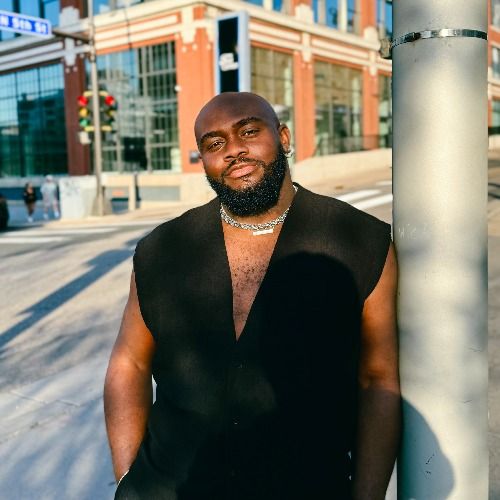
Jamal Wade on 'home, Away' and the Freedom of Showing Up Fully
In this episode of Odejuma, Harry chats with Jamal Wade, a dancer, choreographer, and director whose path runs from Baton Rouge to thirteen years in Los Angeles to a brand new chapter in New York. At its heart, this is a conversation about giving yourself permission. Jamal talks about the fear and judgment he is still unlearning, and what it took to trust that the life he imagined as a boy was always possible. He opens up about 'home, Away', his short film about two young Black men navigating masculinity, vulnerability, and the longing to be a safe space for each other. It is a conversation about becoming, about loving deeply and unconditionally, and about the courage it takes to show up as your fullest self.
Connect with Jamal on Instagram: https://www.instagram.com/jamalkwade/
Learn more about "home, Away" and how you can support it: https://www.jamalwade.com/homeaway
Connect with Harry on Instagram: https://www.instagram.com/harryitie
For more information on Harry, visit: https://www.harryitie.com/
Transcript
Hi, my name is Harry and welcome to Odejuma.
Speaker A:Odejuma is an ishakiri farewell that loosely translates to till tomorrow.
Speaker A:But for me, I look at it as a promise that there is so much more in life to look forward to.
Speaker A:And this interview driven storytelling podcast is rooted in that promise.
Speaker A:So as you take the time to listen, I want you to feel that as we go deeper with folks from across the Black diaspora, exploring the adventures, resilience, joy and the ordinary moments that change their lives that you would have a good hearty laugh with or you find something to sit with.
Speaker A:Because there is power in the stories of everyday people and these stories are worth telling.
Speaker A:Hey, y'.
Speaker B:All.
Speaker A:Welcome to another episode of Odejoma.
Speaker A:It is the second season.
Speaker A:I am so excited we're getting through it.
Speaker A:If you are just joining us, it's your first time and you're watching on YouTube, use the subscribe button.
Speaker A:If you are listening on Apple, Spotify or, or anywhere you listen to your podcast, be sure to also follow us on there.
Speaker A:Today I have Jamal Wade in the studio.
Speaker A:Hi, Jamal, how you doing?
Speaker B:Hey, what's up?
Speaker B:I'm good.
Speaker B:How you feeling?
Speaker A:I feel really good.
Speaker A:It's been an interesting couple of weeks.
Speaker A:I feel like I had low energy at some point, but I guess as the weather starts to warm up, the energy starts to, you know, come back and so that's how I'm feeling.
Speaker A:How are you feeling?
Speaker B:Feeling good.
Speaker B:Also a very loaded past couple of weeks, but I think that just comes with everything that's happening in the world right now.
Speaker B:Seasonally speaking, I'm in New York, so being a part of, like, this historic winter was crazy.
Speaker B:And now the birds are starting to chirp in, the flowers are blooming.
Speaker B:So I'm starting to feel a little more like my, you know, Southern, warm temperatured self.
Speaker B:So that's good.
Speaker A:Yeah, Though this winter was crazy.
Speaker A:Like, and it's very interesting because the past, like two winters haven't been so bad just in general, but this one came back with a vengeance.
Speaker A:So that is pretty interesting.
Speaker A:You say you live in New York.
Speaker A:How did you get to New York?
Speaker A:What was that journey like for you?
Speaker A:Because you say you're from the south, so.
Speaker A:Yeah.
Speaker A:Give us a little bit of intro.
Speaker A:Who is Jamal Weed and how did he get to New York?
Speaker B:Well, the New York chapter is actually very, very new.
Speaker B:I'm originally from Baton Rouge, Louisiana.
Speaker B:I left Baton Rouge when I was 18 years old to move to Los Angeles, where I studied dance theater at the American Musical and Dramatic Academy got my BFA there and after that I stayed in LA for 13 years.
Speaker B:So I was dancing, acting, directing music videos, doing some choreography as well, producing a couple of projects and yeah, living the California dream.
Speaker B:Hiking, camping, you know, all the outdoors things.
Speaker B:My best Discovery Channel life.
Speaker B:Then I turned 30 and then I turned 31 and I was just like, okay, I've been here a very long time.
Speaker B:And I started missing some of my friends from college, especially my best friend who lives here in New York.
Speaker B:And New York was always the other option.
Speaker B:Like if I didn't go to LA when I was 18, it was going to be New York.
Speaker B:However, the concrete jungle didn't sound as satisfying as beaches, mountains, desert in that array of wildlife and nature.
Speaker B:So I went with la.
Speaker B:But then New York started kind of just itching in the back of my mind.
Speaker B:Right around March of last year, my friend said, well, I don't know why you hadn't been moved to New York.
Speaker B:I was like, oh, I thought you loved me.
Speaker B:But since you say it like that, I'm out.
Speaker B:And then two months later I was driving back to Louisiana so I can catch a flight to New York.
Speaker B:And as of June 5th of last year, I have lived in New York City.
Speaker A:Yeah, that is pretty, that is pretty exciting.
Speaker A:And there's so much to get into with your, with your background, starting from, you know, going to get your BFA in dance and then your career as a dancer, choreographer, director.
Speaker A:Just an all around creative person working in the entertainment industry in la, where everybody goes to have their dreams come true and then making the switch to, to New York.
Speaker A:So we're going to start from the, from like the, from the very first part of that story.
Speaker A:Have you always known you wanted to be in the arts?
Speaker A:Where did that spark kind of come from for you?
Speaker A:Basically?
Speaker B:Yeah, growing up as a kid, I was just always very entranced with other worlds.
Speaker B:Louisiana is a beautiful place, it truly is.
Speaker B:There's so many vibrant people and characters, so much personality, and it's in the food you eat and the music you listen to.
Speaker B:And there's just endless potential.
Speaker B:And I found myself always wondering like, where that potential could take me.
Speaker B:And I found a lot of that in TV and in the movies that I watched.
Speaker B:And I would just dream of these crazy worlds.
Speaker B:Like I would go play outside and imagine that I was in the woods riding a drag dragon.
Speaker B:And there was no other way for me to really fulfill that in my mind other than acting and imagining that I was there.
Speaker B:So I would just write stories.
Speaker B:I used to Write stories about literally everything.
Speaker B: d Neopets, like, in the early: Speaker B:But I used to write, like, short stories in the.
Speaker B:In the forums on Neopets.
Speaker B:I was literally, like 11 years old, like, writing these adventure stories about these Neopets, like fighting crime or like, falling in love.
Speaker B:And that was kind of my first inkling that I wanted to tell stories.
Speaker B:And the other part of it was the physical side of things, right?
Speaker B:Like, me and my actual body, like, getting to do these things.
Speaker B:And that came about from me watching music videos.
Speaker B:One of the music videos that I think probably had the most influence on me was music make you lose control with Sierra and M. Elliott.
Speaker B:I remember when that song came out, I was bouncing off the walls, like, trying to put on clothes that mimic the video.
Speaker B:And at the same time, simultaneously, when that song came out, I was going to middle school.
Speaker B:And this was the first time I was ever going to, like, a performing arts school.
Speaker B:And it was a predominantly black school as well.
Speaker B:So when I visited the middle school, they had this thing called Magnet Mania going on.
Speaker B:And it was basically a presentation to give you an overview of what the school was about.
Speaker B:And the dance class was performing to ease on down the road from the width.
Speaker B:So it was like 60, 70, like, black middle schoolers just killing it.
Speaker B:And I'm like, what is this?
Speaker B:Where have I been?
Speaker B:Like, I'm going here.
Speaker B:I am going to this school.
Speaker B:There's no debate about it.
Speaker B:It's about to be lit.
Speaker B:And from there, just the trajectory of my life, my identity, all of it became about the arts and expressing myself and turning myself into, like, a better version of me.
Speaker B:Because at first, all I identified with was books and school, and I was just a little bookworm.
Speaker B:I would use my room to kind of come out of my shell.
Speaker B:But once I went to that performing arts school, it was a teacher I had named Robbie Thomas that recruited me from PE into the dance class, right?
Speaker B:I was taking PE for sixth grade, and I'm sitting here watching these kids in the dance class go on field trips to, like, Atlanta and stuff like that.
Speaker B:I'm like, wait, wait, wait, wait, wait.
Speaker B:This sounds like my meal ticket out of here.
Speaker B:So she recruited me into the dance class.
Speaker B:And the coolest thing about this whole ordeal was at this school, the dancers were the top of the social ladder.
Speaker B:All the.
Speaker B:All of the athletes were trying to get in the dance class because the pretty girls was in there.
Speaker B:And the girls wanted to be in the dance class because that was their pathway to being on the dance teams in high school.
Speaker B:So if you were in the dance class, nobody could tell you anything.
Speaker B:And I was trying to also curb the rumors of being gay.
Speaker B:So I had to do something to kind of put myself at the time.
Speaker B:Who would have thought?
Speaker B:Who would have thought?
Speaker A:Yeah.
Speaker A:So that is so interesting.
Speaker A:Yeah, yeah.
Speaker A:So you, you, you, you, you, you start dancing, you know, in this performing arts school and then you're like, okay, this is my meal to get out of here.
Speaker A:And it was your meal to get out of here.
Speaker A:You go, you know, you get your bfa and then after that you start working professionally.
Speaker A:Right.
Speaker A:What was that interest into the professional industry like for you?
Speaker A:Right, for some, for some folks, it is challenging when you are black and you're trying to find work in a place like la.
Speaker A:So what was that journey like for you?
Speaker A:And do you remember what the.
Speaker A:What was the first role that you got?
Speaker A:And you're like, oh, my God, yes, I finally made it.
Speaker B:I don't know about the first thing that I did that was like, I made it because honestly, so much of where I started in LA was built on what I started doing in Louisiana.
Speaker B:Actually, back in Louisiana, I was dancing in productions with Debbie Allen when I was in high school.
Speaker B:So Debbie Allen would fly to Louisiana and she would put on her original productions that she also does at the Debbie Allen Dance Academy in la.
Speaker B:She would do those in Louisiana.
Speaker B:So I started building connections with some of the choreographers there.
Speaker B:And one person in particular, her name's Asia Wong.
Speaker B:She was the stage manager for the last show that I did with Debbie, which was Brothers of the Night.
Speaker B:And once I moved to la, it was around my sophomore year of college, I decided to hit up Asia.
Speaker B:And she was like, oh my God, yeah, I remember you.
Speaker B:My cousin is doing this thing that he needs some help with and he was shooting a music video.
Speaker B:So they let me come on set and be a pa and then eventually that led to me doing some other shadowing with him.
Speaker B:And it just opened my eyes to that other side of entertainment and being in the behind the scenes.
Speaker B:So I got to work with them on a couple of other projects and that was the side that was opening my eyes to directing.
Speaker B:As far as performing goes, I think the first thing that I did in LA on my own was a PSA for.
Speaker B:It was an anti tobacco campaign for this youth targeted brand called Something Fresh.
Speaker B:It was, it was very urban and edgy.
Speaker B:They had me with a grill in my mouth, and it was like, don't smoke.
Speaker B:That was.
Speaker B:That was one of the first jobs that I did in la, and I felt super cool.
Speaker B:I got paid, you know, I had a check, and I was coming to school, like, yeah, I just got off set.
Speaker B:So that was one of the first jobs that I did.
Speaker B:And I would say the first thing that made me feel like, I guess I made it was post graduation, danced on the VMAs with pink.
Speaker B:And I was also in one of her music videos.
Speaker B:So I think that was one of the first big, big jobs where I was like, okay, I'm in it.
Speaker B:I'm doing it.
Speaker B:Let's see where we go with this.
Speaker B:Okay.
Speaker A:That is pretty.
Speaker A:Pretty amazing.
Speaker A:Now you've had a pretty colorful life.
Speaker A:From all that I can see from all that you're sharing, you know, from your experience in high school working with Debbie Allen, who people would kill to work with and, you know, do stuff with, and then, you know, the directing side and the performing side.
Speaker A:So is it okay if I assume that performing and directing happen side by side for you?
Speaker A:It's not one or the other.
Speaker B:Yeah, that's actually very true, especially in terms of how they progressed.
Speaker B:They were for sure happening simultaneously.
Speaker B:As I was performing post graduation, I was also working on set with a director who was doing a lot of, like, R and B music videos.
Speaker B:And she was also helping me just see the world of directing music videos.
Speaker B:She invited me to choreograph and do movement direction for a few different artists that she was working with.
Speaker B:So I had the chance to work with Ari Lennox and Ombre, this one guy named Skate.
Speaker B:So I was on set doing that as a movement director and choreographer.
Speaker B:But I was also, like, shadowing her and really learning how she manages set and really direct it.
Speaker B:So it was a very simultaneous thing.
Speaker B:And even when I was working as an actor, if I was on set, I was watching very, very closely how the director was managing the crew, how he was setting up shots, how he was communicating with various members of the team.
Speaker B:And I'm saying he.
Speaker B:But also she.
Speaker B:There were plenty of female directors that I got to be around as well, so it was for sure a simultaneous journey.
Speaker B:And I was just picking up everything that I could, no matter what role I was in.
Speaker B:And ultimately, I would say that they're still kind of working that way as well.
Speaker A:Okay.
Speaker B:Yeah.
Speaker B:I definitely enjoy being in front of the camera just as much as I enjoy directing.
Speaker B:The Gemini in Me, I think, leans more towards directing just because all of the.
Speaker B:The personalities and people in my head get to have a hand in something, but I do love it all, and I take every opportunity as a chance to just learn as much as I can from as many people as I can.
Speaker A:Okay, that is interesting.
Speaker A:And I'm just out of curiosity, consider your Gemini.
Speaker A:You're a May Gemini or a June Gemini.
Speaker B:I'm a May Gemini.
Speaker B:Okay.
Speaker A:Okay.
Speaker A:We love May Geminis over here.
Speaker A:I mean, I love all Geminis, but, you know, I feel like May Geminis are the superior ones.
Speaker A:And so, you know, let's just, you know, check in on that regard.
Speaker A:But your work directing led you to nomination at the CMT Music Award for Willie Jones.
Speaker A:Talk to us a little bit about that, about how you created a body, a music video that, you know is.
Speaker A:Is nominated for a major award in that genre.
Speaker A:What was that experience like?
Speaker B:That experience was very kismet and electric, and it was very authentic.
Speaker B:If you don't know, Willie Jones is actually from Shreveport, Louisiana.
Speaker B:I'm from Baton Rouge, Louisiana.
Speaker B:Hours apart.
Speaker B:But I met Willie years before that through my best friend, Jalen Levingston.
Speaker B:So me and Jaylen were roommates in college, and Willie at the time was just coming off of the Voice, I believe.
Speaker B:So Willie came to, like, stay with us in la, and through that just interaction, we got to know each other a little bit.
Speaker B:And then later on, I remember he invited me and Jalen to the studio with him, and he had this new song.
Speaker B:And at the time, I think I just finished directing probably, like, my first or second music video.
Speaker B:And we were just, like, chatting.
Speaker B:He was like, yeah, like, what do you think would be a good idea for this?
Speaker B:And I told him.
Speaker B:I was like, I don't know.
Speaker B:Like, you're talking about the American dream.
Speaker B:And I was like, I just know I always dreamed of being, like, a superhero.
Speaker B:Like, when I was a kid, that was my dream.
Speaker B:So, yeah, that's kind of dope.
Speaker B:And we just kept kind of going back and forth with that idea.
Speaker B:And at the time, there was all this civil unrest happening with the George Floyd protest.
Speaker B:Years before that, I was extremely impacted by the shooting of Alton Sterling, which happened in Baton Rouge, Louisiana, which was an unarmed Black man selling CDs in front of a gas station.
Speaker B:No, not a gas station, but a corner store that was murdered by police.
Speaker B:So it was just a buildup of things that I was already kind of brewing about and needing to express and just right time and right place of Willie, the song, the moment, and kind of needing to make something to speak to it.
Speaker B:And I participated in the protests that were happening in la, which was crazy.
Speaker B:You know, I got tear gassed and being just pushed around by officers and just really being in the thick of that was the main inspiration for how that video turned out.
Speaker A:Yeah.
Speaker A:And, you know, I got to see the video.
Speaker A:It's a very beautiful video.
Speaker A:You did a great job with the.
Speaker A:With the music video, directing on that.
Speaker A:Looking at how your trajectory and your creativity has moved from all you've been saying.
Speaker A:Is it.
Speaker A:Is it going to be okay to say that, you know, your creativity comes from a lot of personal reflections and personal experiences that you've had in your life?
Speaker B:Absolutely.
Speaker B:That video, I would say, is such a culmination of all of my interests, from social justice to black history animation.
Speaker B:Like, I grew up on Cartoon Network.
Speaker B:All I did was watch Cartoon Network.
Speaker B:I would wake up in the morning and try to catch Sailor Moon, and then I would go to sleep at night watching Dragon Ball Z.
Speaker B:So in all of the superhero stuff, Marvel, dc.
Speaker B:So animation was a very big part of my upbringing.
Speaker B:So telling a story through that live action and that mix of animation was just very natural to me and being able to, you know, capture just such a rich part of our history.
Speaker B:In that music video, you know, I displayed the slave master becoming the law enforcement becoming the big money corporation and how all of those things tie together and how we're working against those things at all times as black people.
Speaker B:So it definitely is accurate to say that my work is a direct reflection of my life experience.
Speaker A:That is pretty.
Speaker A:That's pretty good to hear.
Speaker A:And currently you are currently in.
Speaker A:In production or in works for Home Away.
Speaker A:You know, I saw the video that you did on Instagram and I was like, the numbers were quite.
Speaker A:I don't want to say they were alarming or.
Speaker A:But it just.
Speaker A:It needed a.
Speaker A:It needed us to stop and like, pause for a second.
Speaker A:I'd be like, okay, fine.
Speaker A:This is something that is going on in our community.
Speaker A:I want you to talk about homeaway a little bit.
Speaker A:How did you get here to the space where you wanted to make this project and what has that experience been like for you, just even in the production of it all?
Speaker B:Yeah.
Speaker B:Home Away is a short film about two young black men who are on different ends of perceived masculinity and trying to figure out how do they express themselves under the pressures of toxic masculinity.
Speaker B:Right.
Speaker B:Starr is a character who can be perceived as queer, a little more effeminate, and he is under the oppression of a Very like overbearing father.
Speaker B:And Casper, the other character, is a young father who is just feeling the weight of how the world perceives him versus how he perceives himself.
Speaker B:And all of this, once again, is under this idea of what is a man and how black men are allowed to be in various spaces and at various points in their lives.
Speaker B:And I thought it was important to speak to that because so many things that I see happening in the world involving black men have a lot to do with homophobia and toxic masculinity and how it stifles our ability to be vulnerable and our ability to express ourselves.
Speaker B:So that was really what the birth of HomeAway stemmed from.
Speaker B:And I just thought it was important.
Speaker B:I have family and I have friends and just people that I grew up with who I've seen crumble under this idea of who they're supposed to be or who they're versus who they're allowed to be.
Speaker B:And that's really what HomeAway speaks to, is like, what happens when we instead choose to be, like, a safe space for each other and allow ourselves to be as open and expansive as possible in the ways that we receive each other, but also the ways that we show up in front of one another.
Speaker A:Yeah.
Speaker A:And honestly, it's.
Speaker A:I feel like it's a.
Speaker A:It's a.
Speaker A: s and the early: Speaker A:You know, I'm not trying to assign blame, I guess it's how society is and how we were raised or whatever, but just how you're a young queer kid who might not even have the language for what queerness is.
Speaker A:You might not even know that, oh, I might be gay or, I mean trans or whatever it is that I am, but I'm navigating, but I'm not navigating in a way that I'm expected to.
Speaker A:And then I'm getting, like, reprimanded because of that, you know, and having to, you know, people who are maybe more expressive are having to go into themselves.
Speaker A:People who are more creative lose their creative juice because of all of that.
Speaker A:So I feel like, you know, I don't think we can ever have this conversation enough because I feel like, you know, we feel like, oh, we're going to be better than our parents or better than whoever we say we are going to be.
Speaker A:And we keep reinforcing those.
Speaker A:Those stereotypes, you Know what I'm saying?
Speaker A:It's, it gets really tricky for me to just even see that.
Speaker A:So that's why I'm like really happy that this is being made.
Speaker B:Yeah.
Speaker B:And it's, it's.
Speaker B:It permeates so many different areas of our life and it shows up in so many different ways.
Speaker B:And I want to remove the, the important part about me having a non queer character in this film was trying to remove the idea that this only affects queer people.
Speaker B:Right.
Speaker B:There are straight men who are struggling to drink out of a straw because women are like, oh my man, you can't drink out no straw.
Speaker B:That's gay.
Speaker B:And but like so homophobia is, is the ruin of all of us and all that we can be.
Speaker B:You know, it's, it's crazy.
Speaker B:A man can't jump rope because girls jump rope.
Speaker B:It just, it's getting ridiculous.
Speaker B:And that turns into men expressing themselves in harmful ways.
Speaker B:That turns into men thinking that oh, the only way for me to.
Speaker B:Is tough.
Speaker B:The only way for me to be is like hyper masculine.
Speaker B:And I, I gotta, I gotta, you know, put somebody down or I gotta be violent because softness is the antithesis of that.
Speaker B:So I gotta, I gotta, you know, really whoop somebody's ass or it, it just totally throws us in the wrong direction.
Speaker B:All because of the fact that we're trying to steer so clear away from this thing that we've deemed as like the worst thing you can be as a black man.
Speaker B:So I wanted to show how in both ways this same system of like homophobia and toxic masculinity is really affecting straight people, queer people, men, women.
Speaker B:It's an oppressive system that is really doing a number on our people and it's not allowing us to be what our ancestors really wanted us to be.
Speaker B:And that's like as limitless as possible.
Speaker A:I'm excited.
Speaker A:What, what I.
Speaker A:What are your plans?
Speaker A:I know that you know, you have some you might not want to share just right now because you're right, you are still in pre production or you're just developing.
Speaker A:But what are some of your plans and what are some of your hopes for this project?
Speaker A:I mean, how you want it to be received, how you want, where do you want it to be shown?
Speaker A:Like, what are some of the dreams and aspirations you have as regards.
Speaker A:Home away?
Speaker B:Yeah.
Speaker B:HomeAway is the first part of an anthology series that actually centers black queer coming of age stories.
Speaker B:So this first installment is meant to act as the kickoff of a multi genre anthology series that tackles religion, grief, acceptance of oneself outside of their queerness.
Speaker B:A lot of different things that matter to me and that I think, matters to me.
Speaker B:Young people growing up in this day and age, where you would think that we would be past something like this.
Speaker B:And I want this series to reach as many people as it can.
Speaker B:Right now with Homeaway, we filmed the first half of it and we're gearing up to start post production on that first half, assembling our rough cut, and hopefully we can get back to filming the second half right around July.
Speaker B:Something that really hit us really hard is one of our lead actors, Jabari, suffered from cardiac arrest recently.
Speaker B:Yeah, but God is good.
Speaker B:God is great.
Speaker B:And he successfully had a heart transplant and he is on the road to recovery.
Speaker B:The community in la, around the world showed up for him in a way that literally only miracles can provide.
Speaker B:So we're all very grateful for that.
Speaker B:So we're just getting everything ready to get back set up, and I'm really, really excited about where it's going to take us.
Speaker B:And on my end, I'm just crafting the rest of those four episodes and installments of the Homeaway series.
Speaker B:And yeah, I think we want to have a festival run like every great short film should.
Speaker B:But at the end of the day, this is for community.
Speaker B:You know, I want this to screen at community centers, youth centers, clinics, anywhere that we can reach young people in need.
Speaker B:And honestly, whoever.
Speaker B:It's not just a young person thing.
Speaker B:I think all of us have an inner child that needs to be healed and that still needs to know that we can show up in all these ways and our fullest selves and we can be in a space with other black people and show them who we are and in hopes that they'll show us themselves fully in return.
Speaker B:And that's what Homeaway is really about.
Speaker B:It's literally in the title, Home Away.
Speaker B:It's like my home away from home.
Speaker B:If.
Speaker B:If I can't be where I thought I should be, then whenever I'm away, hopefully this place that I end up can be my home.
Speaker B:These people that I end up around can be that sense of home for me.
Speaker B:So that's what the title of Homeaway actually is about.
Speaker A:That is beautiful.
Speaker A:That is really beautiful.
Speaker A:And you talk about community, I feel like I really like that, personally.
Speaker A:I.
Speaker A:Because I feel like our community, and I think we use that word quite often without knowing what it means as people.
Speaker A:But I think that our community, our community doesn't mean that we are going to be besties or we're going to be, you know, locked in.
Speaker A:It means that, you know, we share this common thread that unites us.
Speaker A:Right.
Speaker A:And I want you to be better for it.
Speaker A:I want you to have all the things that you need.
Speaker A:I want you to be safe.
Speaker A:And I think that our community needs this.
Speaker A:Um, and I'm happy that you're a centering community in.
Speaker A:In your dreaming and your.
Speaker A:In how you are ideating how you want even the rollout of the production to be.
Speaker A:You talked about your lead actor and how community showed up for him as well.
Speaker A:So I really, really like that.
Speaker A:I'm very pro community.
Speaker A:What does community look like for you right now?
Speaker A:And what.
Speaker A:What is your role in community?
Speaker A:And just from a Much more.
Speaker A:Maybe at a macro, but also maybe a micro level as well, you know.
Speaker B:Yeah, I. I'm the product of community, so it hits home in a very different way.
Speaker B:I would not be the person that I am today without community.
Speaker B:I think when I came out, I watched my immediate family and friends just kind of transform around my queerness because they had all these other ideas about what it meant to be a queer person.
Speaker B:But then in relationship to me being a queer person, I just watched all of that rewire.
Speaker B:I saw my mom eventually go from, you know, chastising me to being there for her co worker.
Speaker B:That was transitioning.
Speaker B:You know, I watched my brothers become, like, staunch advocates for me and then eventually defendants of other queer kids that may have went to school with them and moving from Louisiana to la.
Speaker B:Like, I developed a community of Louisiana friends who also.
Speaker B:Who are from Louisiana that moved to la.
Speaker B:I've always had lots of Louisiana people in my life, no matter where I was in the country.
Speaker B:So that sense, like you said, that common thread of just what do we have in common?
Speaker B:It's not about being buddy buddy, but at the end of the day, we're still family.
Speaker B:And then just as a queer person, like, I've.
Speaker B:I've met some of the most beautiful people in this journey of, like, learning myself as a.
Speaker B:As a queer man in general, in breaking out of stereotypes of, like, queer people don't do this.
Speaker B:Like, I. I belonged to a queer outdoors group where we went camping and hiking and, you know, I watched my friend play in a queer pickleball league.
Speaker B:The notion that queer people aren't in sports.
Speaker B:I worked on a podcast that was centered in LGBT sports with a WNBA champion named Shea Murphy.
Speaker B:So the community is so expansive.
Speaker B:And I think the real definition of community is openness and availability and showing that there is a place for everyone.
Speaker B:I remember Growing up.
Speaker B:And the deaconess would say this prayer and she would just say in one part of the prayer, she was like, lord, just anywhere in your kingdom, like, just.
Speaker B:Just give me a home anywhere in your kingdom.
Speaker B:And I really resonated with that because that's what community feels like.
Speaker B:It's like in this big kingdom, there has to be a home for, you know, there's plenty of space.
Speaker B:There's plenty of space.
Speaker B:No matter how much space we personally take up, there's still so much space to receive someone else.
Speaker B:So that is what community looks like for me.
Speaker B:And how I show up in that is just trying to be a reflection of what I would want it to be for myself.
Speaker B:You know, I hope people look at me and see that I am an open book and that I. I love endlessly and very deeply and unconditionally.
Speaker B:And that is what I hope community looks like for others.
Speaker B:Just loving deeply and unconditionally and with a whole lot of welcoming energy.
Speaker A:Yeah.
Speaker A:Yeah, I love that.
Speaker A:I love the piece of home that you talked as well.
Speaker A:That was really nice.
Speaker A:That was really nice for you to say.
Speaker A:And it ties, ties into, you know, your project.
Speaker A:Home away ties right back in.
Speaker A:What does home look like for you right now?
Speaker B:Home looks like my mom coming to visit me in New York.
Speaker B:That's my best friend.
Speaker B:She's the reason for the season.
Speaker B:Home looks like me getting to like, hang out with all my nieces and nephews.
Speaker B:It's five of them.
Speaker A:Okay.
Speaker B:You know, uncle mom, big, big Unc, not the little one.
Speaker A:Are they in New York as well?
Speaker B:No, my little brother with four of my nieces and nephews lives in Houston.
Speaker B:And then my other brother has a single daughter who is also in baton marriage with my mom.
Speaker A:Okay.
Speaker B:So they're in the south, but I try to make my way as often as I can.
Speaker B:But it would be really great to have them come up here and just be.
Speaker B:To get a piece of this puzzle as well.
Speaker B:And yeah, home just looks like me taking in New York, getting my biggest bite of the Big Apple that I can.
Speaker B:And I've had such a wonderful experience here.
Speaker B:My best friend that I mentioned earlier, Jalen Livingston, has been such a huge support in making sure that, you know, I feel the love.
Speaker B:He's a very busy man, but he definitely takes the time to be there for me when I need him.
Speaker A:I'm excited that you're grounding yourself in just being in community with people over in New York.
Speaker A:You're figuring it out.
Speaker A:Are you doing any professional work In New York?
Speaker A:Are you acting?
Speaker A:Are you directing?
Speaker A:Are you on Broadway or off Broadway or what is the, what's going on in New York?
Speaker A:What are you doing work wise?
Speaker B:I'm just, I'm filling it out, I'm finding my place.
Speaker B:I'm actively writing projects.
Speaker B:I'm currently writing another short film about a trans woman which I'm very excited about.
Speaker B:I don't want to spill too many details about that, but I'm very excited because once again it is another story rooted in social justice and a very necessary story.
Speaker B:I'mma just say.
Speaker B:I am really only interested in telling our stories as queer black people right now.
Speaker B:So I'm knee deep in creating those, trying to produce those.
Speaker B:So if anybody else is out there wanting to connect with a queer director, producer, writer, I am here.
Speaker B:So yeah, that's what I'm in New York doing.
Speaker B:Outside of, you know, the day job, I work with the kiddos.
Speaker B:I teach math at a middle school.
Speaker B:I also work for performing arts college health facilities facilitating their auditions.
Speaker B:So yeah, I'm, I'm knee deep in the work that matters the most to me.
Speaker A:And you seem like, it seems like you, you're, you, you do a lot.
Speaker A:How do you take time for self care with all that you're doing?
Speaker A:Because you just did a bunch of things that you're doing, prayers you're working on.
Speaker A:So yeah, how do you take time out to take care of yourself?
Speaker B:I try to walk in the park.
Speaker A:Okay.
Speaker B:I go to sleep.
Speaker B:I know the New York girlies are out at all hours of the night.
Speaker B:11:30 Is like my limit.
Speaker B:If I hit the club, I'm showing up at 9, 30, 10 and I'm not.
Speaker B:If you see me, you see me.
Speaker A:See, that's the energy right there.
Speaker B:Okay, cool.
Speaker A:Okay.
Speaker A:Okay.
Speaker B:Other than that, you know, you'll, you can catch me on a hike somewhere.
Speaker B:I just recently found out about this hiking collective called Issei Collective.
Speaker B:And I filmed their last hike that they had.
Speaker B:It was like a hundred and something people out in the outdoors.
Speaker B:It was beautiful.
Speaker B:I was happy to be there.
Speaker B:It was work, but at the same time it was very healing.
Speaker B:It was the first time that I had done something in New York like that.
Speaker B:So I was just grateful for the chance to be out in nature, away from all these buildings and peoples and trains and noises.
Speaker B:So being outdoors is a huge part of my self care routine.
Speaker B:Probably last week I just went and laid in the grass by the pier.
Speaker B:I just needed to touch grass.
Speaker B:So that's a huge part of myself.
Speaker A:Yeah.
Speaker A:Yeah.
Speaker A:I feel like New York is one long hike anyways.
Speaker A:I feel like, you know, it's the.
Speaker A:I mean, it's always working.
Speaker A:I love New York.
Speaker A:Like, I love New York so much.
Speaker A:I feel like there's some elements of New York I wish I could take and bring to Minneapolis, and then it will be a perfect city for me.
Speaker A:But, like, New York is, you know, I love it.
Speaker A:I'm there every year.
Speaker A:Love it, love it, love it so much.
Speaker A:We are.
Speaker A:Right.
Speaker A:We're winding down.
Speaker A:But I was thinking about this, right?
Speaker A:Kehlani has a new album.
Speaker A:Really great.
Speaker A:I'm loving it.
Speaker A:She has a song called Unlearn on the.
Speaker A:On the.
Speaker A:The album, which is, like, her last track.
Speaker A:And she's talking about, you know, the things that she's unlearning as a person.
Speaker A:And I have a little curiosity because it had me thinking about what am I learning in this stage of my life as a professional, as someone who is doing this, you know?
Speaker A:So I'm curious about you as an artist.
Speaker A:What are you unlearning right now in this phase of your life?
Speaker B:A lot of removing the fear and the judgment that I place on myself and, like, my art and my craft.
Speaker B:I remember being young and being so fearless and careless about what people thought, and I'm trying to bring that back to my work, to my just everyday being.
Speaker B:There's a video on my Instagram, actually, of a very active mom in which I did that.
Speaker B:Like, I was on the train getting my life.
Speaker B:Like, I was.
Speaker B:I forgot I was listening to some Normani song, and you could not tell me that I was not in a full production.
Speaker B:I didn't care.
Speaker B:I just didn't care.
Speaker B:I was like, these niggas don't know me.
Speaker B:They don't know me.
Speaker B:They.
Speaker B:They don't know me.
Speaker B:They're not cutting my check.
Speaker B:They're not blocking my check.
Speaker B:So what is.
Speaker B:Let it go.
Speaker B:So that's.
Speaker B:That's one of the biggest things I'm unlearning, is that I am allowed to pretty much do whatever I want.
Speaker B:And I'm the only person that can censor myself for whatever reason, and I'm the only person that can also greenlight myself for whatever reason.
Speaker B:So unlearning that idea that somebody has to be okay with it first or somebody has to agree or somebody has to, like, also think it's cool.
Speaker B:I tell my kids.
Speaker B:I tell the kids at the school that, like, you are in a system right now where you're, you know, wanting to be cool.
Speaker B:Because you want somebody to think you're cool.
Speaker B:It's like, I'm being cool because I think I'm cool.
Speaker B:I think what I'm doing is cool.
Speaker B:It doesn't matter if you think it's cool, you know?
Speaker B:So that is the space that I'm trying to get back to and just trusting myself, like, trusting that if I did it once, I can do it again, and if I mess it up, I can fix it.
Speaker A:Amen.
Speaker A:Amen.
Speaker A:I'm here for that.
Speaker A:Totally.
Speaker A:Totally.
Speaker A:Okay, a bunch of rapid fire questions, and then we'll be wrapping up.
Speaker A:What are the thought.
Speaker A:What are the top three songs on your playlist right now?
Speaker B:Ooh, top three songs on my playlist right now.
Speaker B:Ooh.
Speaker B:I listen to a lot of Troye Sivan.
Speaker B:Lucky Strike was just like, what I was singing in the shower and all up in my vibes.
Speaker B:I listened to a lot of Kehlani as well.
Speaker B:That song 8 really got me.
Speaker B:Yeah, it's right there.
Speaker B:That new Tyler and Zara.
Speaker A:I'm like,.
Speaker B:Okay, that's a good song.
Speaker A:I love that song.
Speaker A:That's.
Speaker A:That's a really good song.
Speaker A:Okay.
Speaker A:Is there a music video you wish you directed?
Speaker B:Okay.
Speaker B:This is such a deep cut, and it's.
Speaker B:It's like, it's not a huge production at all, but.
Speaker B:Maya Fallen, I love that video.
Speaker B:I'm a. I'm a pill and reveal kind of girl.
Speaker B:You know what I'm saying?
Speaker B:I like to be coy and draw back.
Speaker B:You know what I'm saying?
Speaker B:So that video of her, like, stalking this man only for you to find out that it was her.
Speaker B:Nigga, you think she's breaking into somebody's house is, like, no, it's her house.
Speaker B:It's her boyfriend.
Speaker B:So that it was just so subdued and, like, chill.
Speaker B:I like that.
Speaker B:I like.
Speaker B:I like being quiet just as much as, like, being loud and expressive.
Speaker B:So that video, I would have loved to direct.
Speaker A:Yeah, I love that video.
Speaker A:I love that song.
Speaker A:That's a beautiful song for sure.
Speaker A:Who's your dream collaboration, Living or dead?
Speaker A:Who do you want to collaborate with?
Speaker A:Maybe.
Speaker A:Maybe we should do Living and Dead.
Speaker A:Maybe you can choose one of each.
Speaker B:Okay.
Speaker B:Living dream collaboration is Miley Cyrus.
Speaker A:Oh, I didn't see that coming, but I can see it.
Speaker B:Yeah, yeah, yeah, yeah, yeah, yeah.
Speaker B:Hey, now.
Speaker B:Hey, now.
Speaker B:This is what dreams are made of.
Speaker A:That's a Hillary Duff, though.
Speaker A:Isn't that Hilary Duff?
Speaker A:Is it that?
Speaker A:Or is that Miley Cyrus?
Speaker A:I don't know.
Speaker B:Wait a second.
Speaker B:Hold on.
Speaker B:Nope.
Speaker B:You're Right.
Speaker B:That is Hilary Duff.
Speaker B:However.
Speaker B:However, Miley does have a song about dreams coming true as well.
Speaker A:Okay.
Speaker B:And that'll come out in my mind in a second.
Speaker B:But I'm also simultaneously trying to think about who's not here with us that I would want to work with.
Speaker B:Gone too soon.
Speaker B:I think Prince would have been really cool.
Speaker B:Yeah, Prince would have been really cool to work with just because he didn't.
Speaker B:He didn't care.
Speaker B:He didn't care.
Speaker B:Unless he cared.
Speaker A:He didn't.
Speaker A:Yeah.
Speaker B:And I just feel like I would have learned so much from that experience.
Speaker B:So Prince, for sure, just like, what a man of being his own man.
Speaker B:He did not play by anybody else's rules.
Speaker B:Yeah.
Speaker B:And that's true.
Speaker B:That is such the era that I'm trying to embody right now.
Speaker B:So for sure.
Speaker A:That is really true.
Speaker A:And you know, he.
Speaker A:He lived here until he died in Minneapolis, and there's Paisley park where he worked.
Speaker A:And then just even going through.
Speaker A:Going to Paisley park and seeing and experiencing his creativity.
Speaker A:I think that that was pretty.
Speaker A:That was pretty dope as well.
Speaker A:So.
Speaker A:Yeah, I. I love that.
Speaker A:Where is your dream travel destination?
Speaker B:The Galapagos.
Speaker B:The Galapagos island.
Speaker A:Okay.
Speaker A:Okay.
Speaker A:You had that on the tip of your tongue.
Speaker A:You're like, you've been thinking about it for a while, I'm guessing.
Speaker B:I mean, I didn't know you were gonna ask the question, but just in general.
Speaker B:I told you, I'm trying to live my best Discovery Channel dreams.
Speaker A:Yeah.
Speaker A:Yeah.
Speaker B:That is the place to do it.
Speaker B:The birth of Darwinism.
Speaker B:You know what I'm saying?
Speaker B:You know, so.
Speaker A:Yes.
Speaker B:And.
Speaker B:And I'm a lucky girl whose dreams came true.
Speaker B:But underneath it all, I'm just like you.
Speaker B:That is our Miley song about dreams.
Speaker A:You've been thinking about it all this time.
Speaker A:I love that.
Speaker B:It's in there.
Speaker B:It's the climb.
Speaker A:Okay.
Speaker A:Okay, Cool.
Speaker A:They look at your life.
Speaker A:Is there any moment that you would want to take and choreograph as a special dance production?
Speaker A:And what would.
Speaker A:And what is that moment?
Speaker A:The moment of the train?
Speaker B:No, there.
Speaker B:Okay.
Speaker B:There's so many funny moments, but I think a moment that would just be intensely dramatic was my coming out story.
Speaker B:It was the absolute most long story short.
Speaker B:There was a letter about a boy that I left in class.
Speaker B:The letter got turned into the office.
Speaker B:The office calls me in to talk about the letter, only to find out that my mom came and picked the letter up before I even got there.
Speaker B:She leaves me at school, and then I'm faced To ride the bus in total fear and contemplation of what's about to happen once I get home.
Speaker B:And then all hell breaks loose once I do get home.
Speaker B:And my mom is asking me all these questions about the letter and me liking boys.
Speaker B:So I think that is a moment to express through dance.
Speaker B:For sure.
Speaker B:There's only so many words I can use to talk about that one.
Speaker A:Can I inquire a little bit further?
Speaker A:Just a little bit.
Speaker A:Just a tad bit.
Speaker A:Did the boy write you the letter?
Speaker A:You wrote the boy the letter?
Speaker B:Neither.
Speaker B:I was talking to my homegirl.
Speaker B:We was having a little recap.
Speaker A:Okay.
Speaker B:You know what I'm saying about our weekend.
Speaker B:And I was just talking about, you know, my little rec center boy crush right here.
Speaker B:Yeah.
Speaker B:And I left the letter in my notebook or in my binder, and then some kid found it, and they were passing it around in class, and then the teacher took it.
Speaker B:The teacher took it to the office.
Speaker A:And called your mom.
Speaker A:Your mom came to pick it up, and then your mom left.
Speaker A:And then you go home, and then your mom.
Speaker A:Is your mom by the door with the letter in hand or did she give you.
Speaker B:Oh, she was so cynical about it.
Speaker B:She waited, like, hours to even say anything.
Speaker B:She was in her room just brewing, brewing.
Speaker B:And then she calls me in.
Speaker B:She has the.
Speaker B:She's like, underneath the covers with the letter at the edge of the bed.
Speaker B:She's like, jamal, what's that?
Speaker B:And, yeah, I'm 13, so I got a little mouthpiece on me.
Speaker B:I was like, it's a letter, like, flying off to him.
Speaker B:My Scorpio mom.
Speaker B:She's like, I'm talking about what's in the letter.
Speaker B:So it's unfolded.
Speaker B:I'm like, well, you read it.
Speaker B:Just get out of my face.
Speaker B:So she kicks me out of her room, and I go into my room, I close the door, man.
Speaker B:Not even, like, 30 seconds later, she kicks open the door.
Speaker B:Don't close any doors in my house.
Speaker B:It was.
Speaker B:It was crazy.
Speaker B:It was crazy.
Speaker B:But we're on a.
Speaker B:We're in a much better place now, thanks to me.
Speaker B:But, yes, thanks to me is interesting.
Speaker A:What was the journey like from that moment?
Speaker A:Your mom now being your best friend who's so accepting, who supports you and is rooting for you.
Speaker A:What was that process like?
Speaker B:Well, she was always my best friend.
Speaker B:She never stopped.
Speaker B:She was just a little.
Speaker B:My uncle is.
Speaker B:He was the one that actually came to my rescue that night.
Speaker B:He.
Speaker B:Another big piece of what HomeAway is about.
Speaker B:The way that black men can show up for each other.
Speaker B:He was the one that came and got me.
Speaker B:He texted me and told me to come outside when my mom is, like, damn near about to burn the house down.
Speaker B:And he rides me around the neighborhood and he's just like, yo, I know your mom's tripping right now, but, you know, that's your best friend and she loves you.
Speaker B:And if anything, she's just kind of upset that she had to find out about it like this.
Speaker B:But just give her some time.
Speaker B:In the meantime, I hope you know that I love you no matter what, no matter who you are, who you love.
Speaker B:You're my nephew, and nothing's gonna change that.
Speaker B:So him kind of reassuring me in that way meant so much, like, it allowed me to walk back into the house with a little bit of dignity and pride.
Speaker B:It allowed me to go to school and face whoever.
Speaker B:I'm like, if my, you know, boot camp going to, like, air conditioning, fixing, ball playing uncle has my back, then I'm gonna be all right, you know?
Speaker B:And my mom, she eventually came around.
Speaker B:She would say little slick stuff here and there, but I actually got her real good one time with this movie called Prayers for Bobby.
Speaker B:It was like, hey, mom, you know, we ain't really hung out in a while, so we should watch this Lifetime movie, since you love Lifetime Movie Network, and we should watch this movie.
Speaker B:And it's called Prayers for Bobby.
Speaker B:And if you're unfamiliar with the movie, it is about this kid named Bobby who comes out and his mom goes, like, Bible bumping crazy on him, taping scriptures to his toothbrush and just, like, all kinds of stuff.
Speaker B:So Bobby kills himself.
Speaker B:He, like, jumps over an interstate pass.
Speaker B:And this is the first 15 minutes of the movie.
Speaker B:The entire rest of the movie is Bobby's mom sitting with that and trying to figure out, like, why?
Speaker B:Why would he do this?
Speaker B:And she goes on this soul search, and she comes across, like, these other religious leaders and this one preacher who tells her, you know, nothing was wrong with Bobby and that the Bible has been interpreted in all these different ways.
Speaker B:But at the end of the day, the Bible was meant to teach love and compassion and acceptance.
Speaker B:So that turned her around real quick.
Speaker B:She went in that bathroom, cried for about 15 minutes, came back in the bed, and she was like, I'm sorry.
Speaker B:I was like, yeah, yeah.
Speaker B:You good?
Speaker B:Yeah.
Speaker B:Like two months later, she was asking me about this boy that I wanted to go over and hang out with, and she's like, well, do you want him to come over to our house?
Speaker B:Is this a trick question?
Speaker A:That is.
Speaker A:That.
Speaker A:That is so.
Speaker A:I don't know that.
Speaker A:That is beautiful to hear.
Speaker A:And, you know, he has me in my feelings a little bit.
Speaker A:I'm gonna check out the movie, maybe have.
Speaker A:Maybe do a little weekend watch for Ripper as probably.
Speaker A:But also, like, wow, that is something.
Speaker A:I, I, I.
Speaker A:There's nothing as beautiful as having a parent who affirms you.
Speaker A:And I think that sometimes I'm Nigeria, and I grew up in Nigeria.
Speaker A:I grew up very religious, super religious.
Speaker A:Half my, you know, from when I was, like, 13, when I knew that I was gay.
Speaker A:So maybe when I was, like, 21, 22, I was, you know, struggling with my.
Speaker A:Who I was basically.
Speaker A:And to, you know, to see that, you know, you had an experience that was, you know, you know, beautiful in its own way.
Speaker A:You, you know, you have family.
Speaker A:That's affirming.
Speaker A:It's just beautiful to see.
Speaker A:And it's what I pray that every young black, queer person has.
Speaker A:You know, that's what we deserve.
Speaker A:We deserve love.
Speaker A:That is affirming because he really makes.
Speaker B:A whole lot of difference, you know, a huge difference.
Speaker B:A huge, huge difference.
Speaker B:And I can already see how me having that experience is shaping out for, like, my nieces and nephews in the way that they're being raised.
Speaker B:And, you know, I think my.
Speaker B:My uncle's son asked my grandmother the other day if I was gay.
Speaker B:He was like.
Speaker B:She said, is Jamal gay?
Speaker B:Because he had his nails painted.
Speaker B:And my grandmother was trying to dance around it or something.
Speaker B:And my mom was like, you know, she's still kind of in denial, child, but Denver knows that is beautiful.
Speaker A:I love that.
Speaker A:I really love that.
Speaker A:Yeah.
Speaker A:Back to our rapid fire.
Speaker A:Sorry, I deviated a little bit.
Speaker A:What is the last thing that you saw that genuinely moved you?
Speaker B:I was on the train, and this.
Speaker B:This lady was going through something like, it could have been drugs.
Speaker B:It could have been a mental health crisis.
Speaker B:I don't know.
Speaker B:But she laid her head on this boy that was, like, listening to his music, and he just looked and just sat there and just let it happen.
Speaker B:I was just, like, so touched because he could have been, like, you know, what.
Speaker B:What's going.
Speaker B:He could have did anything, but he just allowed her to be and take the moment that she needed.
Speaker B:He was just whatever she needed to be.
Speaker B:If it was a shoulder, if it was like, some neck support, whatever.
Speaker B:He was just.
Speaker B:He's like, you know what?
Speaker B:I'm here.
Speaker B:This is where God wanted me to be, obviously, right now.
Speaker B:So I'm gonna just, like, sit here so that was like, that was really cool to see, like just a human showing up for another human and whatever they were going through.
Speaker A:I love that.
Speaker A:That's not corny at all.
Speaker A:I really like that.
Speaker A:And finally, what is your guilty pleasure?
Speaker B:I don't know if it's really that guilty.
Speaker B:I just be.
Speaker B:I just be eating, bro.
Speaker B:I really just be eating because I cook.
Speaker B:I cook.
Speaker B:I. I enjoy cooking a lot.
Speaker B:So I will like not go somewhere so that I can cook and eat and then go to sleep.
Speaker A:Okay.
Speaker A:I love to eat too.
Speaker A:So I'm right there with you.
Speaker A:What is your favorite thing to make?
Speaker B:I would say baked.
Speaker B:Baked goods because I feel like they have the most complexity, the most science involved.
Speaker B:I like to think of myself as a, as a chemist, you know what I'm saying?
Speaker B:So I'd be in there cooking and baked things are kind of my favorite.
Speaker B:I think the thing that I had the most fun making was a peach cobbler cheesecake.
Speaker A:That is interesting.
Speaker A:Never, never had that before.
Speaker A:Okay, cool, cool.
Speaker A:During the pandemic, were you baking banana bread like everybody else?
Speaker B:Banana.
Speaker B:I don't like bananas.
Speaker B:Sorry.
Speaker B:So I'm disgusted.
Speaker B:But I was like, got the wrong one.
Speaker A:No, everybody, everybody during lockdown was making banana bread.
Speaker A:So I thought maybe you did the same as well.
Speaker B:No, I don't like bananas.
Speaker B:I made a lot of stuff, but banana bread was not on the list.
Speaker A:Shout out to that.
Speaker A:Shout out to that.
Speaker A:As I close this episode.
Speaker A:This has been such great conversation, by the way, but what is the thing that you will look at your, you know, the 13 year old boy who discovered dance, you know, or you know, who had the letter shown to his mom.
Speaker A:What would you tell that boy today?
Speaker B:I would say that everything that you thought was possible absolutely is.
Speaker B:And just trust that, trust that with everything in you.
Speaker B:Without a care, without a worry.
Speaker B:Just know that it's going to be even more beautiful than you saw it in your head and in your dreams.
Speaker A:Awesome.
Speaker A:Awesome.
Speaker A:Well, thank you so much.
Speaker A:This was such great conversation.
Speaker A:I really enjoy getting to know you a little bit more.
Speaker A:I'm excited for everything that you have coming your way and all the work that you're doing in community and for our community.
Speaker A:It's very, very much appreciated.
Speaker A:So thank you so much.
Speaker B:Of course.
Speaker B:Thank you for having me.
Speaker B:I look forward to your next visit to New York.
Speaker B:So hopefully we can get into some fun and I promise not to make you hike too hard.
Speaker A:No, I'm gonna be there actually for pride.
Speaker A:So I'm excited.
Speaker B: I might be out past: Speaker A:That you have to be.
Speaker A:It's pride.
Speaker A:You gotta be outside.
Speaker A:You gotta be outside.
Speaker A:You can't be the Clubs goes at 4 in New York.
Speaker A:That is rare in lots of places in this.
Speaker A:In these United States.
Speaker A:So I won't be there till 4,.
Speaker B:But I'll be out maybe 2:30.
Speaker A:That's good.
Speaker A:That's good.
Speaker A:That's a good compromise.
Speaker A:And if you've been listening, thank you so much for listening to the show.
Speaker A:Don't forget to follow on Apple, Spotify, wherever you listen.
Speaker A:And if you're on YouTube, don't forget to subscribe as well.
Speaker A:I will share more about Jamal and any more information you need in the description so you can check him out.
Speaker A:Thank you again since it's going to be amazing.
Speaker A:I'm super excited and I can't do it without you.
Speaker A:So I'm very, very grateful.
Speaker A:Have a good one.
Speaker A:Until the next time, Odi Juma.