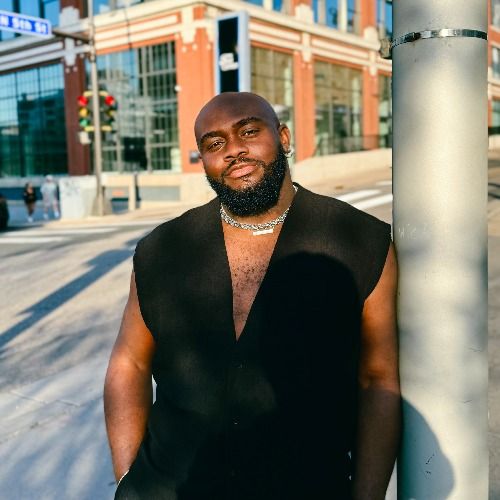
Jason Veasey on Artistic Freedom, Identity, and How 'A Strange Loop' Changed His Life
In this episode of Odejuma, Harry speaks with renowned theater actor Jason Veasey. He reflects on growing up as a military kid who moved across countries and cultures before finding a stage. Jason built his foundation quietly, through regional theater, before Broadway ever called. This conversation traces that arc up to his nearly decade-long run in the critically acclaimed show A Strange Loop, before it became history. He talks about what it means to be a Black queer man in rooms not built for you, the stories he protects, and the ones he refuses to let die. There's humor here, and tenderness, and the particular wisdom of someone who has learned the difference between success and freedom. Jason Veasey is a man becoming, and this is a conversation worth sitting with.
Connect with Jason on Instagram: https://www.instagram.com/veaseyville
Connect with Harry on Instagram: https://www.instagram.com/harryitie
For more information on Harry, visit: https://www.harryitie.com/
Fact-check: The Lion King out-of-town tryouts were held at the Orpheum Theatre, not the Guthrie. Easy mix-up between two of Minneapolis's most iconic venues.
Transcript
Hi, my name is Hariye and welcome to Odejuma.
Speaker A:Odejuma is an ishakiri farewell that loosely translates to till tomorrow.
Speaker A:But for me, I look at it as a promise that there is so much more in life to look forward to.
Speaker A:And this interview driven storytelling podcast is rooted in that promise.
Speaker A:So as you take the time to listen, I want you to feel that as we go deeper with folks from across the Black diaspora, exploring the adventures, resilience, joy, and the ordinary moments that change their lives, that you would have a good, hearty laugh or you find something to sit with.
Speaker A:Because there is power in the stories of everyday people.
Speaker A:And these stories are worth telling.
Speaker A:Hey, y'.
Speaker A:All.
Speaker A:Welcome to another episode of Ode Dreamer.
Speaker A:I'm super excited to have you here.
Speaker A:If you're new here, please follow us.
Speaker A:If you're listening on Apple podcasts, Spotify, Amazon, Iheart, wherever you listen to this podcast, make sure that you follow.
Speaker A:If you're watching on YouTube, use the subscribe button so that you stay in the know.
Speaker A:When I have new episodes released, I'm super excited about today's show.
Speaker A:I love the theater and I have a theater icon with me today.
Speaker A:I have Jason vc.
Speaker A:Hi, Jason.
Speaker A:How you doing?
Speaker B:Hi, Harry.
Speaker B:I'm doing good.
Speaker A:How's it going?
Speaker A:How's the weather like over in New York?
Speaker B:You know, I am a. I don't like the cold, so other people are not happy about it.
Speaker B:We are in the 80s.
Speaker B:Okay.
Speaker B:The high 80s.
Speaker B:And I'm.
Speaker B:That's where I get into my power place.
Speaker B:So I'm grateful.
Speaker B:But like, apparently on Monday we'll be back in the 50s, so I don't know, but like, I'm.
Speaker A:You're feeling good?
Speaker A:You're feeling good about it.
Speaker A:I'm here.
Speaker A:I'm here for it.
Speaker A:Well, thank you for coming on on odd.
Speaker A:I'm super excited to have this conversation.
Speaker A:Said I really love the theater.
Speaker A:I think that theater is an art form that deserves all the love that he gets or that he deserves.
Speaker A:I mean, sorry, I don't think it gets as much love as it deserves.
Speaker B:I agree.
Speaker A:I'm excited to dive right in.
Speaker A:Well, for folks who are just hearing about you or just, you know, learning about Jason, can you tell us a little bit about yourself and your.
Speaker A:A little bit of your background on how you found your way to the theater?
Speaker B:Yeah, sure.
Speaker B:So I am a military brat.
Speaker B:My parents were in the Air Force.
Speaker B:My mother and father, mother is Jamaican.
Speaker B:We moved around a lot and I think that added to my imagination and social skills and things like that.
Speaker B:And when we moved from Germany to Alabama when I was 10 years old is when my parents were like, hey, you keep saying you want to be an actor, throwing it out there.
Speaker B:Well, here's some auditions.
Speaker B:And that's where I kind of started at the Alabama Shakespeare Festival.
Speaker B:You know, especially at that time, was one of those theatrical regional theaters that were like, you know, you've got, like, the Guthrie and then you have the Goodman, you have Alabama Shakespeare Festival, you have Oregon Shakespeare, you know, big, huge theatrical operations.
Speaker A:Yeah.
Speaker B:And that's when I started theater at, like, 10, 11.
Speaker B: it, and moved to New York in: Speaker B:So I've been a theater kid for a very, very, very, very long time.
Speaker A:0, 10, Clearly.
Speaker B:Yeah.
Speaker A:And.
Speaker B:And even before 10, was talking about it, like, just saying, I want to be an actor.
Speaker B:Like, had no idea what that meant.
Speaker B:No idea, you know, that I just.
Speaker B:I want to be an actor.
Speaker B:That's it.
Speaker B:So it's always been a thing in my life at this point that is very fascinating.
Speaker A:And when people say, oh, I'm a theater kid, it's like, oh, I'm a theater kid from high school.
Speaker A:I started in my high school production of, you know, or something.
Speaker A:You started on a major platform.
Speaker A:How was it like as a child, you know, working in that major theatrical outfit?
Speaker B:I think I've been thinking about this a lot, Harry, actually, like, in terms of, like, my high school and college years.
Speaker B:The reality is, you're right.
Speaker B:Most people don't start theater until high school, whether that's because of nerve or access or introduction, you know, and for me, it.
Speaker B:I think starting theater in a professional setting was.
Speaker B:It didn't.
Speaker B:I didn't realize how much of an advantage that was, because also, too, it wasn't like I was the only kid that worked at that theater.
Speaker B:I was also used to other kids who had been doing theater at that age.
Speaker B:Then I went to a junior high school that was all about the arts.
Speaker B:So I was constantly around kids that were interested in the arts.
Speaker B:And more importantly, I was also around because we were in Alabama.
Speaker B:I was also wearing a lot of kids that look like that were in the arts.
Speaker A:So.
Speaker B:So.
Speaker B:So being black in the arts wasn't some sort of fantasy.
Speaker B:It was a real reality.
Speaker B:And so I didn't realize until I got to, I think I want to say college.
Speaker B:I was Just like, certain things that I already knew I didn't understand, like, how other kids didn't know.
Speaker B:I was like, oh, people start this much later.
Speaker B:Yeah, people start this much later and start it.
Speaker B:And because they started a little bit later, they were also on journeys with their families, not understanding, I guess, you know, And I think maybe either I hit the jackpot with my parents or my parents, because I started younger, had had more time to get used to the fact that this was happening.
Speaker B:Whereas if you start, I can imagine someone's family being like, well, wait, what do you mean you want to be an actor?
Speaker B:You want to go to college now for theater when you've just been doing it for two years?
Speaker B:Maybe that's.
Speaker B:I didn't understand people's parents not being supportive.
Speaker A:Yeah.
Speaker B:You know, but I do think one of the things that I benefited from, especially when I got to college, where it's where the competition really starts.
Speaker B:I kind of already had experienced that with.
Speaker B:In junior high and things like, so by the time that I got to college, it was already solidified that it was all mine.
Speaker B:And the only person that I was competing with was myself.
Speaker B:And I had already learned, you know, you don't get cash all the time, and all those great lessons that are helpful in those situations.
Speaker B:And I think my ownership and.
Speaker B:And.
Speaker B:And knowledge of the possibility of my place in theater was well set in stone, particularly because I had seen so many examples of people that looked like me on stage, had teachers that looked like me, had friends that looked me.
Speaker B:So when I got to a program and experienced any sort of resistance or limiting, it was very easy for me to be like, no, that's not true.
Speaker B:That don't make no sense.
Speaker B:Whatever.
Speaker B:Moving on.
Speaker B:Like, I just say I was able to have an armor on that was based in reality.
Speaker B:When someone said, oh, you can't really play that part because, you know, it's usually for black people, I was like, that's not true.
Speaker B: bama Shakespeare, physical in: Speaker B:So what's going on?
Speaker A:Okay.
Speaker A:Yes.
Speaker A:Coming with.
Speaker B:When they would talk about classics or if I hadn't read some, a checkup, it was very easy for me to be like, well, tell me about Joe Turner's coming on, because those are classics as well.
Speaker B:So I don't understand, like, why we're only talking about.
Speaker B:I have to know all these things, but y' all don't got to know anything about this.
Speaker A:Yeah.
Speaker B:You know, what is the response when.
Speaker A:You hit them with Maybe like an August Wilson or something.
Speaker A:How do they respond to that when.
Speaker B:They, when they don't know that there is no response?
Speaker B:I think it's funny because.
Speaker B:It's funny because I think I didn't realize this at the time, but talking to some professors that I had that I actually have a fantastic relationship with to this day, you know, one of them thought I was bored.
Speaker B:And I wasn't bored.
Speaker B:I was just being very patient and waiting to get to the next level.
Speaker B:I didn't realize that I had already learned so many things, so I was just kind of like chilling until we got to the next situation.
Speaker B:You know, I did have one professor who thought I was difficult.
Speaker B:This is not someone I have a relationship with, but thought I was difficult.
Speaker B:But I didn't care that they thought I was difficult.
Speaker B:You couldn't teach me anything about black theater.
Speaker B:I didn't come in here expecting white people to know anything about the contributions of what people look like me to.
Speaker B:My parents made very sure that we already have that and coming in.
Speaker B:So I was, I might have come off as a little bit too confident to that person, but I, I didn't care.
Speaker B:I was, you know, I, I, I, I knew enough about how to exist in theater and loved theater so much that it didn't really matter what program I went to.
Speaker B:There was nothing that was going to deter me from, from doing that.
Speaker B:You know, that's real.
Speaker A:That's real.
Speaker A:And before we go any further, you mentioned the Guthrie earlier on.
Speaker A:I'm, I'm based in the Twin Cities.
Speaker A:Have you performed on the Guthrie before?
Speaker B:No.
Speaker A:You know.
Speaker A:Okay, cool.
Speaker B:Scene.
Speaker B:Scene.
Speaker B:Scene.
Speaker B:Yes, of course.
Speaker A:Yeah.
Speaker B:Many show.
Speaker B:There have friends that have performed there, auditioned a lot for the guy.
Speaker B:But there are def.
Speaker B:It's one of the theaters, one of the five theaters, retail theaters that I've yet to perform at that I.
Speaker B:It will happen one day.
Speaker A:Yeah.
Speaker A:Yeah.
Speaker B:I love.
Speaker A:You've done the Good Man.
Speaker A:I, I think I like regional theater too.
Speaker A:I like.
Speaker A:And I know we're gonna go to Colorado because I hear you talk about Colorado.
Speaker A:Came up a little bit.
Speaker A:I was.
Speaker A:My question was gonna be how did Colorado come into your, you know, to your journey or your history, basically.
Speaker B:Yeah.
Speaker A:But yeah, I do enjoy regional theater.
Speaker A:From like the Good man to the one in Portland.
Speaker A:I saw, I think it was he Clyde's I saw over there at OSF.
Speaker B:Or at Portland Center Stage.
Speaker A:Portland, Center Stage, yes.
Speaker A:Yes.
Speaker A:Which is a nice theater as well.
Speaker A:And then obviously there's one in la.
Speaker A:So I do like you Know, you know, I think like, I feel like theater is, I tell people, like, I love, I really, as someone who is Nigerian born and raised, theater is, it was very integral in how, you know, we were raised.
Speaker A:It's very, it's a very, it's a very intricate part of African storytelling.
Speaker B:Yeah.
Speaker A:It might not be the same way that it's done over here, but my love for theater, you know, whatever city I'm in, I want to go see theater.
Speaker A:And I feel like regional theater, you know, it's really underestimated, you know, in a way.
Speaker A:And I like, y' all should really be hip to the bunch of really great theaters around.
Speaker B:It's weird.
Speaker B:It's like, I definitely find with a lot of the younger artists, either they're not being exposed to it or taught about it, but there seems to be this attitude about regional theater where, where, when I was coming up, when I was artistically raised in, in regional theater.
Speaker B:But like, that's where you learn so much.
Speaker B:That's where you, that's where you get to be a lead.
Speaker B:That's where you learn how to advocate for yourself.
Speaker B:That's where you build your resume.
Speaker B:I mean, the thing about regional theaters, for the most part also too, it's, it's.
Speaker B:They're funded and the community is, that's where they treat you like gold because their community is so thankful for you to be there.
Speaker B:These incredible, huge, huge institutions with legacies and, and, and, and spirits and stories in the walls.
Speaker B:I don't know, I love regional theater and I get sad for people who either felt that there's no value in that or why should they?
Speaker B:And I, and I, you know, just like, you're great if you can just go straight to Broadway and be only on Broadway, fantastic.
Speaker B:But I don't know anyone who works consistently on Broadway on a regular basis from my level or up or age group rep that hasn't worked across the country in institutions like the Guthrie or someplace smaller in like Arkansas, you know, but like, that's where you play these roles.
Speaker B:That's where you get your first shot in a safer space.
Speaker B:That's not the commercial bottom doll, bottom line, money, money, money, money, money, money, money thing, you know, that non profit regional theater is where it's at.
Speaker B:That's where you can focus on the work, you know.
Speaker B:Yeah.
Speaker B:Also too, that's where, especially as someone who's not white, that's where you're going to get a lot of your opportunity.
Speaker B:That's where the majority, even currently right now in this country, the Majority of female non white leadership are at these regional theater institutions.
Speaker B:Their regional theaters are the ones that are trying to do better things and approach theater better.
Speaker A:Yeah, that's real.
Speaker B:Okay, cool.
Speaker A:Thank you for.
Speaker A:Thank you for talking about regional theater because, you know, it comes up a lot in conversation with folks who enjoy the theater.
Speaker A:Everybody wants to go to, oh, I want to see a show on Broadway.
Speaker A:I'm like, yes, you want to see a show on Broadway.
Speaker A:There's a theater down the street.
Speaker A:There's a theater 10 minutes away.
Speaker A:You could go to and watch.
Speaker B:You got mixed.
Speaker B:But you got.
Speaker B:Yeah.
Speaker B:I mean, it's.
Speaker B:It's crazy.
Speaker B:Like, people will be in a city and they know.
Speaker A:Yes.
Speaker B:Like, there's the Guthrie.
Speaker B:They know what the Guthrie is.
Speaker B:But I'm kind of like, I wonder what it's like to, like, be from there and, like, not really know that the Guthrie is like, that girl.
Speaker A:Yeah, like.
Speaker B:Like that.
Speaker A:Like, Like, Yeah, yeah, yeah, for sure.
Speaker B:You know?
Speaker B:I mean, the Lion King's out of town tryout was at the Guthrie before it went to Broadway.
Speaker A:Really?
Speaker A:I had no idea.
Speaker A:Yeah, well, shout out to the Guthrie.
Speaker A:Shout out to the Guthrie.
Speaker A:But Colorado, like I said, is a, you know, huge part of your story.
Speaker A:Talk about that.
Speaker A:And how did you go from Colorado to Broadway?
Speaker B:Well, like I said, my.
Speaker B:I was an Air Force brat.
Speaker B:And so before, I mean, we lived everywhere.
Speaker B:I was born in California, then we moved to Texas, then we moved to Germany, then we moved to Alabama.
Speaker B:And then right before my sophomore year of high school, we moved to Colorado Springs, Colorado, which was the.
Speaker B:It was the first time.
Speaker B:I remember the moving thing was hard for me beforehand.
Speaker B:It was.
Speaker B:It was never that hard.
Speaker B:But this is the first time where I, like, I just didn't want to move.
Speaker B:Maybe it's because I was, you know, a teenager at that time.
Speaker B:And it was the biggest cultural shock, particularly for me and my middle brother.
Speaker B:It was a different type of white, if I can be blunt.
Speaker B:It was a different type of white.
Speaker B:I never been around that many white people who didn't really, really know how to be around black people.
Speaker B:The way that money looked there was very different.
Speaker B:Middle class looked so much richer.
Speaker B:It was our first time not living on a base.
Speaker B:It was my first time going to school, truly, with people who had been going to school together since, like, kindergarten, because, you know, when you're on a base, you're around other military kids.
Speaker B:It was my first year being back in a school that wasn't art centered because, remember, I was in junior high.
Speaker B:Yeah.
Speaker B:Around all artist kids.
Speaker B:And now I'm in a school where like, it just wasn't the focus and it, you know, and I've been used to like doing school shows and working outside of school.
Speaker B:So look, it was a culture shock.
Speaker B:It was cold, random.
Speaker B:It was cold.
Speaker B:It was cold whenever it wanted to be.
Speaker B:You know, there weren't a lot of black people.
Speaker B:It was a big culture shock.
Speaker B:But I, looking back, I definitely think that, like, because of that, it kicked my motivation to a get out of there, but it kicked my motivation to utilize to be an actor even more.
Speaker B:It made me be like, oh, this is definitely what I want to do.
Speaker B:If anything, to get to another place where theater was felt more centric in my life again, which would have been in college.
Speaker B:And I went end up going to college there at University of Northern Colorado, which, you know, it wasn't my first choice, but it ended up being the best choice and most perfect place for me.
Speaker B:I was very successful there.
Speaker B:I really enjoyed the program.
Speaker B:It wasn't a major, like what I call mafia school.
Speaker B:And looking back, we could have used more business education, but we were very focused on craft.
Speaker B:And I kind of look at it like that was like my grad school because I had already had so much theater education beforehand.
Speaker B:And it kind of felt that way in general.
Speaker B:And it solidified for me a few things.
Speaker B:It solidified that this was definitely.
Speaker B:I mean, I already knew that what I was going to do, but solidified that it.
Speaker B:I was.
Speaker B:I had a place there and I knew theater.
Speaker B:It solidified.
Speaker B:I knew how to maneuver through micro.
Speaker B:From microaggressions to microcosms of what the business could look like because there I was the only black boy my entire four years there.
Speaker B:Wow.
Speaker A:In the whole, in the whole.
Speaker B:In, in.
Speaker B:In the program, in the end up acting in the theater program.
Speaker A:Wow.
Speaker B:I had there.
Speaker B:And then along with me, there were four other.
Speaker B:There were four other black women, one in my class and the rest were younger.
Speaker B:Now, now it's different now.
Speaker B:Now it looks like an HBCU child.
Speaker B:Right.
Speaker B:But so, like, there was a lot of maneuvering.
Speaker B:When I think back, there was a lot of maneuvering I did and taking care of myself.
Speaker B:But I was able to do that because of the armor that I had.
Speaker B:The, the.
Speaker B:The armor that I had in terms of just being in theater and knowing how to maneuver through like, the ups and downs of that.
Speaker B:But also, you know, I was very connected to my artistic ancestry.
Speaker B:There was no such thing as.
Speaker B:I. I didn't grow up not feeling Seen, you know, in addition to like the theater.
Speaker B:You have to remember I'm growing up.
Speaker B:This is like the early 90s when I'm like 10 to 5.
Speaker B:So we had like so many shows on television, from Cosby Show, Martin, Different World, New York, Undercover Rock, like In Living Color.
Speaker B:Like, I was just bombarded with all these incredible black talent and the movies, the Spike Lee's, the, The John Singletons, all those things.
Speaker B:And the age of hip hop and the 90s R&B.
Speaker B:Like, it was just, you know, you couldn't tell me that I, I wasn't going to have some sort of place.
Speaker B:So I.
Speaker B:So.
Speaker B:But Colorado, I think, kind of clicked.
Speaker A:In.
Speaker B:A confidence for me in terms of solidifying how I utilize my gifts for when I move to New York.
Speaker B:You know, I don't love Colorado Springs.
Speaker B:No shade there.
Speaker B:But I have a fondness for Colorado in my time in Colorado.
Speaker A:Okay.
Speaker B:For sure.
Speaker B:I think that also my first two years in Colorado were looking back, probably like the loneliest ever felt.
Speaker B:And I'm saying that knowing that that does not compare to some other people's loneliness, but loneliness in the sense that, like, I didn't know where I was going to find my, my, my, my, my, my passion in this new environment.
Speaker B:I'm 15, you know, where there's lots of things swirling off.
Speaker B:This is also the time where, like, it's really coming, it's.
Speaker B:It's really getting real, where I'm kind of like, you know, yeah, I ain't, I ain't.
Speaker B:I'm gay.
Speaker B:It's around that time too, where you're like, you know, it was just all.
Speaker A:Lot.
Speaker B:Lots of, Lots of new stuff.
Speaker B:Right.
Speaker B:I never felt that lonely before, or I shouldn't.
Speaker B:I don't like to say lonely.
Speaker B:Separated.
Speaker B:Separated.
Speaker B:Lonely, lonely.
Speaker B:I think, I think does a disservice to the street, but separated for sure.
Speaker B:You know, up until that point, I think I felt very secure in my surroundings and especially with my family and friends.
Speaker B:And, you know, I had friends at school, I had theater friends, all those things like that.
Speaker B:And then it kind of just like went away.
Speaker B:And it was just.
Speaker B:Again, it was cold in September and I'm like, what's happening, child?
Speaker B:Like, I don't know what's going on.
Speaker B:You know, there's like tons of white people.
Speaker B:Tons of white people.
Speaker B:Like, because you're in the south, white people around, black people all the time.
Speaker A:Yeah.
Speaker B:And I got Colorado.
Speaker B:I was just like, yeah.
Speaker B:You know, and like, people didn't know things.
Speaker B:I was just like some of the black people didn't know things.
Speaker B:I was just like, what's happening?
Speaker B:Okay, you know, so.
Speaker B:But, you know, Colorado's been good to me.
Speaker B:And then I.
Speaker B: And then I graduated in: Speaker B:I didn't move to New York right away.
Speaker B:I moved to Denver and just kind of started, like, working in Denver.
Speaker B:I don't know, maybe to build up confidence, save money, I guess.
Speaker B:And then it went better than I planned.
Speaker A:So I was like, let me just.
Speaker B:Go ahead and go to New York now.
Speaker B: And I've been here since: Speaker B:That is.
Speaker A:That is interesting.
Speaker A:And how was it the lessons you learned in Colorado, Colorado Springs, the Denver.
Speaker A:How did that translate to making you live in this?
Speaker A:Because it would be very jarring to go from Colorado Springs to New York City.
Speaker A:So what were the lessons that, you know, helped you navigate that maybe still applies to your.
Speaker A:How you navigate till today?
Speaker B:Well, I think, when I really think about it, one, it wasn't like I was unfamiliar with New York because my mother moved from Jamaica to New York around, like, 17, 18.
Speaker B:So I have a lot of family here.
Speaker B:It wasn't like we grew up coming here all the time, but.
Speaker B:And every other place we lived, there was always some sort of big city around.
Speaker B:So what I've realized is it's not about what the transition was.
Speaker B:Going from places like Cold Springs to New York.
Speaker B:It was like, what was it like being a city mouse?
Speaker B:Always having to be in these smaller towns?
Speaker B:That was how that was the challenge for me.
Speaker B:It was.
Speaker B:It.
Speaker B:There was never any transition for me going to New York.
Speaker B:It was like, boom.
Speaker B:Like, that's just.
Speaker B:It's just, you know, I'm not even really a city mouse.
Speaker B:I'm like a metropolitan mouse because there are some cities, but I can't live.
Speaker B:You know, I couldn't live in Minneapolis full time.
Speaker B:I love Minneapolis.
Speaker B:I need, like.
Speaker B:I need, like, a city.
Speaker A:So for me to hustle and bustle up the city I'm hearing, yeah, it.
Speaker B:Didn't feel like her transition.
Speaker B:It felt like putting on pants that fit, you know?
Speaker B:Whereas every other place that I lived or places where a lot of us grow up always felt like, I can make the outfit work, but there was always just something a little off for me.
Speaker B:I'm kind of like, this is fine.
Speaker B:You know, like being a military brat.
Speaker B:I know how to make any kind of.
Speaker B:I know how to find or make any environment work, because you have to.
Speaker B:But, you know, I can walk in and be, like, for.
Speaker B:For a period of time, color, springs.
Speaker B:I knew within the first month, I.
Speaker A:Was just like, you're like, once I'm done, I'm done, I'm heading out, you know.
Speaker B:Correct, correct.
Speaker B:And even Denver, which I think is a great, It's a great city, you know, there'd be a time limit for me.
Speaker B:But like, you know, I knew, I knew that New York was going to be.
Speaker B:To be it.
Speaker B:So, you know, the moment flying in and landed, you know, I was kind of like, okay.
Speaker B:And it.
Speaker B:There was.
Speaker B:I don't ever remember any sort of jarring.
Speaker B:No, I mean, besides, like basic like adulting life stuff that would happen any city for me.
Speaker B:I was just like, new playground, let's go.
Speaker B:And I'm still like that.
Speaker B:I'm still.
Speaker B:I do think, I do think regardless, because I grew up going new places all the time.
Speaker B:I think that, that, that's how it, I feel.
Speaker B:It doesn't feel like transitions for me anytime that I move, because I just already had the skill set of being like, okay, let's figure out this, let's figure out that.
Speaker B:Let's figure out.
Speaker A:Yeah, yeah.
Speaker A:You've been in this playground in New York since, you know, since they're from dental now, you've done a bunch of, you know, theatrical productions.
Speaker A:But I want to talk about a strange loop, okay.
Speaker A:Because I, I, because I heard that 10, 10 years on this particular project.
Speaker B:Yeah, yeah, yeah.
Speaker A:I was just like, that's a long time.
Speaker A:And that's like, from, like, is that, is that just in development or from development to stage, to talk about how, how you came in contact with the strange loop, what that person's like, and what that 10 years of your life was first.
Speaker B:I'll say that's not, it's, it's, it's a blessing, but it's also something that doesn't really happen that often where pretty much the same group of people stays with it.
Speaker B:Usually either people become unavailable because their careers move on or the project keeps going and then producers come in and they want.
Speaker B:And the people get replaced by celebrities or more established people.
Speaker B: as, is that I got an email in: Speaker B: ,: Speaker B:Wow.
Speaker B:10 Years to the day.
Speaker B:Then I got my first email from this guy named Michael R. Jackson saying, hey, couple of mutual friends of ours that I just got done working with recommended me as Recommended you.
Speaker B:Would you.
Speaker B:I would love for you to come in and audition for Me for this reading workshop, very low stakes reading workshop of the show I've been working on called Strange Loop, which he had been working on for years, even before that.
Speaker B:And he sent me a bunch of YouTube clips, not from some songs from the show, but a lot of his other like trunk songs or individual songs and things.
Speaker B:He said, could you please watch them?
Speaker B:I was like, okay, cool.
Speaker B:And I watched them and I thought they were irreverent and shocking and fun and cool.
Speaker B:And I never seen anything like it.
Speaker B:And he kept emailing me, being like, have you watched the clips?
Speaker B:And I was like, yeah, like watch the clips.
Speaker B:So I go meet him in a rehearsal room on the campus of NYU and we end up talking for like 45 minutes.
Speaker B:I'm just talking.
Speaker B:And I asked him, I was just like, so am I going to sing for you or what?
Speaker B:He's like, no, no, there's no singing.
Speaker B:I just wanted to catch a vibe because he'd experienced people, day of concert, last minute dropping out because either they were scared to do the material, maybe they were some place in their sexuality or whatever or whatever, or they were scared for their career, but he was, he just wanted to make sure that I wasn't gonna dip or leave.
Speaker B:And I was just like, yeah, I'm not gonna, I don't care about that.
Speaker B:And so I think like a week later I did my first reading of A Strange Loop.
Speaker B:And there at that point in time, there was a couple of us that were there.
Speaker B:I think like John, John Andrew Morrison wasn't there.
Speaker B:He wasn't available like James Jackson.
Speaker B:That's when L. Morgan Lee came on.
Speaker B: uld say from year one of that: Speaker B:And I think we all just kept saying yes to each other because a lot of us in the group weren't necessarily fitting a mold in, in the rest of casting.
Speaker B:You know, I mean, I was working consistently, but it was a fascinating piece.
Speaker B:I really liked it.
Speaker B:And you know, it was just us and Michael and Stephen Brackett, who was our director, either at NYU or rehearsing, literally in a porn studio.
Speaker B:That was how that was also the house of Musical Theater Factory, which was influential in getting the show.
Speaker B:Every time we did another reading or workshop, it got kind of bigger and there'd be changes, there were more elements.
Speaker B:And then we had a dance workshop where we added Raja around.
Speaker B: Then we did one workshop in: Speaker B:It was a hit.
Speaker B:And we were like, okay.
Speaker B:I mean we had, it was, we had been doing it behind music stands for so long.
Speaker B:We had, you know, I, I, I actually for the first five years of workshops did essentially what is like a version of Thought six and then I got bumped up to Thought five.
Speaker B:It's just a very long, long, long journey that was fun.
Speaker B:And we, I don't know what we were thinking.
Speaker B:I don't know.
Speaker B:I never thought we would get a production collectively because we watch people say no, you know, people wouldn't touch us with a ten foot pole.
Speaker B:And then Playwrights Horizons happened and it was like we were Hamilton.
Speaker B:And then the pandemic happened and then we won all these awards and then we went to D.C. and then we went to Broadway.
Speaker B:That's.
Speaker A:Yeah.
Speaker B:And it's, it's responsible for so much.
Speaker B:I mean, it's response.
Speaker B:It's.
Speaker B:The reason why I'm on TV now is because of a strange loop.
Speaker B:It's people getting to see and us being showcased and having that kind of visibility and, but, but again, I mean the majority of us have been with it for so long.
Speaker B:I just cannot believe that we were able to, or Michael was able to fight for us and keep us.
Speaker B:I mean, if you have talked to me five years ago, it had been like a half of us would have been replaced by some of the regular Broadway standbys before we got to Broadway.
Speaker B:I would have never thought that we would have all made it to Broadway.
Speaker B:Never.
Speaker A:Yeah.
Speaker A:And that's pretty cool.
Speaker A:And you made it in Burger on the Splash.
Speaker A:You had a huge producer behind you.
Speaker A:You had all the things.
Speaker B:Yeah.
Speaker A:Some would say you were set up for success, you know, and that's a good thing.
Speaker B:You know, in that way, in that way the like, in that way the like.
Speaker B:The reality is, the idea is, Harry, is that any Broadway musical is a 50, 50 chance of it.
Speaker B:You know, I think we were set up for success because it had been worked on for so long.
Speaker B:We had been working together for so long.
Speaker B:Particularly the thoughts.
Speaker B:I mean, I must say it, we were just, we were really fucking good together.
Speaker B:We were really, really good.
Speaker B:We were like, like it was this kind of magic in a bottle situation.
Speaker B:You know.
Speaker B:Michael R. Jackson makes this statement though.
Speaker B:He said if, if Donald Trump didn't win that first election, we would have never been produced.
Speaker B:If Hillary would have won, we would have never been, we would have Never made it to Playwrights Horizon.
Speaker A:That is interesting.
Speaker A:The people love the show, but, you know, I saw it.
Speaker A:I saw it in San Francisco.
Speaker A:I didn't see the Broadway production.
Speaker A:Yeah, yeah, yeah.
Speaker A:Okay.
Speaker A:But I think that there is.
Speaker A:How do you.
Speaker A:Maybe this is a Michael question, you know, but, you know, I have you here.
Speaker A:I'm just gonna ask you.
Speaker A:But like, the.
Speaker A:They had for folks who are not.
Speaker A:Who are.
Speaker A:Who live in the intersection of blackness and queerness.
Speaker A:Some of us who even live in the.
Speaker A:When it comes to, like, the body weight issues, the fatness as well, adding that layer on top of it.
Speaker B:Yeah.
Speaker A:What do you think about the.
Speaker A:Some of the critiques of a strange loop?
Speaker A:What were some of the things that you feel like folks.
Speaker A:They really understand about the artistry of the work.
Speaker B:Yeah.
Speaker B:Well, I am someone who.
Speaker B:The critiques never bother me.
Speaker B:And if there were critiques, I'd be a little bit worried.
Speaker B:You know, all the best pieces that I can think of have discussions made about them.
Speaker B:And I think.
Speaker B:I don't think there's one thing as a perfect piece.
Speaker B:The main critiques that I.
Speaker B:That I.
Speaker B:Or questions.
Speaker B:Sometimes they're just questions, you know, which I.
Speaker B:Which are.
Speaker B:I think are all valid.
Speaker B:A lot of people have wondered why there was a white director for this Blackbird piece.
Speaker B:And, you know, honestly, if I wasn't part of the production, I probably would have the same question, be like, what's going on with that?
Speaker B:The reality is, though, and Michael has said this on paper, you know, Stephen was the only person that said yes to Michael.
Speaker B:I mean, and when I say the only person at the time.
Speaker A:Yeah.
Speaker B:From brand new up and coming to legendary directors, black.
Speaker B:They all said no.
Speaker B:They all said no.
Speaker B:And that's just the reality of it.
Speaker B:And.
Speaker B:And, you know, and I would challenge anyone in that position to.
Speaker B:To drop the person that continually said yes.
Speaker A:So that's.
Speaker B:That's why Stephen Brackett was there.
Speaker B:There have been critiques about the way that we handle certain gender issues with the balance of how we.
Speaker B:How it's cast versus, you know, the man in the dress trope, which I think are all very valid critiques.
Speaker B:I've.
Speaker B:I've, you know, I've heard critiques about how women are portrayed in the.
Speaker B:In the.
Speaker B:In the piece.
Speaker B:Or again, not critiques, just questions.
Speaker A:Yeah.
Speaker B:You know, I. I have my own specific.
Speaker B:Not critiques, but wishes for very conscious and careful casting with.
Speaker B:With this show.
Speaker B:I think it's hard because there's no notes on casting in the show.
Speaker B:And if you didn't see the production, it's hard to understand why.
Speaker B:But I do, like, one thing I'll tell you that is.
Speaker B:Is personal to me.
Speaker B:I don't.
Speaker B:Don't.
Speaker B:Don't be casting no tenors.
Speaker B:In thought.
Speaker B:In thought.
Speaker B:5 And 6.
Speaker B:Don't be casting no tennis and no 5 and 6.
Speaker A:That's very specific.
Speaker B:It's very specific.
Speaker B:Unless you understand that the base role always gets undermined.
Speaker A:Okay.
Speaker B:People like, oh, it's space.
Speaker B:We don't need that.
Speaker B:Yes, you do.
Speaker B:Yes, you do.
Speaker A:Would you ever direct a version of a strange loop?
Speaker B:The majority of us would.
Speaker B:Yes, absolutely.
Speaker B:That was pretty cool.
Speaker B:And you know why I think.
Speaker B:I think at this point in time, for me to direct it, it's the only way.
Speaker B:Because I've almost.
Speaker B:I've also.
Speaker B:I can't wait to see another production that's not the production that we did.
Speaker B:I'm very excited to see what people's ideas are about it.
Speaker B:But I think in order for me to really open myself up to the possibility of what this piece of art can be, the only way I know how to force myself to release myself of that production is to direct it.
Speaker B:Because if I direct it, I will force myself to not do anything that we did or really dissect and say, I believe that this is a tenant of what makes this production, you know, really, really good.
Speaker B:But, yes, the majority of us would love to direct a production.
Speaker B:Okay.
Speaker B:Okay, that's cool.
Speaker A:And you said that because of a strange loop, now you are.
Speaker A:You are acting on screen now.
Speaker A:So there is only murders in the building.
Speaker A:There is best medicine.
Speaker A:And all these other shows about that journey from stage to screen, what is the difference from, you know.
Speaker B:Well, first of all, I. I gotta say again, sometimes, you know, I'm still trying to figure out whether it's delusion, patience, or confidence.
Speaker B:They can all be the same.
Speaker B:Say it to me.
Speaker B:I was such.
Speaker B:I was such a theater person.
Speaker B:I still am.
Speaker B:That, like, this vision of, like, when, you know what the people say, I really want to do TV and film or transition to TV and film.
Speaker B:I just never said things like that.
Speaker B:I thought it would have organically happened.
Speaker B:I was kind of like, yeah, I'm sure.
Speaker B:I'm sure at some point my ass is going to be up on the screen somewhere.
Speaker B:You know, I did.
Speaker B:I did.
Speaker B:I did American Gangster years ago when I was like, 27.
Speaker B:I was kind of like, all right, cool.
Speaker B:You know, fine.
Speaker B:I mean, such a theater person.
Speaker B:But there's the scene that I had.
Speaker B:I'll never forget the first day that I got the new scene, which is the Joshlet.
Speaker B:The scene on the subway.
Speaker B:Okay, you know what scene I'm talking about in Strange Loop?
Speaker B:The scene on the subway where he meets the guy he found that it's.
Speaker B:That it's not real and that he's white.
Speaker B:All those things like that.
Speaker B:Yeah.
Speaker B:Scene.
Speaker B:And I was just like, ooh.
Speaker B:And I don't know what something said to me.
Speaker B:I go, if we ever get a production and I'm in it and I do my job, this will be the reason that springboards me into TV and the film.
Speaker B:And I was right.
Speaker B:I was right.
Speaker B:We did it at Playwrights Horizons, and almost immediately after Playwrights Horizons, I booked four different TV shows.
Speaker B:Guest stars.
Speaker B:And every casting director talked about that scene.
Speaker B:And I don't.
Speaker B:I don't know what it was.
Speaker B:I don't know what made me think that, but I just knew that it was going to be the showcase for me.
Speaker B:And I think it's been.
Speaker B:It feels like it's happened very quickly for me, but.
Speaker B:Or it can look like it's happened very quickly for me, but, like, I just got lucky where every time I booked a TV situation, it got just a little bit more.
Speaker B:It got bigger in size or I learned a little bit more.
Speaker B:So it just felt like I was going like this.
Speaker B:You know, it felt.
Speaker B:It felt on time and I was ready to go.
Speaker B:And it never felt, like, overwhelming.
Speaker B:It felt like I was.
Speaker B:You know, I never felt.
Speaker B:I never felt the instinct to be like, well, since I've done these two things, now I can go and get a.
Speaker B:You know, it felt like everything was happening, though.
Speaker B:It was supposed to.
Speaker B:I never felt impatient about anything.
Speaker B:My agents were awesome about it.
Speaker B:I was able to still do theater, which is great.
Speaker B:I think the difference.
Speaker B:I'm still figuring out the difference.
Speaker B:Fun.
Speaker B:Because I have yet to do any sort of, like, crazy, dramatic stuff.
Speaker B:I will say, right.
Speaker B:I love television.
Speaker B:I think it's probably because it's closer to theater.
Speaker B:I'm not convinced about filmmaking, and people look at me like I'm crazy.
Speaker B:I think I need to try a movie with a budget.
Speaker B:What.
Speaker A:What is not convincing you yet?
Speaker A:What is the thing that.
Speaker A:Yeah, I.
Speaker A:Maybe you've hinted to us.
Speaker A:Film without a budget.
Speaker A:What are some of the things that make you feel like, oh, film is not where I want to dip my toes into just yet fully.
Speaker B:I mean, it's not that I don't want to.
Speaker B:It's just that, like, I'm a time person, you know, the waiting is A problem for me.
Speaker B:And with theater, it goes like this.
Speaker A:Yeah.
Speaker B:You know, I like that.
Speaker B:I don't, I don't, I don't like.
Speaker B:It's not even.
Speaker B:This is actually the most like, anal retentive thing about me.
Speaker B:You know, with tv, I know eventually we're gonna have to get to something because we only have this amount of time.
Speaker B:We.
Speaker B:With film, I'm kind of like, it's going on, man.
Speaker B:What's happening?
Speaker B:Yeah.
Speaker B:It might feel different when I'm on a film with a bigger budget, when the waiting is more comfortable.
Speaker B:Yes, we shall see.
Speaker B:But for me, you know, you, you spend.
Speaker B:And with tv, you get to spend a long time with the character like you do in a longer run with the show.
Speaker B:I have found that my theater training has made the transition to TV and film for me a lot easier.
Speaker B:And, you know, when you're doing a show, it's as simple.
Speaker B:I mean, something as easy as, like, the pressure of consistency and accuracy that you have to have in theater, I think doesn't feel to me as heavy.
Speaker B:In TV and film, you mess up, no big deal.
Speaker B:We'll start over.
Speaker B:You know, of course you want to be on your gig.
Speaker B:You're taking things in sections.
Speaker B:You know, you're focusing on this moment.
Speaker B:Annie Potts, who's in the show, she said to me something that kind of blew my mind.
Speaker B:A really good day on set after filming feels like a really awesome, in depth day of rehearsal where you've broken down the scene, you've run it, you feel very comfortable with the lines.
Speaker B:You've, you've, you, you've had conversations with the director, you've got the blocking, all those things like that.
Speaker B:You're running it and you probably won't touch it again until we do the next where we do a run of the show and then get into tech.
Speaker B:But we know what the scene is.
Speaker B:And you walked away from rehearsal being like, great.
Speaker B:And we can start digging even more once we get into the run, right?
Speaker B:Because in theater, you know, we have more time.
Speaker B:But a great day of filming feels like an awesome day of rehearsal because the reality is, is that your performance is not your own.
Speaker B:I could, I could, I could go home, Harry, and freak out and be like, this take was so bad.
Speaker B:This take was so bad.
Speaker B:This take was so bad.
Speaker B:Or, or that take was awesome.
Speaker B:That was such a good take.
Speaker B:And you could watch the episode and they don't use the take that you can't stand or the other, like, yeah, you know, so the.
Speaker B:Also when you were when you're doing theater, you're responsible for the audience going like that or, like, you know, you're the camera.
Speaker B:It's a.
Speaker B:It's a director and editor's medium.
Speaker B:You know, you can only do so much.
Speaker B:And so I.
Speaker B:In an effort to, like, keep stay sane, I realized that, oh, my only job is to just throw awesome pasta up against the wall, and then they can figure out the sauce.
Speaker B:Whereas the theater you are throwing.
Speaker B:You're making that pasta, you're throwing it up in the sauce.
Speaker B:You're cooking in front of everyone, and you're doing the whole meal the entire night.
Speaker B:And you'd be in rehearsal.
Speaker B:And, you know, after you get on this number, get on this number, even something as small as, like, you know, hitting your mark on a.
Speaker B:In tv.
Speaker B:And it's hard for some people, but as a theater person, especially musical theater, I'm kind of like, where do I need to stand?
Speaker B:And, you know, I think again, like, even, like, because of, like, if you work on new musical theater or new plays, the constant changes also didn't throw me off.
Speaker B:You know, like, it's kind of like, okay, there's new pages.
Speaker B:I was used to that.
Speaker B:From strange loop to workshops Theater, really.
Speaker B:I think maybe because of theater, that's why the transition felt as easy as possible.
Speaker B:In terms of acting, I. I don't.
Speaker B:I don't know if I think.
Speaker B:If I believe that there's a difference in.
Speaker B:In acting when you're on film versus stage.
Speaker B:I think there's a difference in approach.
Speaker B:There's different elements to be.
Speaker B:To be wary of thing or not wary of, to be aware of.
Speaker B:But when I really think about it, the only thing that I like, the way that I use my voice is different.
Speaker B:Like, I feel very disconnected from my speaking voice on TV and film in a way that I do on theater.
Speaker B:Why?
Speaker A:Why do you feel disconnected?
Speaker A:What's the reason for that?
Speaker B:Well, because even if you're miked in a theater, you still know that you're responsible for making sure that everyone hears you.
Speaker B:So, like, diction and things like that, I'm very well aware of.
Speaker B:Whereas in TV and film, I feel like I'm doing nothing.
Speaker B:Feel like I'm doing nothing.
Speaker B:And particularly because my speaking voice has always been something that people have commented on.
Speaker B:I'm very, very aware of that being one of my main tools of how I express myself and TV and film.
Speaker B:It's just.
Speaker B:It's just getting used to it being what it is and not having to worry about it because, you know, you're mic and there's a boom mic.
Speaker B:And I'll be listening to people.
Speaker B:I'm like, what?
Speaker B:Sometimes I can't hear people.
Speaker A:It's.
Speaker B:It's just a different ball game.
Speaker B:So that's something.
Speaker B:I'm still kind of maneuvering and figuring out how my voice transfers.
Speaker B:What does it sound like in the episode, what.
Speaker B:What are my mannerisms look like?
Speaker B:That's what I'm figuring out now.
Speaker B:Like how I transfer to, you know, I know what transfers on stage.
Speaker B:I don't know how I look and transfer on, on.
Speaker B:On screen, you know.
Speaker A:Yeah.
Speaker A:And would you say that the creative process for your, for you and for your artistic practice is different when you are on stage and when you're doing TV and film, is it different and what does that look like in both instances?
Speaker B:Yeah, for me, it's always going to be different, a little bit different, even depending on the role you're in, if it's staged.
Speaker B:But for.
Speaker B:I found for theater, I'm definitely more regimented in my approach, in my approach to exploration, if I'm being honest.
Speaker B:My main approach with TV is to stay as out of my head as possible and as sane as possible because it can be a very high pressure situation.
Speaker B:You know, whenever you're leveling up, you're at the bottom of the next level.
Speaker B:Right.
Speaker B:And so it's very easy.
Speaker B:And I've watched so many friends of mine, you know, they get on TV and it's just, we start spiraling all over again because we don't want to mess this opportunity up.
Speaker B:And, and that makes sense.
Speaker B:And I know that I can be prone to that too.
Speaker B:So for me, my main goal this last, especially this first season was to just, even if I'm faking it, to really just.
Speaker B:And tell myself, I mean, this isn't ho's a week.
Speaker B:This is easier than a strange loot.
Speaker B:This is easier than Lion King, for sure.
Speaker B:You know, in an effort to stay out of my head so I can actually be free.
Speaker B:Because I do think that the more in your head with tv, it's gonna, it's.
Speaker B:It's gonna be a wrap.
Speaker B:It's gonna be a wrap.
Speaker B:There's too much at stake.
Speaker B:There's too many elements for you to be getting in your head.
Speaker B:You know, it's.
Speaker B:There's too many eyes watching to be spiraling for what is maybe, maybe a page of dialogue.
Speaker B:I just refuse to do it at this grown age.
Speaker B:If I'm.
Speaker B:If I'm going to be on a comedy, I'm going To have fun.
Speaker B:I'm going to, you know, have a good time.
Speaker B:I'm going to learn.
Speaker B:I'm going to ask questions.
Speaker B:And I know that that could be easier said than done, but that has been.
Speaker B:My main focus, is to just remind myself that this is just the beginning of something and not the end all be all or definitive experience.
Speaker B:And also, I must have.
Speaker B:I didn't put a gun to anyone's head and say hi to me.
Speaker B:I put my.
Speaker B:I made two self tapes and I got the job.
Speaker B:So if they think I got the goods, I'm not going to disagree with.
Speaker B:If it ends up that I suck.
Speaker B:That's on y'.
Speaker B:All because.
Speaker A:Because Yacht, you started to sell tapes and you said, sure.
Speaker A:You said you're gonna go with Jason, and here we are.
Speaker B:That's on y'.
Speaker B:All.
Speaker B:You know, so.
Speaker B:But again, all these are tricks for me to quell any anxiety of that.
Speaker B:I mean, that's the thing with Strange Loop, you know, One, that wasn't my Broadway debut, so I'd already been through that before.
Speaker B:Yeah.
Speaker B:But by the time we got to Broadway, we'd already done two productions of the show.
Speaker B:So there was.
Speaker B:There was this privilege of not of one knowing the show very well and also knowing that the theater world at large was so excited for us to be there.
Speaker B:It wasn't kind of like a.
Speaker B:How are.
Speaker B:How are critics gonna feel about it?
Speaker B:We already know how the critics feel about it.
Speaker B:Yeah.
Speaker A:Because they've said it twice.
Speaker B:They gave us.
Speaker B:They gave us all the awards, you know, and even to this day, I still, like.
Speaker B:We get a guest star on the show, they bring up that strange loop like nobody's business.
Speaker B:It happens all the time.
Speaker B:Which I think is crazy and insane that this show about a black gay boy, about a fat black gay boy and the thoughts in his head has lasted past what we did, you know?
Speaker A:Yeah.
Speaker A:Would you say that?
Speaker A:So I wouldn't be wrong to say that a strange loop changed your life, you know, and the trajectory of your career.
Speaker B:Yes.
Speaker B:And I will say that it changed my life.
Speaker B:It changed my life.
Speaker B:From the first time I ever read the script, I knew it was gonna.
Speaker B:I knew it was gonna be special.
Speaker B:I'm not shocked.
Speaker B:It's had the impact.
Speaker B:The whole journey is kind of crazy, but, like, it changed my life.
Speaker B:From the moment I read it, I knew that, like, if I could help it, I.
Speaker B:It behooved me to be a part of it as long as I possibly could.
Speaker B:I knew it was going to change somebody's life.
Speaker B:But yes, for sure.
Speaker B:It definitely.
Speaker B:It definitely changed my life.
Speaker B:Yeah, it definitely.
Speaker B:It definitely changed my life.
Speaker B:That's one of those things where, like, I knew I wanted to originate a role on Broadway.
Speaker B:I had no idea it was going to be anything like that.
Speaker B:No idea.
Speaker B:No.
Speaker A:I feel like everybody dreams about origination a role on Broadway, and you did that.
Speaker A:You're, you know, it's history at this point, so you should be very proud about the work that you did for sure on them.
Speaker A:We're going to go into some rapid fire questions you have.
Speaker A:I feel like we've learned so much about your journey and your story and how you approach your art, but we were still very curious about some things, so we're going to ask a couple of rapid fire questions.
Speaker B:All right.
Speaker A:The first one is, what are the three songs that are currently on your playlist right now?
Speaker B:I can tell you.
Speaker B:Hold on.
Speaker B:If your girl only knew by Aaliyah, because I've been going back and revisiting my girl.
Speaker A:I love Aaliyah.
Speaker A:One of my faves.
Speaker B:I love her.
Speaker A:I love her.
Speaker B:The next song that's heavy on my playlist is South London Lover Beware.
Speaker B:South London Lover Boy from the new Ray album.
Speaker A:Okay, I haven't heard that one yet.
Speaker B:Yes.
Speaker B:And then Overqualified, Duran Bernard.
Speaker A:Okay, okay.
Speaker A:We love Duran.
Speaker A:Okay, That's a.
Speaker A:That's a good one.
Speaker A:That's a good one.
Speaker A:I like that.
Speaker A:Yes.
Speaker B:Yeah.
Speaker B:I love Duran.
Speaker A:Okay.
Speaker A:What?
Speaker A:What?
Speaker A:Where is your dream travel destination right now?
Speaker B:Tokyo.
Speaker B:Okay.
Speaker A:Okay.
Speaker A:Love that dream collaboration, Living or Dead.
Speaker B:Can I do two?
Speaker A:Sure you can.
Speaker B:Living.
Speaker B:Specifically, David Alan Greer.
Speaker B:If you don't know who David Alan Greer is, get into that.
Speaker A:Dead.
Speaker B:I'm gonna say Harry Belafonte.
Speaker A:That's a good one.
Speaker A:And you're like, Ken.
Speaker A:He's from Jamaica too, right?
Speaker B:Yeah, yeah.
Speaker A:Or the West Indies.
Speaker A:I don't know.
Speaker A:I'm not sure.
Speaker A:I have to check for some Caribbean country.
Speaker A:I don't know.
Speaker A:I'll have to check.
Speaker A:What is.
Speaker A:Or is that Sydney Portier?
Speaker A:I'm confusing my.
Speaker B:No, no, Sydney Sidi.
Speaker B:Porter's Bahamian.
Speaker B:Harry is Jamaican.
Speaker A:Okay, cool.
Speaker A:See, I feel like, you know, I'm a little smart.
Speaker A:I know something.
Speaker A:What is a role that you really want to play so badly on Broadway?
Speaker B:It's, you know, it's cheesy, but it hasn't.
Speaker B:It hasn't been.
Speaker B:That's a lie.
Speaker B:Okay, okay, okay.
Speaker B:Right now on Broadway, there's not a lot.
Speaker B:If you ask me to play any role on Broadway right now, I would Want to play either Abraham Lincoln and Omari.
Speaker A:Okay.
Speaker B:Or Earnest in Death Becomes Her.
Speaker A:I saw Death Becomes Her Last year.
Speaker A:I love that show.
Speaker A:That's a good musical.
Speaker A:Yeah.
Speaker A:Okay, what is a compliment?
Speaker A:You never get tired of hearing that.
Speaker B:I never get tired of hearing.
Speaker B:I don't get tired of compliments.
Speaker B:I would say.
Speaker B:I would say my ease.
Speaker B:Okay, that's good.
Speaker B:That's good.
Speaker A:What's the best meal you've ever had?
Speaker A:Ever?
Speaker A:Yes.
Speaker B:Only because I miss it.
Speaker B:My mom's curry chicken or my dad's Frito pie.
Speaker A:I like a good curry chicken.
Speaker A:Yeah, yeah.
Speaker A:The final rapid fire question.
Speaker A:What is your guilty pleasure?
Speaker B:I don't believe in guilty pleasures.
Speaker B:If it pleases me, I say it.
Speaker A:If it pleases you, you do it.
Speaker A:You know?
Speaker A:Okay.
Speaker A:What are some of.
Speaker A:What are some of life's pleasures that, you know, you heavily indulge in?
Speaker B:You can find me at any Housewives franchise, okay?
Speaker B:Any housewives franchise.
Speaker B:In terms of theater.
Speaker B:I don't care what anyone says.
Speaker B:Footloose is an incredible musical.
Speaker A:Okay, okay.
Speaker B:Incredible.
Speaker A:I haven't said it on stage before, so I wouldn't know.
Speaker B:All this other film loses everything I love so much.
Speaker B:What else?
Speaker B:I like baloney.
Speaker B:I understand people's aversion to it.
Speaker A:Okay.
Speaker B:I love black men.
Speaker A:As you should.
Speaker A:As you should.
Speaker A:As you should.
Speaker B:As I should.
Speaker B:And I understand why everyone else does.
Speaker B:I. I love the heat.
Speaker B:I'd rather be hot than cold any day.
Speaker B:And I know that they.
Speaker B:People can say, well, you can never take off too much, too many.
Speaker B:Yes, you can.
Speaker B:You can.
Speaker B:You can.
Speaker B:Yeah.
Speaker B:I'd rather be in 95 degrees than anything under.
Speaker B:Anything under 50.
Speaker B:My God.
Speaker A:Well, we get, but we get.
Speaker A:We're moving into a time where it gets like 110 degrees.
Speaker A:You want to be in that heat.
Speaker B:No, listen, now, listen.
Speaker B:Obviously that's extreme, but that to me is just as extreme as some Minnesota negative.
Speaker B:That, that's.
Speaker B:Those are the same things.
Speaker A:But, but, but to be fair, if it's really hot, you can, you know, you can.
Speaker A:If it's really cold, sorry.
Speaker A:You could go to, you know, layer up.
Speaker A:You can wear your thermal underwear.
Speaker A:You can wear your sweater.
Speaker A:You can wear your jacket.
Speaker A:If it's that hot, you can't take off your skin.
Speaker A:You're gonna.
Speaker B:It doesn't matter if it's that cold.
Speaker B:I don't want to be going anywhere anyway, so it's irrelevant.
Speaker B:Just because I have to go somewhere doesn't mean I want to go somewhere in the cold fair.
Speaker A:But if it's hot.
Speaker A:You know, if it gets like really hot, like hot like fire, like a says, you know.
Speaker B:Yeah.
Speaker B:It could also, it could also be so cold.
Speaker B:I mean, either way, you don't want to be out there too long anyway.
Speaker B:Even if you're layered up.
Speaker B:This is where my mind goes.
Speaker B:Even if we're layered up.
Speaker B:Right.
Speaker B:It will be layered up out there for so long.
Speaker B:If you get stuck out there layered up, you're still fair.
Speaker B:The lanes are only going to last you so long.
Speaker B:In the same way that that heat past 110, it's not sustainable.
Speaker A:Yes.
Speaker A:Okay.
Speaker A:Yes.
Speaker A:I, I,.
Speaker B:I don't want to be in 110 heat.
Speaker B:Don't get me wrong.
Speaker B:I don't want to do that.
Speaker B:But like being hot feels.
Speaker B:It's the same for people who are like, I'd rather be cold.
Speaker B:For me it's like I start like it hurts.
Speaker B:Yeah, we, if they said, if they said New York City or America is about to disintegrate and we're about to go into this like arctic apocalypse, just take me out.
Speaker A:Because New York, New York gets really cold though.
Speaker A:New York gets like, you get.
Speaker A:Y' all get to the negative sometimes.
Speaker B:So here's the thing about.
Speaker B:For a while.
Speaker B:So here's the thing about cold.
Speaker B:Yeah, for sure.
Speaker B:Here's the thing about cold.
Speaker B:That where I can justify it.
Speaker B:One, where am I living where it's cold?
Speaker B:At least it's New York and the cold happens when the cold is supposed to happen.
Speaker B:See, when we moved to Colorado, it was June and there was snow on the ground.
Speaker B:That's where I ju.
Speaker B:It's just in June.
Speaker A:That is crazy.
Speaker A:Yeah.
Speaker B:It was so chaotic.
Speaker B:And so to me, if it's winter time, I expect it to be cold because it's the winter time.
Speaker B:If we are not in the winter.
Speaker B:I don't understand.
Speaker A:Harry, you talked about housewives.
Speaker A:You said you, you're, you're deep in any.
Speaker A:What, what is your favorite housewives franchise?
Speaker B:Okay, favorite housewives franchise of all time is going to be Beverly Hills.
Speaker B:Close second is going to be Atlanta because the cultural impact and significance and the way that it affected all the other franchises.
Speaker B:But the reason why I'm gonna love I love Beverly Hills is because Beverly Hills consistently has always had one.
Speaker B:One thing that the other franchises either don't have or they waver, and that's.
Speaker B:They always have money and the money is a main tenant.
Speaker B:I don't want to be watching people who are middle class.
Speaker B:I want people to be rich because, because, you know, Is that what I'm hearing?
Speaker B:Watching rich people spiral is what makes me feel better.
Speaker B:Not watching middle class people pretending to be rich.
Speaker B:That's is what's the point.
Speaker B:I can do that with my friends.
Speaker B:Okay.
Speaker B:I want money.
Speaker B:And.
Speaker B:And then you have Atlanta because Atlanta obviously black and showing what money does in our communities and putting Atlanta on the map, which is its own different.
Speaker B:Which is its own different thing.
Speaker B:But I think that those two franchises will always be my favorite because they also taught the entity of Housewives itself how to better itself.
Speaker A:I have a. I have a question.
Speaker B:Yeah.
Speaker A:And I know that, you know, I'm going off script a little bit.
Speaker B:I have a question.
Speaker A:So Potomac announced, you know, the new cast list and there are two other people who are also filming with them that they have said are they're trying to like test stuff with the show.
Speaker B:Kind of.
Speaker A:There is this black lady who seem super religious from what video that I saw.
Speaker A:And then there's a white lady who is Stacy's friend.
Speaker A:Potomac has a history of colorism, accusations, allegations.
Speaker A:Most of the, most of the main players are light skinned.
Speaker A:Like you know, it's a whole thing.
Speaker B:Do you think that boring and boring,.
Speaker A:You know, Atlanta had killed Zo for a while?
Speaker B:Yeah.
Speaker A:You think that Patrolback needs a Kim Zosiac type of person?
Speaker A:You know, I don't know if that lady's name.
Speaker A:I'm sure she's.
Speaker B:I don't.
Speaker B:Here's the thing.
Speaker B:I don't think, I don't think so.
Speaker B:But like I'm not anti it because here's the thing about Potomac.
Speaker B:We have to remind ourselves that Potomac wasn't supposed to be a Housewives franchise.
Speaker B:Remember that first season was Karen's etiquette school and it was boring.
Speaker B:So they made it into a Housewives franchise.
Speaker B:Second of all, the thing about Potomac, and we all know this if you watch it, is that like, yes, there were a lot of.
Speaker B:There actually were relationships prior to the show filming.
Speaker B:But like how many of them are actually in Potomac?
Speaker A:They are by the Potomac River.
Speaker B:They are buying.
Speaker B:I mean last time I checked, the only one that actually lives in Potomac still.
Speaker B:No, she rents, but she still lives there.
Speaker A:I read my house.
Speaker B:She lives there.
Speaker B:She lives there for that.
Speaker B:She lives there when filming.
Speaker B:Monique is the only that lives there full time.
Speaker A:Okay now, but now I will say.
Speaker B:There's something about what I do love about Potomac and what I do think was a missed opportunity at some points with Potomac was to focus on the fact that it's a his, that, that, that Part of me is historically upper elite black.
Speaker B:I thought there could have been more emphasis on that, which is why bringing in a white person, I'm kind of like, okay.
Speaker B:But also too so many of.
Speaker B:I mean, like, you know, who, who's that lives in D.C. two of them live in D.C. you know, so we'll see.
Speaker B:I think they, they've needed some fresh blood and a mix up for a while.
Speaker A:I mean, it's not really fresh blood if it's just.
Speaker A:I think only Tia is the fresh.
Speaker A:Fresh blood woman is black.
Speaker B:I mean, there, there are some people that I think that need to like, you know, I think all the Green Eyed bandits need to go.
Speaker B:They've been.
Speaker B:They've been needed to go for a long time.
Speaker B:Here's the thing.
Speaker B:Here's the thing.
Speaker B:One, because they're just not entertaining.
Speaker B:They don't.
Speaker B:I look at, I look at Housewives as.
Speaker B:Even though it's real.
Speaker B:Right.
Speaker B:I look at it as a scripted TV show.
Speaker B:Who's on their gig?
Speaker B:I don't care what you feel about Kenya Moore.
Speaker B:She knows how to do her job.
Speaker B:Lisa Rinna knew how to do her job until she didn't anymore.
Speaker B:Right.
Speaker B:Giselle and Robin don't know how to do their job.
Speaker B:If you want to be a bandit, if you'll be a band to be.
Speaker A:A bandit, I feel Giselle tries.
Speaker A:I feel Giselle.
Speaker B:I think that Giselle tries.
Speaker B:But the thing about Giselle is that Giselle is one of those people that like, she tries.
Speaker B:And Giselle makes the same mistake every season.
Speaker B:Giselle, you cannot be people who are actually private in real life.
Speaker B:Don't go on reality shows.
Speaker B:So you cannot try to fight the machine of reality shows.
Speaker B:If you don't want to expose things about your life, then don't be on the show.
Speaker A:That is true.
Speaker A:That is true.
Speaker B:If you don't.
Speaker B:And here's the thing also, you can't be someone who's nosy and then don't want to answer questions about your own stuff.
Speaker A:Yeah.
Speaker B:You won't be nosy being everyone else's business.
Speaker B:You can't get all.
Speaker B:You can't get all cagey and dodgy when we ask about the ex husband.
Speaker A:I think, I think that she has realized she didn't get a package at the reunion last this past reunion.
Speaker B:Yeah.
Speaker A:I think she's gonna step up.
Speaker A:I think Robin is back to hold Karen accountable.
Speaker A:So I think that that should be fun.
Speaker A:That's the Wendy of it all.
Speaker A:My girl Wendy.
Speaker B:Oh, gosh.
Speaker B:How do you feel about the wind Like, I feel like.
Speaker B:Do you feel like Wendy and her husband were being shady, or do you feel like it just got mismanaged and they.
Speaker B:And they.
Speaker B:They lost and like, they just didn't know what was happening.
Speaker B:They tried to do too much the same.
Speaker B:What do you think?
Speaker B:Or can you not speak?
Speaker B:Can you not speak on it?
Speaker A:You know, I love Wendy.
Speaker A:She's my Nigerian sister.
Speaker B:Yeah, he.
Speaker A:I don't know.
Speaker A:I don't want to believe that they did this intentionally.
Speaker A:I think that they have too many degrees between the two of them to make this kind of mistake.
Speaker A:So I'm just curious to see what happens.
Speaker B:It feels like, to me, a perfect example of someone getting lost in the reality TV sauce.
Speaker B:And because they're getting lost in the sauce, they're making all these moves, and that's when mistakes, legitimate mistakes can happen.
Speaker B:Or you're not paying attention to some things or someone.
Speaker B:Someone that you trust gives you a shortcut that you're not realizing can be.
Speaker B:And because you're on reality tv, you forget that the eyes are on you.
Speaker A:Yeah, it feels like it.
Speaker B:It doesn't feel like scamming.
Speaker B:It feels like, oh, y'.
Speaker B:All.
Speaker B:Y' all drank the Kool Aid now.
Speaker B:And when you drink the Kool Aid, there are some things that happen when you drink the Kool Aid.
Speaker B:Yeah, that's what it feels like to me.
Speaker A:Yeah.
Speaker A:Yeah.
Speaker A:You know, I know we've gone into reveland, but, you know, I still have one more question before.
Speaker B:Okay.
Speaker A:Before I ask my final question for you.
Speaker A:There is one.
Speaker A:There's a new franchise called the Real House of Rhode Island.
Speaker A:Have you seen it?
Speaker A:Do you have any thoughts if you have.
Speaker B:I have not seen it.
Speaker B:My group chat has been saying I need to watch it.
Speaker B:I have no interest.
Speaker B:But as a scholar, I owe it at least three.
Speaker B:Three episode watches.
Speaker A:Why don't you have it?
Speaker A:Why don't you have any interest.
Speaker B:Care about Rhode Island?
Speaker A:I would say.
Speaker A:I would say Rhode island came off.
Speaker A:Came out blazing like they.
Speaker A:They did.
Speaker A:Yes, they did.
Speaker A:Okay.
Speaker A:It's so entertaining.
Speaker A:Now, you might take it in the way.
Speaker B:In the same way that.
Speaker B:That Salt Lake City came out blazing.
Speaker A:So I don't think so.
Speaker A:I think to me, Solid City picked.
Speaker A:And I. I didn't.
Speaker A:I didn't watch Solid City as it was happening.
Speaker A:I'm still new to housewives, so when I binged Salt Lake City, I think they were.
Speaker A:They had just wrapped up season four.
Speaker A:When I binged this, I binged it all through.
Speaker B:Okay.
Speaker A:And to me, it didn't Pick up.
Speaker A:Until season two, it was still a little bit.
Speaker A:There are moments that I liked in, like, oh, when you smell like hospital.
Speaker A:Or when Mary said she got ejected and she flew up down into the neighborhood.
Speaker A:But the whole gen shop thing, that was really, like, clicked for me.
Speaker B:Well, and then.
Speaker B:And then after Jen shop.
Speaker A:Exactly.
Speaker A:It became really good.
Speaker A:But Rhode island from, like, episode one, it kind of reminded me of.
Speaker A:This is weird to say, but Atlanta, like that first episode of Atlanta, when you need, doesn't have her name on the list.
Speaker A:You know, those kind of antics.
Speaker A:That is what Rhode island is giving.
Speaker B:And I think that's the best endorsement I've heard.
Speaker B:That's the best endorsement I've heard in terms of breaking down.
Speaker B:Why I should watch is.
Speaker A:It is really.
Speaker A:I think.
Speaker A:I think it's, you know, they're.
Speaker A:They're getting straight to the nitty gritty.
Speaker A:Something that would happen in episode seven or eight.
Speaker A:You're talking about in episode one, you know, they're having the party that.
Speaker A:You know, the kind of party that would close out a season.
Speaker B:Yeah.
Speaker A:Having that in episode three.
Speaker B:So it was like, okay.
Speaker A:You know, so I feel like the show has all the things.
Speaker A:So I think you should check it out.
Speaker B:Okay.
Speaker B:All right.
Speaker B:I mean, I'm definitely.
Speaker B:I'm definitely planning on it, but I'll prioritize that and check that out, you know, because that's what you.
Speaker B:I need, you know, I need to do.
Speaker B:I need to send you.
Speaker B:There's this incredible breakdown that this influencer did about, like, what about certain archetypes that make the perfect cast of a Housewives cast.
Speaker B:So now I can see it.
Speaker B:So I'm like, if one of us missing, we're going to be like, we gotta get rid of her.
Speaker B:Or that.
Speaker B:Or they need to, like, she's actually this one.
Speaker B:You know, we gotta finish it up.
Speaker B:And it has to be like, there has to be, like, across ages, there's got to be like, you know, there's got to be one that's like, messy.
Speaker B:Messy.
Speaker B:Messy.
Speaker B:Messy, messy, messy.
Speaker B:Yeah.
Speaker B:They have like a queen bee that, like, doesn't mind dabbling in the mess, but, like, pulling like you.
Speaker B:You have to have all these little tenants.
Speaker A:Yeah.
Speaker B:For it to really kind of work.
Speaker B:And if one of them's missing, it's going to be like, you know, and also, too, I have a superpower.
Speaker B:I can look at someone be like, you're not a housewife.
Speaker B:You're a friend of you.
Speaker B:A friend of.
Speaker A:Their housewives you've looked at.
Speaker A:I mean, like, you're not a housewife.
Speaker A:You're a friend of other people.
Speaker A:Do you have any.
Speaker A:Any names you can throw of some of these housewives?
Speaker B:65% Of Potomac, for an example.
Speaker B:65% Of Potomac on any other franchise would be a friend of.
Speaker A:That is interesting.
Speaker B:I think Robin Robert, his friend of energy, if I ever saw that.
Speaker A:Well, she's.
Speaker A:She's friend of now, so.
Speaker A:Hey.
Speaker B:Yeah, rightfully so.
Speaker B:I would say Teddy from Beverly Hills, friend of energy.
Speaker B:Drew should.
Speaker B:Drew, actually, Drew shouldn't even be on the show, but Drew from Atlanta, friend of energy.
Speaker A:Okay.
Speaker A:Drew Sadara.
Speaker A:This is so interesting.
Speaker A:I've never really had housewives deep dive on my podcast before.
Speaker A:I. I am working on a new project and we might be doing some of that on there.
Speaker A:But yeah, this is really.
Speaker B:This has been really.
Speaker B:Listen, I'm down.
Speaker A:You.
Speaker A:You.
Speaker B:You invite me back, we'll talk about it.
Speaker B:Because I.
Speaker B:Because there so interesting too, about not just the show, but if you like, there's something interesting about, like, once you get familiar with it, you start to see.
Speaker B:Fortunately or unfortunately, you start to see how the Kool Aid starts affecting people.
Speaker B:You know, it's kind.
Speaker B:It's one.
Speaker B:This.
Speaker B:It was kind of like, you know, people kind of like, I married.
Speaker B:My first thoughts kind of be like, we'll see how long?
Speaker B:Because, you know, because.
Speaker B:Because being married on this show is really hard.
Speaker A:Yeah.
Speaker A:Yeah.
Speaker B:You know, we'll see.
Speaker B:And then when it, like when.
Speaker B:When Wendy was on those kind of side, how is this gonna work?
Speaker B:Because, you know, people from the Caribbean and African countries, they don't want.
Speaker B:They don't love their.
Speaker B:Like, how is your.
Speaker B:How are your.
Speaker B:How does your family feel about this?
Speaker B:My mom tells me all the time, she's just like, you can't go on the reality because business and things in the.
Speaker B:In the.
Speaker B:Yeah.
Speaker B:You know.
Speaker A:Yeah.
Speaker A:Which is why I feel like there has to be a level of.
Speaker A:With like Wendy, for example, or Neca, who was there for one season, there's a level of.
Speaker A:You curate what you want people to see.
Speaker A:You know what I'm saying?
Speaker B:And I think that that's the thing.
Speaker B:If you watch it long enough, the people who try to curate as much as possible end up realizing, you can't beat Bravo.
Speaker B:Yeah, you can't beat it.
Speaker B:You can't.
Speaker B:It's going to.
Speaker B:It's going to.
Speaker B:And usually they end up getting beat because they get lazy, because they're kind of like, you know, once that second season hair installment gets put in and the second season, once they get that second season for the money and of it and the changes, you know, but you can't go on the show.
Speaker B:Like, people who go on the show, never having watched it, I'm kind of like, what are you doing?
Speaker B:Why would you do that?
Speaker B:Your feet, you know, but like, you can't go on the show and think that you're gonna, like, outsmart that.
Speaker B:It's just not gonna.
Speaker B:It just doesn't work that way.
Speaker B:Yeah, yeah.
Speaker B:You know, that is.
Speaker B:Or if you think that you're gonna, like, moral high ground, it kind of like Kim Fields did where she was just like, I'm better that baby.
Speaker B:Oh, my God.
Speaker A:That was.
Speaker A:That.
Speaker B:That's.
Speaker A:That feels like a different.
Speaker A:That was the time that.
Speaker A:That season was something you feel.
Speaker B:Wow.
Speaker B:It's just like you can.
Speaker B:You can try to shame people all you want, but that's how you end up.
Speaker B:And then what happens?
Speaker B:People like.
Speaker A:Oh, yeah.
Speaker A:The one who I thought was gonna come back was Shamari, though.
Speaker A:And, you know.
Speaker B:Yeah.
Speaker B:But I.
Speaker B:And the thing is, I thought Shamar was good on the show.
Speaker A:She was great.
Speaker A:Great.
Speaker A:I think.
Speaker A:I think the drinking thing didn't put out.
Speaker A:I think they didn't want to.
Speaker A:I know.
Speaker A:I. I think that things came out that she didn't want to confront on reality because I. I think they may have offered her back.
Speaker A:I don't know if they offer her back to come back.
Speaker B:I.
Speaker B:Well, I think especially after.
Speaker B:I think after, you know, it's a different time now, and I think after situations like Leah from New York, whatever.
Speaker B:I think Bravo is being very careful that they're not enabling behavior.
Speaker B:So if someone is exhibiting that kind of situation, I think they're now taking the sense of how, like, we're not letting you go.
Speaker B:We are heavily suggesting.
Speaker B:Because, you know, they've been coming under fire for you.
Speaker B:It's, you know, different.
Speaker B:Like I said, it was a different time now.
Speaker B:So that's what.
Speaker B:That's what I hope it is.
Speaker B:I hope that they didn't let her go because of her drinking because there must be some other people that should have been let go as well.
Speaker A:You know, one of them is in Potomac.
Speaker A:But anyways.
Speaker A:Okay.
Speaker A:Anyway.
Speaker A:But this is me.
Speaker A:I really.
Speaker A:I really enjoy really speaking with you again.
Speaker B:To know you.
Speaker A:I get it.
Speaker A:To understand your journey.
Speaker A:But before we go, after all is said and done, after everything, after all the shows.
Speaker A:But it's on tv, on the stage.
Speaker A:What do you want your legacy to be?
Speaker A:What do you want to leave for the world and for, you know, other Young black queer folks who are coming behind you.
Speaker B:I specifically want to a leave the door open behind me, and I want to ensure that not only do black queer artists understand that there has always and will always be a place for them in this industry or this world of being a creative, that there's also a place for all of them.
Speaker B:So the people next to you in front of it, we're root.
Speaker B:We root, we root.
Speaker B:We root.
Speaker B:We root, we root, we root.
Speaker B:You know, so it's not just about you getting through the door.
Speaker B:It's just like if you can get through the door, homegirl and homeboy and home, they.
Speaker B:They can get through the door as well, too.
Speaker B:I think our community together is really what I want to leave behind.
Speaker B:People who root for each other and understand that one person's success does not take away from anything that you've got.
Speaker B:I promise you.
Speaker B:I promise you.
Speaker B:I promise you.
Speaker B:I promise you.
Speaker B:Propos you.
Speaker A:Yeah.
Speaker A:Yeah.
Speaker A:Well, thank you so much.
Speaker A:This has been such great conversation.
Speaker A:I feel like I know you a little bit better based off this conversation and also just even you giving us your time, giving us a little bit of insight.
Speaker A:Very welcome, very appreciative of that, and I hope to see you on the next.
Speaker A:On our.
Speaker A:On the other show we break much more.
Speaker B:I want to invite.
Speaker B:If I, if I, if I see a couple episodes go by about this, I'm going reach out and be like, what?
Speaker B:Right?
Speaker A:What's, what's.
Speaker A:What's I?
Speaker A:What's I?
Speaker A:Something.
Speaker A:I'll let you know.
Speaker A:And yeah, thank you for tuning in for listening to this conversation.
Speaker A:If you want to know more about Jason, I will share information in the description so you can check and follow him and, you know, do all the things.
Speaker A:Thank you so much for listening.
Speaker A:Till I see you on the next one.
Speaker A:Odejuma.